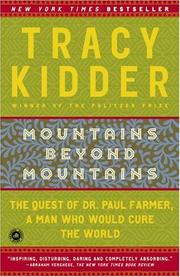
Mountains Beyond Mountains
Paul Farmer, the doctor who co-founded Partners In Health, treating the poor.
Summary
Kidder follows Paul Farmer, a physician and anthropologist who co-founded Partners In Health and spent his career treating patients in Haiti, Peru, Russia and elsewhere while holding a position at Harvard Medical School. Kidder travelled with Farmer over several years.
Farmer's central argument is that the standard of care available to poor patients should be the same as that available to wealthy ones, and that the public health orthodoxy of cost-effectiveness, which held that treating drug-resistant tuberculosis in poor countries was not economically justified, was a decision to let people die rather than a technical constraint. He demonstrated in Peru that community-based treatment of multi-drug-resistant tuberculosis could work, which changed World Health Organization policy and eventually the price of the drugs.
The operational model Partners In Health built uses community health workers, meaning local people trained and paid to visit patients daily, which addressed the adherence problem that had made treatment appear impossible. Kidder does not present Farmer as easy to emulate. He documents the personal cost, the strain on his family, the twelve-hour walks to visit single patients, and the difficulty other people had working alongside someone who accepted no limits. Farmer's own answer, that the goal is not to be reasonable, is the book's central tension.
Kidder is a sympathetic observer and the book is a portrait rather than an analysis of global health policy. Farmer's position on cost-effectiveness has been argued against by health economists on the grounds that resources spent on expensive treatments come from somewhere. Farmer died in 2022.
Key takeaways 8
- The standard of care available to poor patients should be the same as for wealthy ones, which Farmer treated as a moral requirement rather than an aspiration.
- Cost-effectiveness arguments in global health are decisions about whose lives to save rather than technical constraints.
- Community-based treatment of drug-resistant tuberculosis worked in Peru, which changed World Health Organization policy and eventually drug pricing.
- Community health workers who are local, trained and paid to visit patients daily solved the adherence problem that had made treatment appear impossible.
- Demonstrating that something works in one place changes what is considered possible everywhere, which is why the Peru project mattered beyond its patients.
- Structural violence, meaning the arrangements that determine who gets sick and who gets treated, is the actual subject of medicine in poor countries.
- Farmer's approach imposed costs on his family and on colleagues, which Kidder documents rather than omitting.
- Health economists argue that resources spent on expensive treatments come from other uses, which is the objection Farmer's position does not fully answer.
Who should read it
Readers interested in how a demonstration project changed global policy, and in what a refusal to accept resource constraints costs the person making it.
Who recommended it 6 · 4 direct
Similar books 6
Chosen by shared topics, the entries that hold them, and the people who recommended both.
How smallpox was eradicated, told by one of the physicians who did it.
Recommended by: Bill Gates
How doctors try to close the gap between their intentions and their performance.
Recommended by: Mohnish Pabrai, John Maeda
True cases showing the power and the limits of medicine as it is practised.
“Gawande, Atul, Complications: A Surgeon’s Notes on an Imperfect Science (New York: Picador, 2002)” — Michael Mauboussin
Source: Are You an Expert? Experts and Markets, page 10
Recommended by: Michael Mauboussin, Mohnish Pabrai and 1 other
A neurosurgeon on how medical decisions and hospital incentives work.
Recommended by: Bill Gates
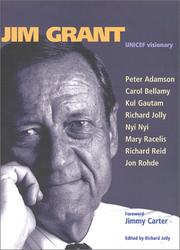
Eight stories by colleagues of the UNICEF leader behind a child survival revolution.
Recommended by: Bill Gates
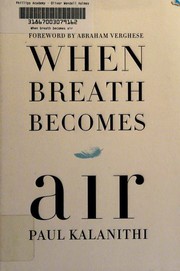
A neurosurgeon diagnosed with lung cancer at 36 asks what makes life worth living.
“Paul Kalanithi's book When Breath Becomes Air is one of the best books I've ever read.” — Brad Feld
Source: Book: When Breath Becomes Air — Feld Thoughts
Recommended by: Bill Gates, Brad Feld, Kathryn Minshew and 11 others