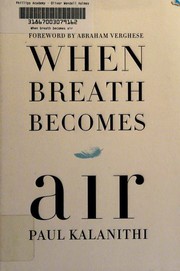
When Breath Becomes Air
A neurosurgeon diagnosed with lung cancer at 36 asks what makes life worth living.
Summary
Kalanithi was a neurosurgery resident at Stanford, in his final year of training, when he was diagnosed with metastatic lung cancer at thirty-six. He had studied English literature and the history of medicine before medicine, and he wrote the book during treatment. He died before completing it, and his wife Lucy Kalanithi wrote the epilogue.
The first half describes his path into neurosurgery and what the work taught him about the relationship between a surgeon and a patient facing catastrophic outcomes. He writes about the operations where success means preserving a person's identity rather than their life, about telling families what has happened, and about how residents are trained to manage the emotional weight. The second half describes his own diagnosis and the reversal of position from doctor to patient.
The central question he pursues is what makes a life meaningful when its duration becomes short and uncertain. He describes the practical version of this problem, which was deciding what to do with the time available without knowing whether it was months or years. He returned to operating, and he and Lucy decided to have a child.
The book is unfinished and reads that way in places, with the second half shorter and less shaped than the first. It offers no method and no consolation framework. Kalanithi's literary background produces passages that some readers find overwritten. Its value is the specificity of the account rather than any generalisable conclusion, and readers looking for practical guidance about mortality or illness will not find it.
Key takeaways 7
- A neurosurgeon's real work concerns identity and what the patient will be afterwards, not survival alone.
- Knowing the statistics of a disease does not tell a patient what will happen to them, which is why doctors should give patients a way to think rather than a number.
- The question of how to spend remaining time becomes unanswerable when the amount of time is uncertain rather than short.
- Medical training produces detachment as a protective mechanism, and that detachment damages the doctor's ability to help patients face what is happening.
- Kalanithi chose to continue operating and to have a child after diagnosis, treating those as the answer to what made his life meaningful.
- Literature and science answer different questions about human life, and Kalanithi argues that neither alone is sufficient.
- A patient's own knowledge of medicine does not protect them from the psychological experience of receiving a terminal diagnosis.
Who should read it
Readers wanting a direct account of confronting mortality from someone with the medical training to understand exactly what was happening to him.
Who recommended it 14 · 8 direct
“Paul Kalanithi's book When Breath Becomes Air is one of the best books I've ever read.”
“And then, in terms of what I am reading now, I am about half way through, "When Breath Becomes Air," Paul Kalanithi.”
“It is called When Breath Becomes Air by Paul Kalanithi.”
Similar books 6
Chosen by shared topics, the entries that hold them, and the people who recommended both.
Life in Nazi concentration camps, and logotherapy: finding meaning to survive.
“What's more certain to me is that we all need a why, as Viktor Frankl told us in Man's Search for Meaning.” — David Heinemeier Hansson
Source: Universal Basic Dead End
Recommended by: David Heinemeier Hansson, David Perell and 29 others

How a running-shoe importer became Nike, surviving one cash crisis after another.
“…books I've recommended, highlighted to death, or forced on friends.” — Andrew Wilkinson
Source: Andrew Wilkinson's Bookshelf, neverenough.com
Recommended by: Andrew Wilkinson, Bill Gates, Bill Gurley and 27 others
A journalist's marriage, her husband's illness, and what fighting for his life cost.
Recommended by: Bill Gates
A thirteen-year-old boy with autism explains how his mind thinks and feels.
Recommended by: Matt Mullenweg, Mohnish Pabrai
How doctors try to close the gap between their intentions and their performance.
Recommended by: Mohnish Pabrai, John Maeda
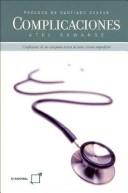
True cases showing the power and the limits of medicine as it is practised.
“Gawande, Atul, Complications: A Surgeon’s Notes on an Imperfect Science (New York: Picador, 2002)” — Michael Mauboussin
Source: Are You an Expert? Experts and Markets, page 10
Recommended by: Michael Mauboussin, Mohnish Pabrai and 1 other
Where it sits in the reference 4
As an Amazon Associate I earn from qualifying purchases.