Man's Search for Meaning
Life in Nazi concentration camps, and logotherapy: finding meaning to survive.
Summary
Frankl combines an account of his imprisonment in Nazi concentration camps with an introduction to logotherapy, the school of psychotherapy he founded. The first part describes three phases of a prisoner's psychological response: shock on arrival, apathy during imprisonment, and depersonalisation after liberation. He writes as a psychiatrist observing himself and others rather than as a chronicler of atrocity.
The central claim is that the primary human motivation is the search for meaning, not pleasure as Freud held or power as Adler held. Frankl argues that meaning can be found in three ways: through work or deeds, through experiencing something or loving someone, and through the attitude taken toward unavoidable suffering. He states that the last freedom, the choice of one's response to circumstances, cannot be removed by any external condition.
The logotherapy section describes clinical technique, including paradoxical intention, in which a patient is instructed to try to produce the symptom they fear, and dereflection, which shifts attention away from the self. Frankl also describes the existential vacuum, a sense of emptiness he saw increasing in postwar patients.
Readers should be aware of the book's limitations as evidence. Frankl generalises from his own survival, and the implication that attitude determined who lived has been criticised as unfair to those who died. Timothy Pytell and others have questioned aspects of Frankl's account of his own camp history and his postwar positioning. Logotherapy never developed a substantial empirical research base and remains marginal in clinical psychology. The book's influence comes from the moral argument rather than from the therapy.
Key takeaways 8
- The primary human drive is the search for meaning rather than the pursuit of pleasure or of power.
- A person can be stripped of everything except the freedom to choose their attitude toward their circumstances.
- Meaning is found in specific work, in love for a particular person, and in the stance taken toward unavoidable suffering.
- Suffering ceases to be suffering at the moment it acquires meaning, though suffering is never necessary to find meaning.
- Prisoners who lost a future orientation, including a specific reason to survive, deteriorated and died quickly.
- Happiness cannot be pursued directly and only appears as a side effect of dedication to something outside the self.
- The existential vacuum, an experienced emptiness once material needs are met, produces its own class of psychological distress.
- Paradoxical intention treats anxiety symptoms by instructing the patient to attempt the outcome they fear.
Who should read it
Readers facing an extended period without external reward who want an argument about purpose that survived the most extreme test available.
Who recommended it 31 · 8 direct
“What's more certain to me is that we all need a why, as Viktor Frankl told us in Man's Search for Meaning.”
“Powerful, deep, etc. First half describes life inside Auschwitz. Second half has powerful succinctly-said insights into the universal struggle. There's a reason this book has sold a billion copies.”
Similar books 6
Chosen by shared topics, the entries that hold them, and the people who recommended both.
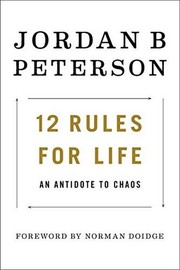
Twelve rules for living, each drawn from clinical practice, biology and myth.
“A unique thinker with strong opinions presented as indisputable fact. More surprisingly interesting ideas than almost any book I've ever read. Extremely thoughtful, but occasionally abruptly concludes with an unsupported point. It has a conservative “this is how it is” certainty. It’s a broad collection of thoughtful insights on life, mixed with a lot of Bible interpretation.” — Derek Sivers
Source: Derek Sivers book notes (primary, rated list) · Rating: 9/10
Recommended by: Derek Sivers, Guy Spier, Nat Eliason and 8 others
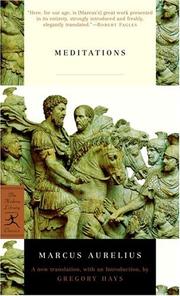
A Roman emperor's private notes reminding himself to live by Stoic principles.
“For example, the Hayes translation of Marcus Aurelius' Meditations is regarded as being truest to the original text, while also having a modern (accessible) feel.” — Shane Parrish
Source: How to Remember What You Read
Recommended by: Austen Allred, Mohnish Pabrai, Nat Eliason and 17 others

Why some things gain from volatility and disorder, and how to build them.
“Antifragile. Loved the first 1/3 and last 1/3 of this book.” — Andrew Chen
Source: Books I’m reading (2013)
Recommended by: Ana Fabrega, Andrew Chen, Derek Sivers and 24 others

Advice on living, drawn from a psychiatrist's thirty years with patients.
“Powerful and profound life lessons from a psychiatrist who's been listening to people's problems for decades.” — Derek Sivers
Source: Derek Sivers book notes (primary, rated list) · Rating: 9/10
Recommended by: Andrew Wilkinson, Derek Sivers, Nat Eliason and 1 other

Why people mistake luck for skill, above all in markets.
“Fooled By Randomness was unquestionably the best non-fiction book I read in 2005.” — Brad Feld
Source: Book Review: Fooled By Randomness — Feld Thoughts
Recommended by: Barton Biggs, Brad Feld, Derek Sivers and 15 others
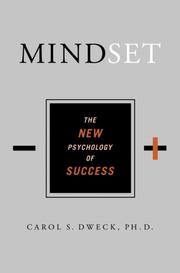
People who think ability grows with effort learn more than those who think it fixed.
“One of the reasons I loved Mindset is because it's solutions-oriented.” — Bill Gates
Source: Gates Notes review of Mindset
Recommended by: Bill Gates, Derek Sivers, Michael Mauboussin and 16 others
Where it sits in the reference 6
As an Amazon Associate I earn from qualifying purchases.