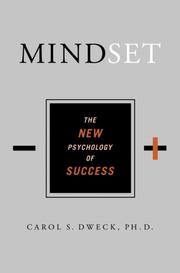
Mindset
People who think ability grows with effort learn more than those who think it fixed.
Fixed versus growth mindset; widely used in management and coaching
Summary
Dweck distinguishes a fixed mindset, in which a person believes intelligence and ability are static traits, from a growth mindset, in which they believe ability develops through effort and strategy. She argues that the belief itself changes behaviour, because people holding a fixed view avoid challenges that might reveal limits, treat effort as evidence of low ability, and respond to setbacks by withdrawing.
The research base is decades of experiments with schoolchildren, most famously the praise studies. Children praised for intelligence after solving problems subsequently chose easier tasks, performed worse after difficulty and were more likely to misreport their scores. Children praised for effort chose harder tasks and improved. Dweck extends the framework to sport, business, relationships and parenting, using cases including Enron as an organisation that recruited and rewarded fixed-mindset talent.
The practical content concerns praise and feedback. Dweck argues that praising process, strategy and effort produces different behaviour than praising ability, and that organisations should be examined for which they reward. She also describes the false growth mindset, where people claim the label while behaving as before, and she has spent years correcting the reading that growth mindset means praising effort regardless of result.
The replication record is mixed and this matters. Large pre-registered studies and meta-analyses find effects far smaller than the early work suggested, often near zero for academic achievement, with possible small effects for low-achieving students. Some researchers argue the construct does not hold up outside Dweck's own lab. The praise findings have replicated better than the intervention findings. Treat the distinction as a useful frame for feedback and treat the claimed effect sizes with caution.
Key takeaways 8
- People hold either a fixed or a growth belief about ability, and that belief determines how they respond to difficulty.
- Praising intelligence makes children avoid challenge and perform worse after failure, while praising process makes them seek challenge.
- A fixed mindset makes effort threatening, because needing to work hard is taken as evidence of insufficient natural ability.
- Organisations can hold a mindset, and companies that recruit and reward innate talent suppress learning and conceal failure.
- Setbacks are information about strategy for a person with a growth mindset and a verdict about identity for a person with a fixed one.
- The word yet converts a statement of failure into a statement about a current position in a process.
- Believing that ability is developable does not mean that everyone can achieve anything, only that current performance does not fix future performance.
- Claiming a growth mindset while still avoiding challenge and concealing failure is a common and self-deceiving pattern.
Who should read it
Managers designing feedback and performance conversations, and parents, provided they treat the intervention research as much weaker than the popular account suggests.
Who recommended it 19 · 5 direct
“One of the reasons I loved Mindset is because it's solutions-oriented.”
“Crucial distinction: People in a “fixed” mindset believe that you *are* great or flawed. People in a “growth” mindset believe your greatness (or flaws) are because of your actions. The fixed mindset is very harmful in every area of life (work, art, relationships, business, etc.) We get our initial mindset from our environment. When parents say, “You are great,” instead of ”You did great work,” they accidentally create the “fixed” mindset.”
“Carol S. Dweck, Mindset: The New Psychology of Success (New York: Random House, 2006)”
Similar books 6
Chosen by shared topics, the entries that hold them, and the people who recommended both.
Research on shame and vulnerability, and why vulnerability comes before connection.
“I think it's Brene Brown's book, Daring Greatly, talks about this really well. Or Krista Tippett on Becoming Wise, another great book.” — Matt Mullenweg
Recommended by: Matt Mullenweg, Tom Bilyeu, Tony Hsieh and 4 others
Givers, takers and matchers, and why givers end up both at the bottom and the top.
“If you feel you are too generous, or too greedy, or are wary and insist on reciprocation, consider reading this research-based look at the subject of these different personality types. Counter-intuitive findings.” — Derek Sivers
Source: Derek Sivers book notes (primary, rated list) · Rating: 6/10
Recommended by: Derek Sivers, Mohnish Pabrai, Alex Lieberman and 4 others
Deliberate practice, not innate talent, explains world-class performance.
“Talent is not innate - it comes from thousands of hours of deliberate practice: focused improving of your shortcomings. That's it. If you can get past the first 20% of the book that just asks questions, the next 60% is quite good.” — Derek Sivers
Source: Derek Sivers book notes (primary, rated list) · Rating: 6/10
Recommended by: Derek Sivers, Michael Mauboussin and 3 others
A book of renewal for leaders whose winning at work means losing at life.
Recommended by: Mohnish Pabrai
Nine toddler traits, such as imagination and determination, that adults can relearn.
Recommended by: Richard Branson
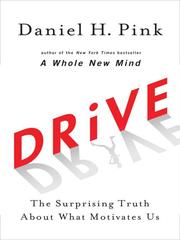
Rewards work for routine tasks; creative work runs on autonomy, mastery and purpose.
“Essential for all managers. Deep surprising study of motivation at work. Extrinsic vs intrinsic. Work vs play. When money is used as an external reward for some activity, the subjects lose intrinsic interest for the activity.” — Derek Sivers
Source: Derek Sivers book notes (primary, rated list) · Rating: 8/10
Recommended by: Derek Sivers, Michael Mauboussin and 4 others