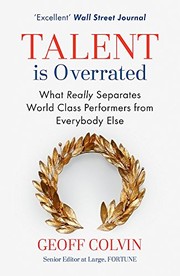
Talent Is Overrated: What Really Separates World-Class Performers from Everybody Else
Deliberate practice, not innate talent, explains world-class performance.
Summary
Colvin, a Fortune editor, argues that specific innate talent does not explain elite performance and that deliberate practice does. He surveys the research, principally Anders Ericsson's, and applies it to business rather than to the music and sport contexts where it was developed. His attack on the talent explanation covers the absence of evidence for domain-specific innate ability, the finding that childhood indicators do not predict elite adult performance well, and the study of Mozart's early work showing that the compositions before roughly ten years of training were not exceptional.
His account of deliberate practice specifies what distinguishes it from ordinary repetition: it is designed specifically to improve performance, frequently by a teacher; it can be repeated a great deal; feedback on results is continuously available; it is highly demanding mentally and cannot be sustained for long periods; and it is not enjoyable. He is explicit that this last property explains why most people do not do it.
The business application is the book's contribution. Colvin argues that most professional work provides no feedback loop, that experience therefore does not produce improvement, and that a professional wanting to improve must construct the practice conditions themselves, including defining specific aspects to work on, seeking feedback that would not otherwise arrive, and practising components separately from actual performance.
The research base has weakened since publication, with meta-analyses finding that deliberate practice accounts for a smaller share of performance variance than Ericsson claimed, particularly outside highly structured domains. The construction of practice conditions in unstructured professional work remains the useful part.
Key takeaways 8
- Innate domain-specific talent does not explain elite performance, and childhood indicators predict adult outcomes poorly.
- Deliberate practice is designed specifically to improve performance, is repeatable, provides continuous feedback and is mentally demanding.
- Deliberate practice is not enjoyable, which is the property that explains why most people do not do it.
- Experience alone does not produce improvement, and professionals with decades of practice frequently perform no better than those with a few years.
- Most professional work provides no feedback loop, which means the conditions for improvement must be constructed deliberately.
- Components of a skill should be practised separately from actual performance, which most professionals never do.
- Working at a level that produces frequent errors is required, and comfortable performance indicates that no improvement is occurring.
- Meta-analyses since publication find that deliberate practice explains a smaller share of performance variance than the book claims.
Who should read it
Professionals in unstructured fields who want to construct practice conditions their work does not supply, with the effect sizes treated as overstated.
Who recommended it 5 · 3 direct
“Talent is not innate - it comes from thousands of hours of deliberate practice: focused improving of your shortcomings. That's it. If you can get past the first 20% of the book that just asks questions, the next 60% is quite good.”
“Colvin, Geoff, Talent is Overrated: What Really Separates World-Class Performers from Everybody Else (New York: Portfolio, 2008)”
Similar books 6
Chosen by shared topics, the entries that hold them, and the people who recommended both.
Givers, takers and matchers, and why givers end up both at the bottom and the top.
“If you feel you are too generous, or too greedy, or are wary and insist on reciprocation, consider reading this research-based look at the subject of these different personality types. Counter-intuitive findings.” — Derek Sivers
Source: Derek Sivers book notes (primary, rated list) · Rating: 6/10
Recommended by: Derek Sivers, Mohnish Pabrai, Alex Lieberman and 4 others

How organisations find exceptional talent before others do.
Recommended by: Mohnish Pabrai
Why creative, holistic right-brain thinkers will lead the future economy.
Recommended by: Ray Dalio
People who think ability grows with effort learn more than those who think it fixed.
“One of the reasons I loved Mindset is because it's solutions-oriented.” — Bill Gates
Source: Gates Notes review of Mindset
Recommended by: Bill Gates, Derek Sivers, Michael Mauboussin and 16 others
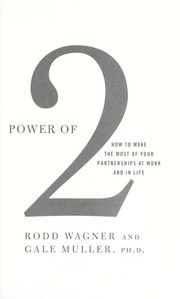
What makes partnerships succeed, told through the stories of famous pairs.
Recommended by: Mohnish Pabrai
A book of renewal for leaders whose winning at work means losing at life.
Recommended by: Mohnish Pabrai