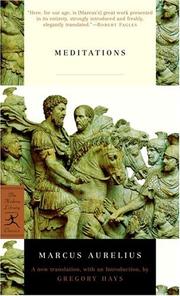
Meditations
A Roman emperor's private notes reminding himself to live by Stoic principles.
Stoic notebooks on self-command and what is within your control
Summary
The book collects private notes the Roman emperor wrote to himself between roughly 170 and 180, largely on campaign, with no intention of publication. It has no argument structure. Twelve books contain repeated reminders, self-corrections and restatements of Stoic doctrine that Marcus was trying to hold onto under pressure.
The philosophical content is standard Stoicism, mostly derived from Epictetus. The dichotomy of control separates what depends on us, meaning judgment and intention, from what does not, meaning body, reputation, and the actions of others. Marcus repeatedly tells himself that harm comes from his own opinion about events rather than from the events. He reminds himself of mortality constantly, uses the view from above to reduce the apparent size of his concerns, and prepares in advance for encounters with difficult people.
The book's authority comes from its author's position. Marcus held absolute power over the Roman world while writing about restraining anger, ignoring insult, accepting death and doing the work in front of him. The entries about dealing with tedious colleagues, being criticised unfairly, and continuing when tired read as the notes of a working executive rather than of a professional philosopher.
What the book does not do matters. It offers no systematic argument, so a reader wanting the Stoic case must go to Epictetus or to modern treatments. Its fatalism about the cosmic order sits awkwardly with modern readers. Marcus persecuted Christians and prosecuted wars while writing these entries, which raises questions about how far the philosophy governed his conduct. Translation matters more than for most classics, and the Hays version reads very differently from older ones.
Key takeaways 8
- Judgment, intention and response lie within a person's control, and everything else including reputation, body and outcomes does not.
- Harm comes from a person's opinion about an event rather than from the event itself, so removing the judgment removes the injury.
- A person should perform the work in front of them without complaint about the conditions or the people involved.
- Anticipating each day that you will meet obstruction, ingratitude and arrogance removes the shock when you do.
- Constant awareness of death clarifies what deserves attention and reduces the weight given to status and reputation.
- Other people's opinions of you carry no weight, and seeking praise transfers control of your state of mind to them.
- The obstacle in the path becomes the material for right action, so external impediments cannot prevent virtue.
- Everything is impermanent, including fame, so the desire to be remembered rests on a mistake about time.
Who should read it
Anyone under sustained pressure who wants the private working notes of someone applying Stoic practice while holding real power.
Who recommended it 20 · 9 direct
“For example, the Hayes translation of Marcus Aurelius' Meditations is regarded as being truest to the original text, while also having a modern (accessible) feel.”
“Of course, none of these secondary sources are substitutes for reading Meditations itself, but we should keep in mind that Marcus was not attempting to write an autobiography.”
“This I think is a good tie-in to meaning, and I'm going to get there with a self-indulgent reference back to Marcus Aurelius. For people who have not read Meditations. Read Meditations.”
Similar books 6
Chosen by shared topics, the entries that hold them, and the people who recommended both.
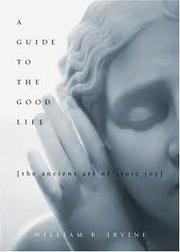
Stoicism as a practical philosophy, with techniques such as negative visualisation.
“…books I've recommended, highlighted to death, or forced on friends.” — Andrew Wilkinson
Source: Andrew Wilkinson's Bookshelf, neverenough.com
Recommended by: Andrew Wilkinson, Austen Allred and 7 others
Life in Nazi concentration camps, and logotherapy: finding meaning to survive.
“What's more certain to me is that we all need a why, as Viktor Frankl told us in Man's Search for Meaning.” — David Heinemeier Hansson
Source: Universal Basic Dead End
Recommended by: David Heinemeier Hansson, David Perell and 29 others
Letters on how to live, a course in Stoic philosophy written to a friend.
“Seneca, translated by Robin Campbell, Letters from a Stoic (London: Penguin House, 1969), 178” — Michael Mauboussin
Source: Probabilities and Payoffs: The Practicalities and Psychology of Expected Value
Recommended by: Michael Mauboussin, Mohnish Pabrai and 5 others
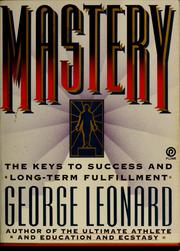
Mastery as long practice on the plateau, with a reward that comes late.
“Mostly detailed historical biographical tales of ”masters” like DaVinci, Darwin, Mozart, Proust, Goethe, Wright Brothers, Einstein, Coltrane, Martha Graham, etc. Lessons dissected from their successes, and categorized. Similar format to his great book “48 Laws of Power”, but a little less effective here. The biographies were interesting, but lessons were mostly conventional wisdom.” — Derek Sivers
Source: Derek Sivers book notes (primary, rated list) · Rating: 8/10
Recommended by: Derek Sivers, Patrick O'Shaughnessy and 2 others
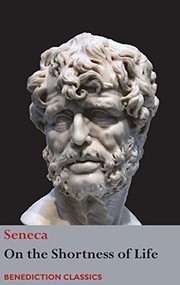
Life is not short; people waste most of it, and how to use it well.
“But the greatest peril of misplaced worry, Seneca cautions, is that in constantly bracing for an imagined catastrophe, we keep ourselves from fully living - something on which he expounded in his most famous moral essay, On the Shortness of Life.” — Maria Popova
Source: Resolutions for a Life Worth Living: Attainable Aspirations Inspired by Great Humans of the Past
Recommended by: Jim Collins, Maria Popova, Patrick Collison and 3 others
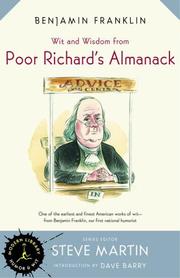
An almanac of proverbs and maxims urging thrift, industry and courtesy.
Recommended by: Li Lu, Tim Ferriss
Where it sits in the reference 1
Topics 2
As an Amazon Associate I earn from qualifying purchases.