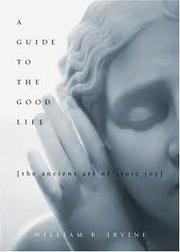
A Guide to the Good Life
Stoicism as a practical philosophy, with techniques such as negative visualisation.
Modern Stoicism; desire management and negative visualisation
Summary
Irvine, a philosophy professor, presents Stoicism as a practical programme rather than as a historical subject. He argues that most people never choose a philosophy of life and therefore pursue whatever their environment supplies, and that Stoicism offers a defensible goal, which he identifies as tranquility, meaning the absence of negative emotions and the presence of positive ones.
The techniques are the book's contribution. Negative visualisation, which Irvine treats as the central Stoic practice, means deliberately contemplating the loss of what you have, which he argues counteracts hedonic adaptation and converts current circumstances into something noticed rather than assumed. The trichotomy of control modifies Epictetus, splitting things into those over which we have complete control, no control, and some control, with the third category handled by internalising goals, so that a tennis player aims to play as well as possible rather than to win.
Other techniques include fatalism about the past and present, meaning treating what has already happened as fixed; voluntary discomfort, meaning deliberately experiencing cold, hunger or hardship to reduce fear of them and to increase appreciation; and self-denial as training rather than as asceticism. Irvine also covers the Stoic handling of insults, grief, anger, fame and luxury, with practical advice in each case.
Academic philosophers have criticised the trichotomy as a departure from what the Stoics held, and Irvine's identification of tranquility as the goal replaces virtue, which was the actual Stoic position. His treatment of Stoic physics and of the rational cosmos is minimal. Readers wanting historical accuracy should go to the primary texts. Readers wanting a usable programme will find this the clearest available.
Key takeaways 8
- A person who does not choose a philosophy of life will pursue whatever goals their surroundings supply, usually money and status.
- Deliberately contemplating the loss of what you have counteracts adaptation and makes present circumstances noticeable rather than assumed.
- Things divide into those under complete control, those under none, and those under partial control, and the third category should be handled by internalising the goal.
- Setting an internal goal, such as performing as well as possible, removes the anxiety attached to outcomes that depend on others.
- Treating the past and the present moment as fixed removes the wasted effort of wishing they were different.
- Voluntarily experiencing discomfort reduces fear of losing comfort and increases the value of having it.
- Insults harm only through the judgment that they matter, and the effective responses are humour or no response at all.
- Pursuing tranquility does not require withdrawal from work or ambition, and Stoics held public office and ran businesses throughout.
Who should read it
Readers who want Stoicism as a set of daily practices with clear instructions, rather than as historical philosophy.
Who recommended it 9 · 3 direct
“…books I've recommended, highlighted to death, or forced on friends.”
“Almost too personal for me to give an objective review, because I found when reading it that the quirky philosophy I've been living my life by since 17 matches up exactly with a 2000-year-old philosophy called Stoicism. Mine was self-developed haphazardly, so it was fascinating to read the refined developed original. Really resonated.”
Similar books 6
Chosen by shared topics, the entries that hold them, and the people who recommended both.
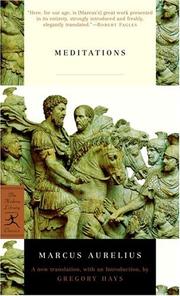
A Roman emperor's private notes reminding himself to live by Stoic principles.
“For example, the Hayes translation of Marcus Aurelius' Meditations is regarded as being truest to the original text, while also having a modern (accessible) feel.” — Shane Parrish
Source: How to Remember What You Read
Recommended by: Austen Allred, Mohnish Pabrai, Nat Eliason and 17 others
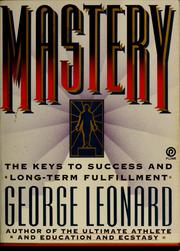
Mastery as long practice on the plateau, with a reward that comes late.
“Mostly detailed historical biographical tales of ”masters” like DaVinci, Darwin, Mozart, Proust, Goethe, Wright Brothers, Einstein, Coltrane, Martha Graham, etc. Lessons dissected from their successes, and categorized. Similar format to his great book “48 Laws of Power”, but a little less effective here. The biographies were interesting, but lessons were mostly conventional wisdom.” — Derek Sivers
Source: Derek Sivers book notes (primary, rated list) · Rating: 8/10
Recommended by: Derek Sivers, Patrick O'Shaughnessy and 2 others

An almanac of proverbs and maxims urging thrift, industry and courtesy.
Recommended by: Li Lu, Tim Ferriss

Franklin's life as printer, scientist, diplomat and founder.
“…books I've recommended, highlighted to death, or forced on friends.” — Andrew Wilkinson
Source: Andrew Wilkinson's Bookshelf, neverenough.com
Recommended by: Alfred Lin, Andrew Wilkinson, Brad Feld and 11 others
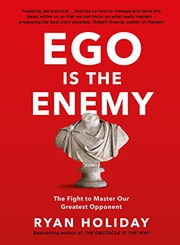
How ego harms a person in aspiration, success and failure, and how to check it.
“Forget yourself and focus on the work. Be humble and persistent. Value discipline and results, not passion and confidence. Be lesser, do more. This message is crucial, but the opposite of almost every other book. I wish everyone would read this. I need to re-read it each year. It's that important. It's easy to read this and say “oh yeah I've got my ego under control”, but the problem is deeper than that.” — Derek Sivers
Source: Derek Sivers book notes (primary, rated list) · Rating: 9/10
Recommended by: Andrew Wilkinson, David Cancel, Derek Sivers and 5 others
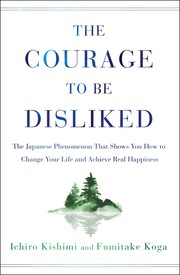
Alfred Adler's psychology taught through five nights of dialogue.
“This book is oddly written (it's translated from Japanese), but it changed my life.” — Andrew Wilkinson
Source: Newsletter
Recommended by: Ali Abdaal, Andrew Wilkinson, Derek Sivers and 11 others
Where it sits in the reference 1
Topics 2
As an Amazon Associate I earn from qualifying purchases.