
The Courage to Be Disliked
Alfred Adler's psychology taught through five nights of dialogue.
Summary
Kishimi and Koga present the psychology of Alfred Adler through a dialogue between a philosopher and a young man over five nights. Adler was a contemporary of Freud who broke with him, and the book states his positions in deliberately provocative form.
The central claim is teleology against etiology. Adler holds that people are driven by present goals rather than determined by past causes, so trauma does not determine current behaviour. A person who cannot leave the house is not prevented by past events but produces anxiety in order to achieve the goal of not leaving. This is the most contested position in the book and the authors state it without softening.
The second major claim is separation of tasks. A person must distinguish their own tasks from other people's, and whether someone else likes or approves of you is their task and not yours. Seeking recognition makes a person live according to other people's expectations, which the book treats as the root of unfreedom. Freedom, in this account, means accepting being disliked.
The third is that all problems are interpersonal, and that the healthy response is community feeling, meaning a sense of contribution to others without any expectation of recognition. The authors reject praise and reprimand alike, arguing that both operate through vertical relationships and produce dependence. Adlerian psychology has little empirical support and the denial of trauma effects contradicts substantial clinical evidence. The dialogue format allows objections to be raised and then dismissed rather than tested. The separation of tasks is the most practically useful idea and can be adopted without accepting the rest.
Key takeaways 8
- People act to achieve present goals rather than as a result of past causes, so explanations that reference trauma describe a purpose rather than a determinant.
- Whether other people approve of you is their task, and treating it as your task is the source of most unhappiness.
- Freedom means accepting that some people will dislike you, and any life arranged to avoid that is lived on other people's terms.
- Seeking recognition produces behaviour aimed at satisfying others' expectations rather than at contributing anything.
- All problems are interpersonal problems, since a person alone would have no basis for the comparisons that produce distress.
- Praise and reprimand both establish vertical relationships and should be replaced with expressions of gratitude between equals.
- A person can change at any moment, and the claim that change is impossible is a decision to remain unchanged.
- Feelings of inferiority are subjective interpretations rather than objective facts, and they can motivate effort or excuse inaction depending on the goal they serve.
Who should read it
Readers preoccupied with others' approval who want a blunt argument for separating their responsibilities from other people's, treating the trauma claims sceptically.
Who recommended it 14 · 4 direct
“This book is oddly written (it's translated from Japanese), but it changed my life.”
“Wow. A profound little philosophy book from Japan, communicating the psychology of Alfred Adler - a rival of Freud. Told as a conversation between an angry student and a patient teacher.”
Similar books 6
Chosen by shared topics, the entries that hold them, and the people who recommended both.
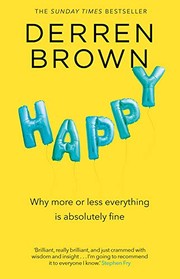
“Brilliant and profound yet totally entertaining philosophy book by one of my favorite people. Gives an approachable overview of past philosophies and shows how they apply to your life today better than the harmful pop-self-help-positivity stuff. Amazing perspectives on desires, death, relationships, anger, and how being present doesn’t matter as much as the story you tell yourself afterwards. His fun writing style isn’t reflected in my notes here. Get the book.” — Derek Sivers
Source: Derek Sivers book notes (primary, rated list) · Rating: 9/10
Recommended by: Ali Abdaal, Derek Sivers, Reese Witherspoon
Life in Nazi concentration camps, and logotherapy: finding meaning to survive.
“What's more certain to me is that we all need a why, as Viktor Frankl told us in Man's Search for Meaning.” — David Heinemeier Hansson
Source: Universal Basic Dead End
Recommended by: David Heinemeier Hansson, David Perell and 29 others

A dialogue between a philosopher and a young man on how to live a happy life.
“The sequel to the great “Courage to be Disliked”. The philosophy of Alfred Adler, on education, self-reliance, coming to terms with your past, focusing on solutions instead of problems, and active loving. Be warned, the format is strange: a dialog between an angry youth and calm philosopher. You can skim over what the youth says, since it's just angry objections.” — Derek Sivers
Source: Derek Sivers book notes (primary, rated list) · Rating: 7/10
Recommended by: Derek Sivers, Ryan Hoover
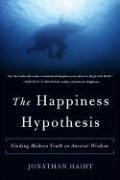
Ancient wisdom on happiness tested against modern psychology and brain research.
“Psychology professor's digestible but deep insight into how our minds work, around the topic of happiness. Great metaphor of a rider on the back of an elephant. Rider is reasoning, elephant is emotions. Rider has limited control of what the elephant does. Surprising insights into ethics and morality. See my notes for great quotes, but read the whole well-written book.” — Derek Sivers
Source: Derek Sivers book notes (primary, rated list) · Rating: 9/10
Recommended by: Andrew Wilkinson, Derek Sivers, Tony Hsieh

Advice on living, drawn from a psychiatrist's thirty years with patients.
“Powerful and profound life lessons from a psychiatrist who's been listening to people's problems for decades.” — Derek Sivers
Source: Derek Sivers book notes (primary, rated list) · Rating: 9/10
Recommended by: Andrew Wilkinson, Derek Sivers, Nat Eliason and 1 other

Twelve rules for living, each drawn from clinical practice, biology and myth.
“A unique thinker with strong opinions presented as indisputable fact. More surprisingly interesting ideas than almost any book I've ever read. Extremely thoughtful, but occasionally abruptly concludes with an unsupported point. It has a conservative “this is how it is” certainty. It’s a broad collection of thoughtful insights on life, mixed with a lot of Bible interpretation.” — Derek Sivers
Source: Derek Sivers book notes (primary, rated list) · Rating: 9/10
Recommended by: Derek Sivers, Guy Spier, Nat Eliason and 8 others