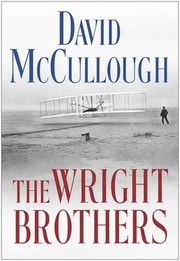
The Wright Brothers
From a Dayton bicycle shop to the first powered flights and the 1908 demonstrations.
Two bicycle makers solving flight through iteration and self-funding
Summary
McCullough tells the story of Wilbur and Orville Wright from their Dayton bicycle business through the first powered flights at Kitty Hawk in 1903 and the demonstrations in France and at Fort Myer in 1908 and 1909 that finally established their claim. He drew on the brothers' correspondence, diaries and the family papers.
The most instructive material concerns their method. They identified control as the unsolved problem when others were pursuing power and lift, and worked on gliders for three years before attempting an engine. They built their own wind tunnel after discovering that the published lift coefficient tables from Lilienthal were wrong, and generated their own data across two hundred wing shapes. They taught themselves to fly the gliders before adding power, accumulating hours of practical experience that competitors with better-funded programmes never obtained.
McCullough emphasises that they had no college education, no external funding, no government contracts and no scientific establishment behind them, and that they financed everything from the bicycle shop's profits. He contrasts this with Samuel Langley's federally funded programme, which failed publicly twice. The later sections cover the years of disbelief, in which American newspapers ignored or denied the flights, and the patent litigation that consumed the brothers afterwards and which McCullough treats with less attention than it deserves.
The book is narrative history without technical depth, and readers wanting the aeronautics should look elsewhere. McCullough is admiring throughout and the brothers' commercial failures and litigiousness receive limited treatment. The account of how they identified the right problem and built their own data is the part with the widest application.
Key takeaways 8
- The Wrights identified control as the unsolved problem while competitors pursued power and lift, which determined why they succeeded and others did not.
- They discovered that the published aeronautical data everyone was using was wrong, and built their own wind tunnel to generate correct figures.
- They spent three years on unpowered gliders before attempting flight with an engine, accumulating practical flying experience their competitors never had.
- They financed the entire programme from a small bicycle business with no external capital or government support.
- Samuel Langley's well-funded federal programme failed publicly while the Wrights succeeded on a fraction of the budget, which McCullough attributes to method rather than resources.
- Building and testing at small scale before committing to the full system allowed them to discover errors cheaply.
- American newspapers and scientific institutions refused to accept the flights for years after they occurred, which delayed commercial exploitation.
- Neither brother had a college education or any formal training in the field they solved.
Who should read it
Founders and engineers who want a case study in identifying the right problem, distrusting published data, and building capability incrementally without capital.
Who recommended it 6 · 4 direct
Similar books 6
Chosen by shared topics, the entries that hold them, and the people who recommended both.
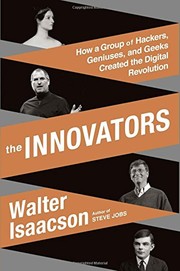
Computing as a run of collaborations, from Ada Lovelace and Babbage to Google.
Recommended by: Mohnish Pabrai, Patrick Collison, Bill Gates and 3 others
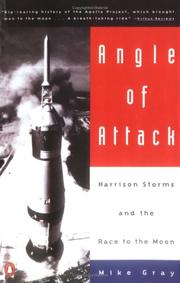
Harrison Storms, an aerospace engineer, and the building of Apollo for the moon race.
Recommended by: Patrick Collison
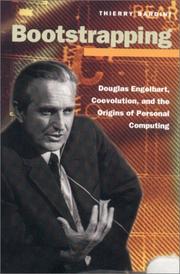
Douglas Engelbart and the origins of personal computing and its interfaces.
Recommended by: Patrick Collison
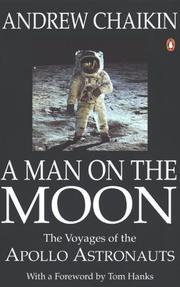
The Apollo astronauts and their voyages to the Moon.
“Walking on the moon is probably the coolest thing humans have ever done.” — Morgan Housel
Source: A Few Good Books · Collaborative Fund
Recommended by: Morgan Housel
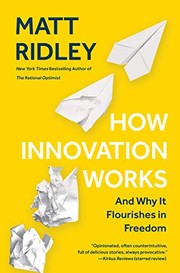
Innovation is gradual, collective and bottom-up, not the work of lone inventors.
“Matt Ridley, How Innovation Works: And Why It Flourishes in Freedom (New York: Harper, 2020)” — Michael Mauboussin
Source: Increasing Returns: Identifying Forms of Increasing Returns and What Drives Them, page 17
Recommended by: Balaji S. Srinivasan, Michael Mauboussin and 1 other

SpaceX's first six years, when it nearly failed four times before Falcon 1 flew.