Intrinsic Value
What a business is worth to a silent owner: all the cash it will produce over its life, discounted to today. Because every input is an estimate, practitioners compute a conservative range rather than a point and compare that range with the quoted price. Price is an input to the transaction and never to the appraisal.
Start here
- The Little Book of ValuationAswath Damodaran, 2011
- Expectations InvestingAlfred Rappaport, Michael J. Mauboussin, 2001
- Valuation: Measuring and Managing the Value of CompaniesTim Koller, Marc Goedhart, David Wessels, 1990
- Security AnalysisBenjamin Graham, David L. Dodd, 1934

How to read financial statements sceptically and value bonds and stocks.
“I am reminded once again of the quote that sits in the front of Ben Graham’s Security Analysis, from Horace’s Ars Poetica: “Many shall be restored that now are fallen and many shall fall that now are in honor.” — Bill Miller
Source: 2007 Q3 Market Commentary
Recommended by: Bill Miller, Christopher Bloomstran and 18 others
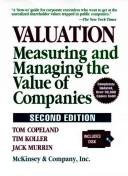
McKinsey's guide to discounted cash flow valuation and managing for value.
“For an excellent discussion of valuing banks, see Koller, Goedhart, and Wessels, Valuation, 733-758.” — Michael Mauboussin
Source: Return on Invested Capital: How to Calculate ROIC and Handle Common Issues, page 38
Recommended by: Michael Mauboussin, Mohnish Pabrai and 1 other

Why an asset's value is the present value of the cash it will pay its owners.
“That a company’s value is the present value of its future free cash flows is familiar to most investors, and was set forth in The Theory of Investment Value, a seminal book written by John Burr Williams in 1938.” — Michael Mauboussin
Source: Where’s the Bar? Introducing Market-Expected Return on Investment (MEROI), page 6
Recommended by: Michael Mauboussin, Mohnish Pabrai and 1 other
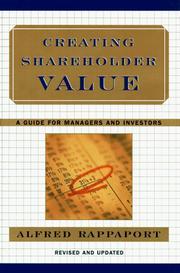
Value is discounted future cash flow, not earnings per share or return on equity.
“Alfred Rappaport, a professor emeritus at the Kellogg School of Management at Northwestern University, made this point clearly in his seminal book, Creating Shareholder Value.” — Michael Mauboussin
Source: Market Share: Understanding Competitive Advantage Through Market Power, page 1
Recommended by: Michael Mauboussin, Mohnish Pabrai
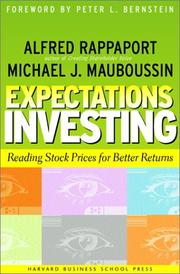
Start from the share price and ask what results it expects a company to deliver.
Recommended by: Mohnish Pabrai
Four principles of corporate value, from McKinsey's valuation work, for executives.
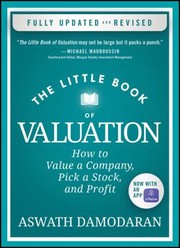
Intrinsic and relative valuation of stocks, explained for general readers.
Recommended by: Mohnish Pabrai
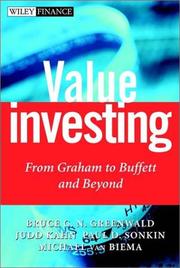
Columbia's value investing method: a valuation in three stages, most reliable first.
“In the book, Value Investing–From Graham to Buffett and Beyond, by Greenwald, Kahn, Sonkin and Van Biema, there are discussions of NAV.” — Martin J. Whitman
Source: Third Avenue Funds Q3 2003 Shareholder Letters (Chairman's letter by Martin J. Whitman)
Recommended by: Martin J. Whitman, Michael Mauboussin and 5 others
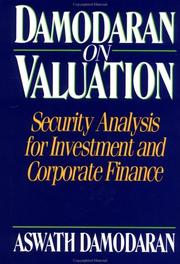
Advanced valuation for the cases where the standard methods break down.
“We adapted this from Aswath Damodaran, Damodaran on Valuation (New York: John Wiley & Sons, 1994), 56-58” — Michael Mauboussin
Source: M&M on Valuation, page 13
Recommended by: Michael Mauboussin
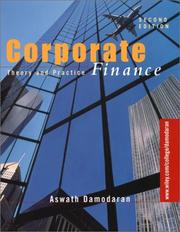
A full corporate finance textbook built around investing, financing and dividends.
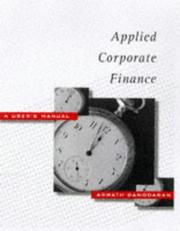
Corporate finance built around three decisions: investing, financing and dividends.
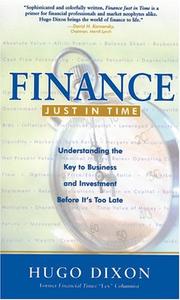
A no-equations guide to corporate finance and markets: risk, valuation and mergers.
Recommended by: Mohnish Pabrai
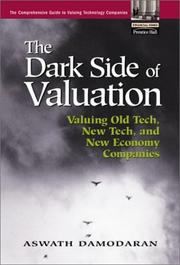
How to value companies where standard methods break down, from start-ups to tech.
Recommended by: Rational Capital Investment Fund
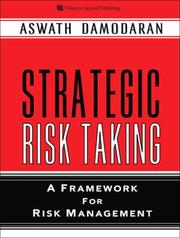
Risk as a source of value: how firms measure it and take the risks they suit.
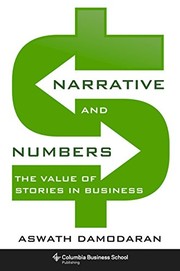
Why a valuation needs both a business story and numbers, and how to join them.
“Aswath Damodaran, Narrative and Numbers: The Value of Stories in Business (New York: Columbia Business School Publishing, 2017)” — Michael Mauboussin
Source: Trading Stages in the Company Life Cycle, page 18
Recommended by: Michael Mauboussin
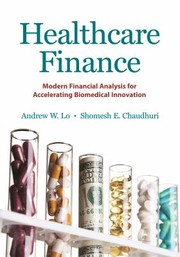
Financial engineering applied to funding biomedical research and drug development.
“Paper, September 2016. Lo, Andrew W., and Shomesh E. Chaudhuri, Healthcare Finance: Modern Financial Analysis for Accelerating Biomedical Innovation (Princeton, NJ: Princeton University Press, 2023)” — Michael Mauboussin
Source: Cost of Capital and Capital Allocation: Investment in the Era of "Easy Money", page 18
Recommended by: Michael Mauboussin
 Aswath Damodaranwrote 7 books here
 Alfred Rappaportwrote 2 books here
 Andrew W. Lowrote 1 book here
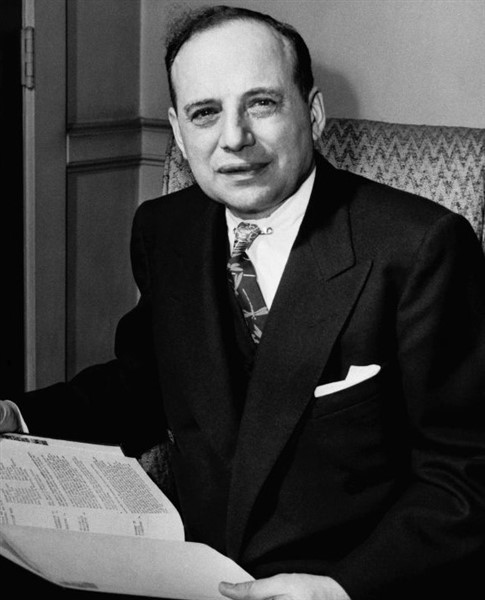 Benjamin Grahamwrote 1 book here
 David L. Doddwrote 1 book here
 Michael Mauboussinwrote 1 book hereMichael Mauboussinrecommends 8 books here
 Mohnish Pabrairecommends 8 books here
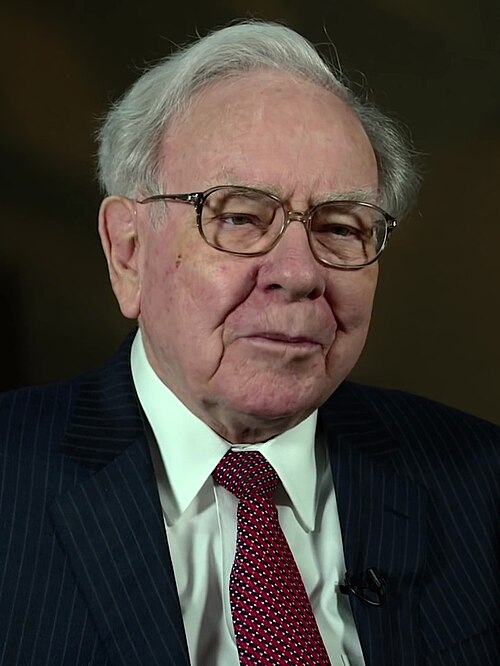 Warren Buffettrecommends 3 books here
 Prem Watsarecommends 2 books here
 Howard Marksrecommends 1 book here
 John C. Boglerecommends 1 book here
 Marc Andreessenrecommends 1 book here
 Bill Millerrecommends 1 book here
Show all 20





- Everything Is a DCF ModelMichael J. Mauboussin · paper · Every multiple is a discounted-cash-flow claim in disguise.
- Examining Valuation MultiplesMichael J. Mauboussin · paper · What a multiple is really a shorthand for.
- The Calculus of ValueHoward Marks · memo · The relationship between price and value, stated plainly.
- An Owner's ManualWarren Buffett · essay · Berkshire's economic principles, including opportunity cost.