
Eugene F. Fama
Nobel laureate economist best known for empirical work on portfolio theory, asset pricing and the efficient-market hypothesis. The efficient-markets framework and the Fama-French factor models are the primary sources on which most modern empirical asset pricing is built.
 University of Chicago Booth School of Business
Start here
- The Theory of FinanceMerton H. Miller, 1972
- Foundations of Finance1976
- The Fama Portfolio: Selected Papers of Eugene F. FamaJohn H. Cochrane, Tobias J. Moskowitz, 2017
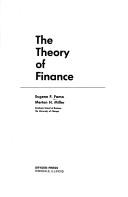
The first graduate textbook to set out financial economics as one theory.
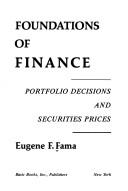
A graduate statement of financial economics' theory and evidence.
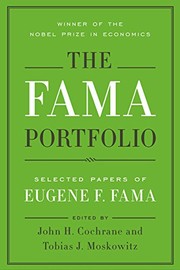
Eugene Fama's key papers on efficient markets and asset pricing, with commentary.
“The book is The Fama Portfolio and it should be on the shelf (after being read! 1 1 Close Actually, hopefully you’ve read a decent amount of these before☺ ) of any serious student of finance.” — Clifford Asness
Source: Add More Fama to Your Portfolio
Recommended by: Clifford Asness
 The Theory of Finance | The first graduate textbook to set out financial economics as one theory. | 1972 | T4 | – |
 Foundations of Finance | A graduate statement of financial economics' theory and evidence. | 1976 | T4 | – |
 The Fama Portfolio: Selected Papers of Eugene F. Fama | Eugene Fama's key papers on efficient markets and asset pricing, with commentary. | 2017 | T4 | Clifford Asness |
| Production of U.S. Rm-Rf, SMB, and HML in the Fama-French Data Library | SSRN / Journal of Finance / Journal of Financial Economics | Research paper | 2023-11-13 |
| Regional Prosperity and Its Spillovers | SSRN / Journal of Finance / Journal of Financial Economics | Research paper | 2023-09-05 |
| A Look Back at Modern Finance: Accomplishments and Limitations | SSRN / Journal of Finance / Journal of Financial Economics | Research paper | 2023-03-01 |
| Stimulus and the Permanent Income Hypothesis | SSRN / Journal of Finance / Journal of Financial Economics | Research paper | 2021-02-22 |
| House Prices and Rents | SSRN / Journal of Finance / Journal of Financial Economics | Research paper | 2020-11-09 |
| Contract Costs, Stakeholder Capitalism, and ESG | SSRN / Journal of Finance / Journal of Financial Economics | Research paper | 2020-10-30 |
| Taxes | SSRN / Journal of Finance / Journal of Financial Economics | Research paper | 2020-09-30 |
| Business Income Taxes | SSRN / Journal of Finance / Journal of Financial Economics | Research paper | 2020-09-30 |
| The Value Premium | SSRN / Journal of Finance / Journal of Financial Economics | Research paper | 2020-01-27 |
| Property Taxes | SSRN / Journal of Finance / Journal of Financial Economics | Research paper | 2019-08-19 |
| Government and Nonprofits | SSRN / Journal of Finance / Journal of Financial Economics | Research paper | 2019-06-28 |
| Wealth Taxes | SSRN / Journal of Finance / Journal of Financial Economics | Research paper | 2019-06-14 |
| Taxes: A Simple Scheme | SSRN / Journal of Finance / Journal of Financial Economics | Research paper | 2019-06-14 |
| Interest Rates and Inflation Revisited | SSRN / Journal of Finance / Journal of Financial Economics | Research paper | 2018-10-18 |
| Comparing Cross-Section and Time-Series Factor Models | SSRN / Journal of Finance / Journal of Financial Economics | Research paper | 2018-10-16 |
| Volatility Lessons | SSRN / Journal of Finance / Journal of Financial Economics | Research paper | 2017-12-04 |
| Long-Horizon Returns | SSRN / Journal of Finance / Journal of Financial Economics | Research paper | 2017-05-24 |
| Multifactor Portfolio Efficiency and Multifactor Asset Pricing | SSRN / Journal of Finance / Journal of Financial Economics | Research paper | 2015-11-26 |
| Cross-Section Versus Time-Series Tests of Asset Pricing Models | SSRN / Journal of Finance / Journal of Financial Economics | Research paper | 2015-11-03 |
| Choosing Factors | SSRN / Journal of Finance / Journal of Financial Economics | Research paper | 2015-10-02 |
| International Tests of a Five-Factor Asset Pricing Model | SSRN / Journal of Finance / Journal of Financial Economics | Research paper | 2015-06-26 |
| Incremental Variables and the Investment Opportunity Set | SSRN / Journal of Finance / Journal of Financial Economics | Research paper | 2014-10-15 |
| Dissecting Anomalies with a Five-Factor Model | SSRN / Journal of Finance / Journal of Financial Economics | Research paper | 2014-10-01 |
| A Five-Factor Asset Pricing Model | SSRN / Journal of Finance / Journal of Financial Economics | Research paper | 2013-06-30 |
| Two Pillars of Asset Pricing (Nobel Prize lecture) | The Nobel Foundation | Speech | 2013 |
| Was There Ever a Lending Channel? | SSRN / Journal of Finance / Journal of Financial Economics | Research paper | 2012-12-20 |
| Does the Fed Control Interest Rates? | SSRN / Journal of Finance / Journal of Financial Economics | Research paper | 2012-08-05 |
| Size, Value, and Momentum in International Stock Returns | SSRN / Journal of Finance / Journal of Financial Economics | Research paper | 2010-12-05 |
| My Life in Finance | SSRN / Journal of Finance / Journal of Financial Economics | Research paper | 2010-02-15 |
| Luck Versus Skill in the Cross Section of Mutual Fund Returns | SSRN / Journal of Finance / Journal of Financial Economics | Research paper | 2009-03-10 |
| The Profitability and Equity Financing of Style Groups: 1906-2006 | SSRN / Journal of Finance / Journal of Financial Economics | Research paper | 2008-07-15 |
| Capital Structure Choices | SSRN / Journal of Finance / Journal of Financial Economics | Research paper | 2008-04-15 |
| Average Returns, B/M, and Share Issues | SSRN / Journal of Finance / Journal of Financial Economics | Research paper | 2007-05-20 |
| Migration | SSRN / Journal of Finance / Journal of Financial Economics | Research paper | 2006-08-28 |
| Dissecting Anomalies | SSRN / Journal of Finance / Journal of Financial Economics | Research paper | 2006-06-26 |
| Disagreement, Tastes, and Asset Prices | SSRN / Journal of Finance / Journal of Financial Economics | Research paper | 2005-11-17 |
| The Anatomy of Value and Growth Stock Returns | SSRN / Journal of Finance / Journal of Financial Economics | Research paper | 2005-09-28 |
| The Value Premium and the CAPM | SSRN / Journal of Finance / Journal of Financial Economics | Research paper | 2005-03-16 |
| Profitability, Growth, and Average Returns | SSRN / Journal of Finance / Journal of Financial Economics | Research paper | 2004-07-30 |
| The Behavior of Interest Rates | SSRN / Journal of Finance / Journal of Financial Economics | Research paper | 2004-05-25 |
| Editorial: Clinical Papers and Their Role in the Development of Financial Economics | SSRN / Journal of Finance / Journal of Financial Economics | Research paper | 2003-11-28 |
| The Capital Asset Pricing Model: Theory and Evidence | SSRN / Journal of Finance / Journal of Financial Economics | Research paper | 2003-09-16 |
| Financing Decisions: Who Issues Stock? | SSRN / Journal of Finance / Journal of Financial Economics | Research paper | 2003-08-13 |
| New Lists: Fundamentals and Survival Rates | SSRN / Journal of Finance / Journal of Financial Economics | Research paper | 2003-05-07 |
| Organizational Forms and Investment Decisions | SSRN / Journal of Finance / Journal of Financial Economics | Research paper | 2000-10-24 |
| The Equity Premium | SSRN / Journal of Finance / Journal of Financial Economics | Research paper | 2000-07-20 |
| Size and Book to Market Factors in Earnings and Returns | SSRN / Journal of Finance / Journal of Financial Economics | Research paper | 2000-05-10 |
| Disappearing Dividends: Changing Firm Characteristics or Lower Propensity to Pay? | SSRN / Journal of Finance / Journal of Financial Economics | Research paper | 2000-02-03 |
| Testing Tradeoff and Pecking Order Predictions About Dividends and Debt | SSRN / Journal of Finance / Journal of Financial Economics | Research paper | 1999-12-15 |
| Separation of Ownership and Control | SSRN / Journal of Finance / Journal of Financial Economics | Research paper | 1998-11-29 |
| Agency Problems and Residual Claims | SSRN / Journal of Finance / Journal of Financial Economics | Research paper | 1998-11-29 |
| Characteristics, Covariances, and Average Returns: 1929-1997 | SSRN / Journal of Finance / Journal of Financial Economics | Research paper | 1998-08-12 |
| The Corporate Cost of Capital and the Return on Corporate Investment | SSRN / Journal of Finance / Journal of Financial Economics | Research paper | 1998-08-11 |
| Multifactor Explanations of Asset Pricing Anomalies | SSRN / Journal of Finance / Journal of Financial Economics | Research paper | 1998-06-28 |
| Forecasting Profitability and Earnings | SSRN / Journal of Finance / Journal of Financial Economics | Research paper | 1997-11-13 |
| Value Versus Growth: The International Evidence | SSRN / Journal of Finance / Journal of Financial Economics | Research paper | 1997-05-01 |
| Market Efficiency, Long-Term Returns, and Behavioral Finance | SSRN / Journal of Finance / Journal of Financial Economics | Research paper | 1997-04-30 |
| Determining the Number of Priced State Variables in the ICAPM | SSRN / Journal of Finance / Journal of Financial Economics | Research paper | 1997-03-05 |
| Taxes, Financing Decisions, and Firm Value | SSRN / Journal of Finance / Journal of Financial Economics | Research paper | 1997-02-01 |
| Investment Decisions, Financing Decisions, and Firm Value | SSRN / Journal of Finance / Journal of Financial Economics | Research paper | 1997-01-27 |
| Discounting Under Uncertainty | SSRN / Journal of Finance / Journal of Financial Economics | Research paper | 1996-12-18 |
| Common Risk Factors in the Returns on Stocks and Bonds | Journal of Financial Economics | Research paper | 1993 |
| Efficient Capital Markets: A Review of Theory and Empirical Work | The Journal of Finance | Research paper | 1970 |
| Random Walks in Stock-Market Prices | Financial Analysts Journal | Research paper | 1965 |
| Why Cliff Asness Believes Markets Are Getting Dumber | Capitalisn't | 2025-06-12 | 51 min | Are financial markets becoming less efficient? Famous investor Cliff Asness certainly thinks so. In his paper published last year, “ The Less-Efficient Market Hypothesis ,” Asness argues that social media and low interest rates, among other factors, have distorted market information so that stocks have become disconnected from their true values. This distortion has directed funds toward undeserving assets and firms and staved off necessary market corrections. Asness is the founder, managing principal, and chief investment officer at AQR Capital Management. He is an active researcher on various financial and investment topics and received an MBA and PhD in finance from the University of Chicago Booth School of Business. From her early days as a journalist reporting on Wall Street, Bethany recounts Asness as an outspoken, successful quant investor: one who invests based primarily on the fundamentals of the market rather than those of the firm. She also remembers him being “colloquial” and willing to be “experimental” with ideas. Asness’s recent paper continues that experimental style as he challenges the legacy of the efficient market hypothesis on which his PhD advisor, Nobel Prize laureate Eugene Fama, made his name, and which argues that asset prices reflect all available information, making it impossible to “beat” or outperform the market. |
| Eugene Fama — For Whom Is The Market Efficient? | The Joe Walker Podcast | 2024-12-31 | 55 min | Eugene Fama is a 2013 Nobel laureate in economic sciences, and is widely recognised as the "father of modern finance." He is currently the Robert R. McCormick Distinguished Service Professor of Finance at the University of Chicago. Full transcript available at: https://josephnoelwalker.com/eugene-fama-156/ See omnystudio.com/listener for privacy information. |
| 164. Interview with Eugene Fama (English version) | The Bull - Il tuo podcast di finanza personale | 2024-12-03 | 33 min | Eugene Fama is considered the father of modern finance and was awarded the Nobel Prize in Economics in 2013. In this interview we have discussed about today's market efficiency, factors' premiums, passive investing and much more. Acquista il mio libro, Sei già ricco ma non lo sai Seguiteci anche su Instagram ! =============================================== Investi con Scalable in azioni e ETF a prezzi imbattibili. Migliaia di audiolibri riassunti in 15 minuti con 4Books . L'Assicurazione sulla Vita semplice e conveniente: Turtleneck . I link sono sponsorizzati e l'Autore potrebbe percepire una commissione. =============================================== ATTENZIONE: nessun contenuto di questo podcast deve essere inteso come una raccomandazione di investimento. La citazione di determinati ETF è a mero scopo esemplificativo e non deve essere intesa in alcun modo come una sollecitazione all'acquisto di specifici prodotti finanziari. L'autore non è un consulente finanziario e non intende presentarsi come tale. Investire comporta dei rischi. Affidatevi sempre a dei professionisti e/o assicuratevi sempre di aver compreso pienamente il funzionamento, le implicazioni e i rischi di ciascun prodotto finanziario prima di investirvi del denaro. L'autore non è inoltre affiliato ad alcuna società emittente di prodotti di investimento. Learn more about your ad choices. Visit megaphone.fm/adchoices |
| Professor Kenneth French on Risk, Return, and Rationality | #530 | The Meb Faber Show - Better Investing | 2024-04-19 | 52 min | Today’s guest is Professor Ken French , the Roth Family Distinguished Professor of Finance at the Tuck School of Business at Dartmouth College. He’s written some of the most influential papers in finance alongside former podcast guest, Professor Eugene Fama. In today’s episode, Ken shares what topic he and Professor Fama disagree on. Then we get into a number of topics: what it means to truly be a long-term investor, the global market portfolio, misconceptions around stock buybacks, and much more. (01:17) - Welcome to our guest, Kenneth French (03:35) - Investing in FAANG Stocks: Should You Expect Unexpected Returns? (07:10) - Deciphering an investors skill vs. |
| Episode 5 - Eugene Fama Says Embrace the Randomness | Zions Finest - A Star Wars: Shatterpoint Podcast | 2023-07-17 | 1:03 | I enjoy random walks as much as any econ PhD out of the University of Chicago, but how am I supposed to handle the inability to control my Shatterpoint deck and dice variance?!?!?! (Like many of you, I am also still reeling from Fama sharing the Nobel Prize with Hansen and Shiller. What a wild world we live in.) In this episode, Matt leads a discussion as to how to think about randomness in Shatterpoint, how luck and skill are not mutually exclusive (thanks Richard Garfield), and how to leverage and enjoy both in your gaming. We focus on how Obi-Wan is an exemplary piece in smoothing out randomness in crucial aspects of your matches, but also how randomness can be skill-testing in a way that is extremely satisfying. You will enjoy this discussion. Here's a link to Richard Garfield's lecture on Skill vs. Luck in games. Join the Slack!!! |
| Eugene Fama – A Life in Finance | The Meb Faber Show - Better Investing | 2022-11-19 | 38 min | Today’s guest is the legendary Professor Eugene Fama, a 2013 Nobel laureate and widely recognized as the “father of modern finance.” In today’s episode, we talk to Professor Fama about whether he thinks the Fed can control inflation, where the phrase efficient markets came from, and his take on the global market portfolio. As we wind down, we hear the last time he bought an individual stock. ----- Follow Meb on Twitter , LinkedIn and YouTube For detailed show notes, click here To learn more about our funds and follow us, subscribe to our mailing list or visit us at cambriainvestments.com ----- This episode is sponsored by Masterworks . Masterworks is opening the doors to top-tier, blue-chip art investments to everyone. Visit masterworks.com/meb to skip their wait list. Today’s episode is sponsored by The Idea Farm . The Idea Farm gives you access to over $100,000 worth of investing research, the kind usually read by only the world’s largest institutions, funds, and money managers. Subscribe for free here . ----- Interested in sponsoring the show? Email us at Feedback@TheMebFaberShow.com ----- Past guests include Ed Thorp , Richard Thaler , Jeremy Grantham , Joel Greenblatt , Campbell Harvey , Ivy Zelman , Kathryn Kaminski , Jason Calacanis , Whitney Baker, Aswath Damodaran , Howard Marks , Tom Barton , and many more. ----- Meb's invested in some awesome startups that have passed along discounts to our listeners. Check them out here ! |
| Episode 15 Eugene Fama, University of Chicago Booth School of Business | Middle Market Musings | 2022-01-21 | 42 min | Eugene Fama is the 2013 Nobel laureate in economic sciences, widely recognized as the “father of modern finance.” Professor Fama finds himself in the wrong part of town and ends up on a podcast with Andy and Charlie. Gene Fama is direct, funny, and generous in sharing insights on the evolution of financial markets dating back to his revolutionary efficient market hypothesis, the development of private equity as an asset class alongside of public equity, and a battery of current issues like inflation and cryptocurrency. How good is he? The MMM co-hosts are stunned into good behavior. |
| MIB Live (Replay) with Eugene Fama and David Booth | Masters in Business | 2019-11-08 | 59 min | Bloomberg Opinion Columnist Barry Ritholtz sits down with University of Chicago economist Eugene Fama — a Nobel laureate widely known as "the father of modern finance" — and his onetime student, Dimensional Fund Advisors founder David Booth, for a special Masters in Business conversation. This discussion was broadcast live on Tuesday, November 5. See omnystudio.com/listener for privacy information. |
| Eugene Fama on Finance 01/30/2012 | EconTalk | 2012-01-30 | 1:02 | Eugene Fama of the University of Chicago talks with EconTalk host Russ Roberts about the evolution of finance, the efficient market hypothesis, the current crisis, the economics of stimulus, and the role of empirical work in finance and economics. |
| Eugene Fama: Why Most Investors Should Just Buy Index Funds | Becker Friedman Institute University of Chicago | |||
| Nobel Laureate Explains How to Beat the Markets | Eugene Fama | David Lin | |||
| The Efficient Markets Hypothesis and Modern Finance with Nobel Prize Winner Eugene Fama | Hoover Institution | |||
| Are markets efficient? | Chicago Booth Review | |||
| Prof. Eugene Fama | Rational Reminder 200 | The Rational Reminder Podcast | |||
| Eugene Fama's advice for the next president | Chicago Booth Review | |||
| Eugene Fama Discusses his Career and the World of Finance | The Silk Lectures featuring Nobel Laureates |
 CWhy Cliff Asness Believes Markets Are Getting DumberCapitalisn't · 2025-06-12
 TEugene Fama — For Whom Is The Market Efficient?The Joe Walker Podcast · 2024-12-31
 T164. Interview with Eugene Fama (English version)The Bull - Il tuo podcast di finanza personale · 2024-12-03
 TProfessor Kenneth French on Risk, Return, and Rationality | #530The Meb Faber Show - Better Investing · 2024-04-19
 ZEpisode 5 - Eugene Fama Says Embrace the RandomnessZions Finest - A Star Wars: Shatterpoint Podcast · 2023-07-17
 TEugene Fama – A Life in FinanceThe Meb Faber Show - Better Investing · 2022-11-19
 MEpisode 15 Eugene Fama, University of Chicago Booth School of BusinessMiddle Market Musings · 2022-01-21
 MMIB Live (Replay) with Eugene Fama and David BoothMasters in Business · 2019-11-08
 EEugene Fama on Finance 01/30/2012EconTalk · 2012-01-30
 BEugene Fama: Why Most Investors Should Just Buy Index FundsBecker Friedman Institute University of Chicago
 DNobel Laureate Explains How to Beat the Markets | Eugene FamaDavid Lin
 HThe Efficient Markets Hypothesis and Modern Finance with Nobel Prize Winner Eugene FamaHoover Institution
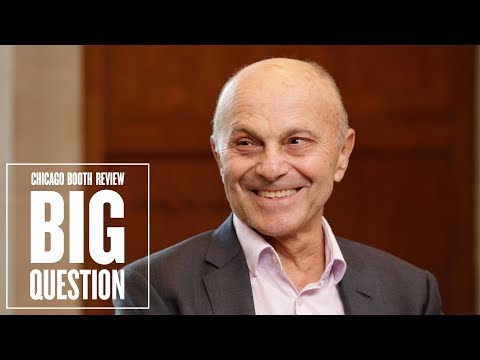 CAre markets efficient?Chicago Booth Review
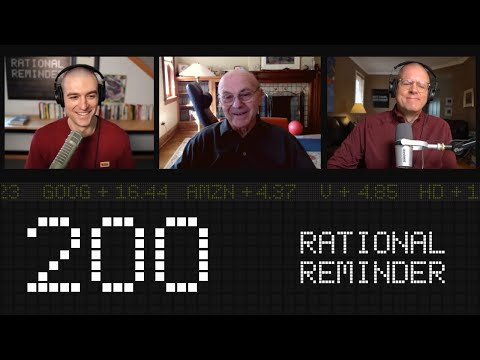 TProf. Eugene Fama | Rational Reminder 200The Rational Reminder Podcast
 CEugene Fama's advice for the next presidentChicago Booth Review
 TEugene Fama Discusses his Career and the World of FinanceThe Silk Lectures featuring Nobel Laureates