 T
Podcast · 46 episodes in the reference, 2016 to 2026
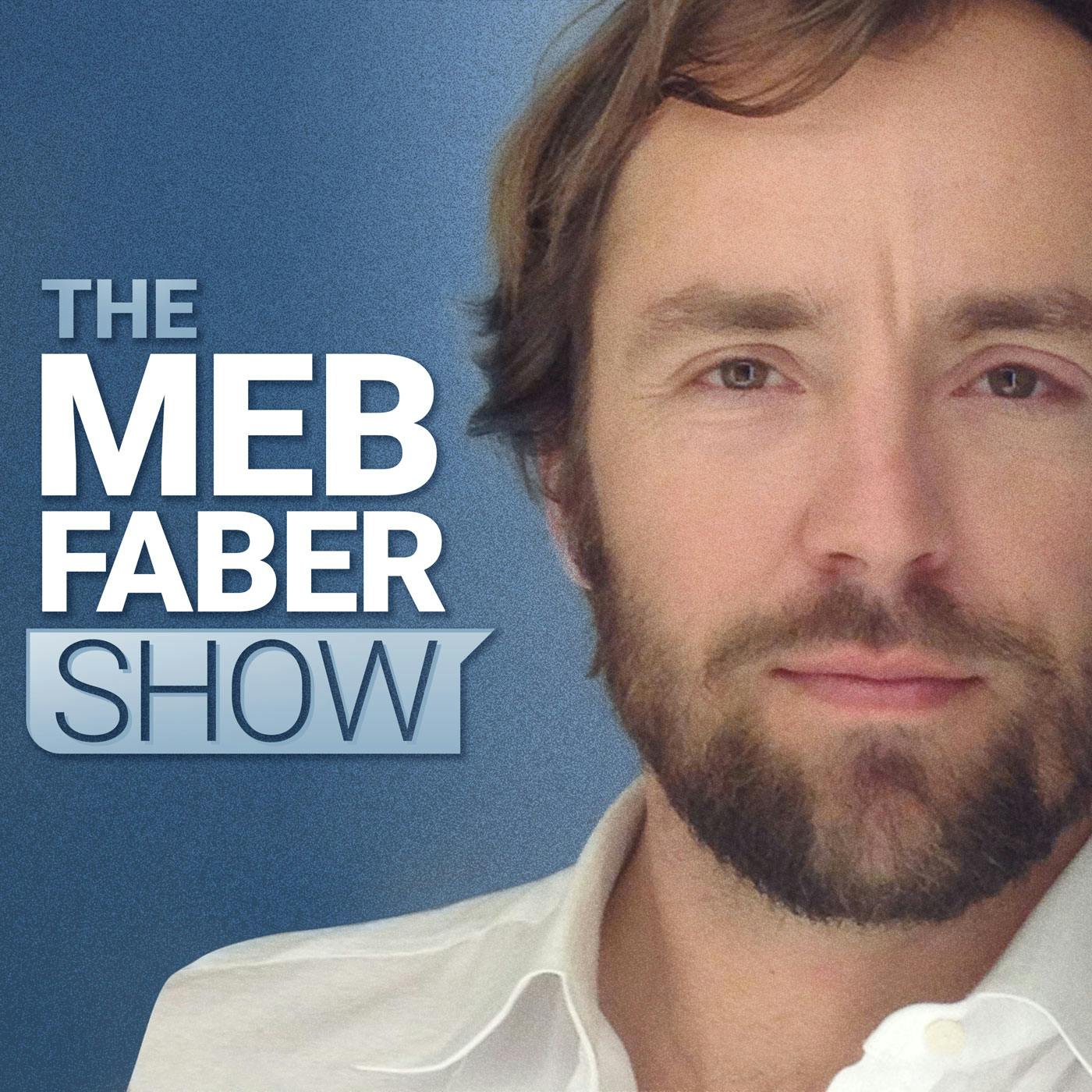
The Meb Faber Show - Better Investing
Published by The Idea Farm
Host
Meb FaberMeb FaberCo-founder, CEO and Chief Investment OfficerCo-founded Cambria Investment Management and writes the Meb Faber Research blog on markets and investing.
Episodes
 Charley Ellis on How America Actually Got Built (Investing in America Series) | #633 | Charles D. Ellis | 8 June 2026 | 51 min | My guest today is Charles Ellis, founder of Greenwich Associates, longtime member of Yale’s investment committee, and author of more than 20 books, including the classic Winning the Loser’s Game. In today’s episode, Charley reflects on writing the first major book on share repurchases 50 years ago, when the idea was so foreign that Goldman mailed it to 1,000 corporations as a “legitimizer.” Charley also walks us through his new book, Great American Investments: A History of the Bold Initiatives that Shaped a Nation, covering 14 audacious public investments from the Louisiana Purchase to the Marshall Plan. He explains how each came down to one or two obsessed individuals, why Alaska turned out to be the bargain of the century, and how Frances Perkins muscled Social Security into law. As the episode winds down, he shares the lunch with Sandy Gottesman in the early 1970s that led him to buy Berkshire Hathaway at $700 a share — and hold it ever since. (0:00) Starts (1:54) Charley on stock buybacks (8:06) Current state of investing and behavioral economics (11:37) Advice for young investors and long-term strategies (16:41) Charley's new book: Great American Investments: A History of the Bold Initiatives that Shaped a Nation (25:42) The origins of social Security (32:46) American entrepreneurship (36:43) Will AI be the next great American investment? |
 The Tax Alpha Arms Race (w/ Wes Gray & Brent Sullivan) | #622 | Wesley R. Gray | 13 March 2026 | 57 min | Today’s guests are Wes Gray, Co-CIO of Alpha Architect, and Brent Sullivan, Editor of Tax Alpha Insider, which is the only publication focused on taxable portfolio strategy. In today’s episode, Brent Sullivan and Wes Gray discuss how to handle concentrated stock positions. They explore the complexities around 351 ETF exchanges, what investors need to know when participating to adhere to tax laws. To close, they examine the rise of tax-managed long-short strategies and how AI may transform tax planning and portfolio management. (0:00) Starts (1:18) Brent Sullivan's background (3:36) Handling concentrated stock positions (7:32) 351 to ETF conversions (14:49) Regulatory scrutiny & IRS enforcement (27:39) Rebalancing, tax implications and practical advisor advice (34:09) Future ETF seeding predictions (39:01) Comparing ETF seeding and portfolio consolidation strategies (45:48) Long short strategies (52:23) Brent Sullivan's book and conference ----- Follow Meb on X , LinkedIn and YouTube For detailed show notes, click here To learn more about our funds and follow us, subscribe to our mailing list or visit us at cambriainvestments.com ----- Follow The Idea Farm: X | LinkedIn | Instagram | TikTok ----- Interested in sponsoring the show? |
 This Could Be Buffett’s Most Misunderstood Trade (It Made $55 Billion) | Tobias Carlisle | Tobias E. Carlisle | 7 October 2025 | 47 min | Today’s guest is Tobias Carlisle, founder of Acquirers Funds and serves as portfolio manager of the firm’s deep value strategy. He’s just released a book called Soldier of Fortune: Warren Buffett, Sun Tzu and the Ancient Art of Risk-Taking . In today’s episode, Toby starts by discussing the current valuation landscape and the challenge for small cap investors. Then he explores the intersection of Warren Buffett’s investment philosophy with Sun Tzu’s teachings. He walks through notable investment case studies, including General Re, Burlington Northern and Japanese trading houses. The case studies all convey the significance of patience, strategic thinking, and the pursuit of asymmetric opportunities in investing, while also addressing the psychological aspects that influence investor behavior. |
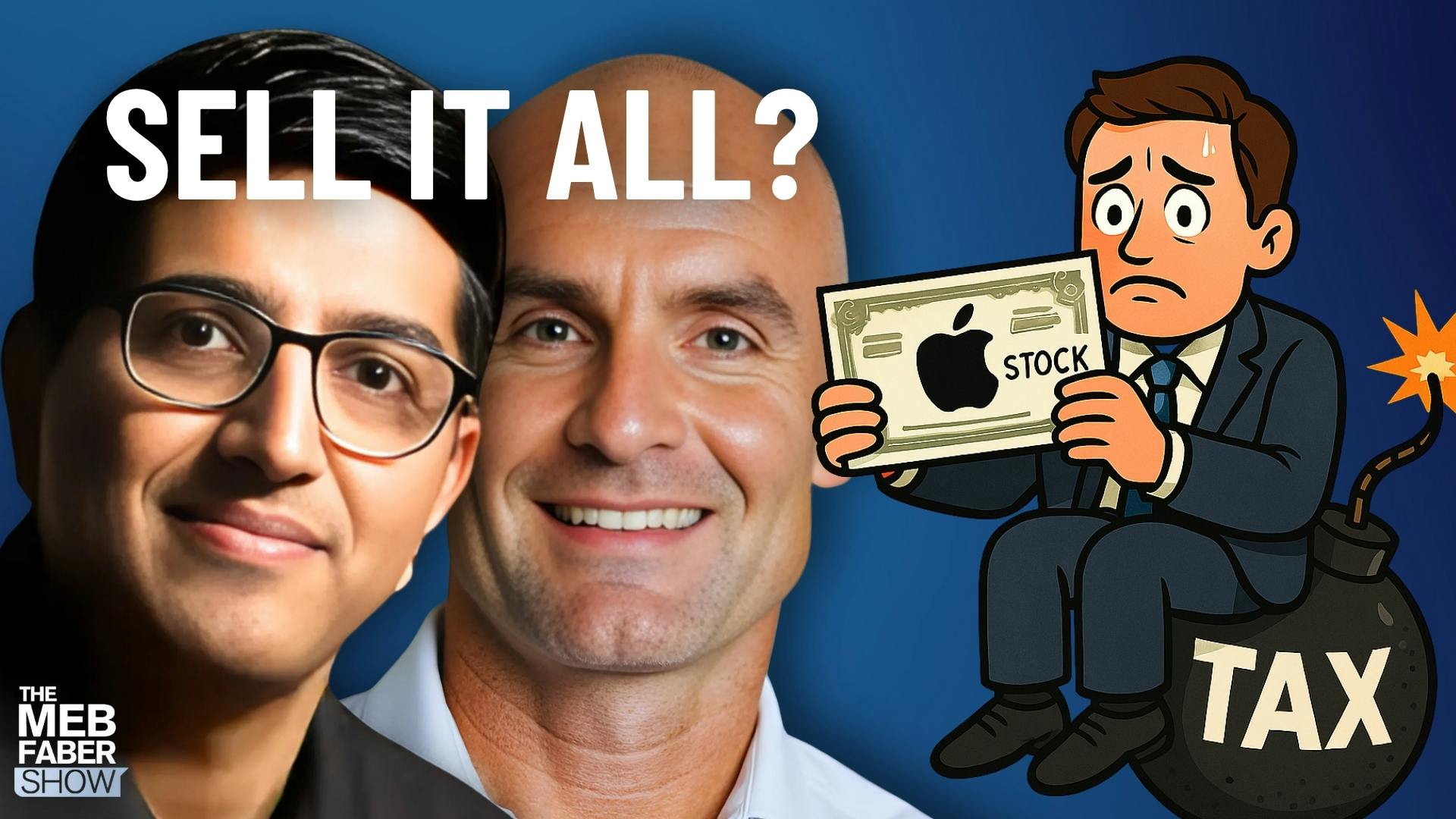 Tax Strategies, Exchange Funds, and Portfolio Optimization with Wes Gray & Srikanth Narayan | #591 | Wesley R. Gray | 18 July 2025 | 47 min | Today’s guests are Wes Gray, founder, CEO and Co-CIO of Alpha Architect, and Srikanth Narayan, founder and CEO of Cache, which he started in 2022 after experiencing concentrated stock positions in his own portfolio. Previously, he served in engineering and product leadership positions at Uber and Alphabet. In today’s episode, Meb, Wes & Srikanth share some big news about a new idea involving both exchange funds and 351 ETF conversions. Srikanth explains the mechanics of exchange funds, the risks associated with stock concentration, and the launch of his newest initiative. The discussion also touches on tax efficiency, fees, the competitive landscape of asset management, and more. Learn more about 351 ETF Exchanges or email us to chat! (0:00) Starts (1:10) Discussion on Section 351 (4:33) Explanation of exchange funds and stock concentration risk (16:25) Case study of the new exchange fund model (20:06) Onboarding and cost structure of the new exchange fund (23:13) Qualifying illiquid assets and cost in tax strategies (31:03) Use cases and investor education on ETF tax benefits (34:11) FAQs and the importance of tax alpha (45:23) Reflections on SPACs and speculative markets ----- Follow Meb on X , LinkedIn and YouTube For detailed show notes, click here To learn more about our funds and follow us, subscribe to our mailing list or visit us at cambriainvestments.com ----- Follow The Idea Farm: X | LinkedIn | Instagram | TikTok ----- Interested in sponsoring the show? |
 Passive Investing Is Breaking the Market — Here’s the Hidden Cost (Rob Arnott & Cam Harvey) | Robert D. Arnott | 20 June 2025 | 1:08 | Today’s guests are Rob Arnott, founder and Chairman of the board of Research Affiliates, and Campbell Harvey, Head of Research at Research Affiliates and Professor of Finance at the Fuqua School of Business at Duke University. In today’s episode, Rob and Cam touch on the state of value investing in a megacap dominated market, emphasizing the potential consequences of large scale passive investing. They also touch on the rapid change presented by AI, what it may be capable of, and its impacts on how we should view investing. Finally, they address the global investing environment and macro trends, instability, and the role of government in changing world markets. (0:00) Starts (1:46) Introduction of Rob Arnott & Cam Harvey (7:35) Passive investing risks (14:22) The opportunity in small caps and foreign markets (24:22) Similarities between today & the Dot-Com era (34:43) REITs, gold and investor sentiment (47:14) Government spending & US national debt concerns (1:03:27) US debt service, defense spending, and financial crisis risks (1:05:09) Cam on the inverted yield curve (1:08:09) Closing remarks and listener feedback ----- Follow Meb on X , LinkedIn and YouTube For detailed show notes, click here To learn more about our funds and follow us, subscribe to our mailing list or visit us at cambriainvestments.com ----- Sponsor: YCharts enables financial advisors to make smarter investment decisions and better communicate with clients. |
 Market Titans' Memorable Investments: Jeremy Grantham, John Arnold & Sam Zell Share | Jeremy Grantham | 2 May 2025 | 16 min | Today’s episode features the most memorable investments from Jeremy Grantham, John Arnold and Sam Zell. (0:00) Starts (0:53) Jeremy Grantham (5:25) John Arnold (8:24) Sam Zell To listen to the full episodes, click the links below: Jeremy Grantham I : Apple , Spotify , YouTube Jeremy Grantham II : Apple , Spotify , YouTube John Arnold : Apple , Spotify , YouTube Sam Zell : Apple , Spotify , YouTube ----- Follow Meb on X , LinkedIn and YouTube For detailed show notes, click here To learn more about our funds and follow us, subscribe to our mailing list or visit us at cambriainvestments.com ----- Follow The Idea Farm: X | LinkedIn | Instagram | TikTok ----- Interested in sponsoring the show? Email us at Feedback@TheMebFaberShow.com ----- Past guests include Ed Thorp , Richard Thaler , Jeremy Grantham , Joel Greenblatt , Campbell Harvey , Ivy Zelman , Kathryn Kaminski , Jason Calacanis , Whitney Baker, Aswath Damodaran , Howard Marks , Tom Barton , and many more. ----- Meb's invested in some awesome startups that have passed along discounts to our listeners. Check them out here ! ----- Editing and post-production work for this episode was provided by The Podcast Consultant ( https://thepodcastconsultant.com ). |
 3 Truths Every Value Investor Should Remember (Francois Rochon Reveals) | Francois Rochon | 8 April 2025 | 1:02 | Today’s guest is Francois Rochon, the President of Giverny Capital, which has returned over 15% per year for over 30 years. In today’s episode, Francois walks through the influence of Peter Lynch and Warren Buffett on his investment philosophy. He highlights three principles that have helped him navigate market cycles in his career: patience, humility and rationality. We also walk through some of the lessons learned from his investment mistakes, which he highlights in his annual letters. (0:00) Starts (0:48) Introducing Francois Rochon (5:15) Tech bubble lessons (10:13) Investment mistakes (18:01) The real expenses of stock-based compensation (25:01) Focus on company fundamentals in the long-run (34:40) Evaluating Berkshire Hathaway (41:43) Cryptocurrencies and value investing in art (53:12) Handling bear markets (56:42) Francois' most memorable investments ----- Follow Meb on X , LinkedIn and YouTube For detailed show notes, click here To learn more about our funds and follow us, subscribe to our mailing list or visit us at cambriainvestments.com ----- Follow The Idea Farm: X | LinkedIn | Instagram | TikTok ----- Interested in sponsoring the show? Email us at Feedback@TheMebFaberShow.com ----- Past guests include Ed Thorp , Richard Thaler , Jeremy Grantham , Joel Greenblatt , Campbell Harvey , Ivy Zelman , Kathryn Kaminski , Jason Calacanis , Whitney Baker, Aswath Damodaran , Howard Marks , Tom Barton , and many more. |
 100 Unloved Stocks: How Rob Arnott Finds & Invests In Them | Robert D. Arnott | 13 September 2024 | 48 min | Today’s returning guest is Rob Arnott, founder and Chairman of Research Affiliates. In today’s episode, Rob discusses his newest article, ‘ Nixed: The Upside of Getting Dumped ,’ which explores the concept of investing in stocks that have been removed from major indexes. He explains that these ‘dumped’ stocks often outperform the market and thinks investing in a strategy such as this provides an opportunity to invest in deep value, small-cap, and unloved companies. Meb and Rob touch on other topics, including the performance of value investing, the narrative around AI, and the macroeconomic backdrop. (2:01) NIXT overview (16:05) Factors behind the strategy (21:52) Expanding the strategy internationally (24:17) Market concentration (30:26) AI narratives and Nvidia (35:25) Macro conditions & election impacts on markets (45:25) Small cap value ----- Follow Meb on Twitter , LinkedIn and YouTube For detailed show notes, click here To learn more about our funds and follow us, subscribe to our mailing list or visit us at cambriainvestments.com ----- Today's episode is sponsored by YCharts . YCharts enables financial advisors to make smarter investment decisions and better communicate with clients. Get 20% off your initial YCharts Professional subscription when you start your free trial Follow The Idea Farm: Twitter | LinkedIn | Instagram | TikTok ----- Interested in sponsoring the show? |
 This Michael Mauboussin Masterclass Can Make You A Better Investor | Michael Mauboussin | 10 September 2024 | 56 min | Today’s guest is Michael Mauboussin , Head of Consilient Research at Counterpoint Global, a $70 billion equity manager. In today’s episode, Michael covers some of his latest research on market concentration, equity issuance and stock buybacks, and how the boom and bust cycle relates to AI today. He also shares some common attributes among great investors, lessons from Elon Musk & Tesla, and more. (1:31) Guest Introduction: Michael Mauboussin (2:41) Capital allocation and stock-based compensation (9:58) Trivia question on the top performing stock (15:56) Market concentration (23:13) Modern value investing & the rise of intangibles (28:45) Attributes of great investors (33:09) Factors influencing total shareholder returns (42:22) Technology, capitalism, and market predictability (48:15) Indexing, market efficiency & book recommendations (54:10) The Santa Fe Institute's interdisciplinary approach ----- Follow Meb on Twitter , LinkedIn and YouTube For detailed show notes, click here To learn more about our funds and follow us, subscribe to our mailing list or visit us at cambriainvestments.com ----- Today's episode is sponsored by YCharts . YCharts enables financial advisors to make smarter investment decisions and better communicate with clients. Visit YCharts to download their 2024 Election Guide & start your free trial - be sure to mention "Meb" for 20% off your subscription (new clients only). |
 Professor Kenneth French on Risk, Return, and Rationality | #530 | Eugene F. Fama | 19 April 2024 | 52 min | Today’s guest is Professor Ken French , the Roth Family Distinguished Professor of Finance at the Tuck School of Business at Dartmouth College. He’s written some of the most influential papers in finance alongside former podcast guest, Professor Eugene Fama. In today’s episode, Ken shares what topic he and Professor Fama disagree on. Then we get into a number of topics: what it means to truly be a long-term investor, the global market portfolio, misconceptions around stock buybacks, and much more. (01:17) - Welcome to our guest, Kenneth French (03:35) - Investing in FAANG Stocks: Should You Expect Unexpected Returns? (07:10) - Deciphering an investors skill vs. |
 The Biggest Investment Mistake: Billionaire Hedge Fund Cliff Asness Reveals | Clifford Asness | 5 April 2024 | 1:03 | Today’s guest is Cliff Asness , co-founder, managing principal and Chief Investment Officer at AQR Capital Management. In today’s episode, Cliff & I start by talking about some quotes he may or may not have said in the past. Then we kick around a bunch of topics. We talk about diversifying by both asset class and geography, the challenge of managing short-term expectations while keeping a long-term perspective, and how AQR is implementing AI and machine learning in their investment process. (1:20) - Welcome to our guest, Cliff Asness (1:45) - Cliff’s article in the Financial Times (2:30) - Parsing Cliff’s real quotes from fake ones (8:56) - Thoughts on bonds as a diversifier (13:37) - Moving away from market-cap weighting (19:27) - Managing client expectations (29:30) - AQR Data Sets (29:56) - Alternative trend-following (43:48) - Position resizing for alternative strategies (48:06) - AQR implementing AI in their investment process (51:46) - Cliff’s most controversial opinion (57:39) - Cliff’s most memorable investment Learn more about Cliff: AQR ; Twitter ----- Follow Meb on Twitter , LinkedIn and YouTube For detailed show notes, click here To learn more about our funds and follow us, subscribe to our mailing list or visit us at cambriainvestments.com ----- Sponsor : Today’s episode is sponsored by The Idea Farm . |
 How to Convert an SMA to an ETF with Wes Gray & Robert Elwood | #522 | Wesley R. Gray | 23 February 2024 | 44 min | Today’s returning guest is Alpha Architect’s Wes Gray , and he’s joined by Bob Elwood , a business lawyer with a focus on investment funds. Wes and Bob just helped complete a separately managed account to ETF conversion of $770 million, so we had to get them on the show to walk through the process! They walk through the process of doing an SMA to ETF conversion via Section 351 from start to finish. They share some of the more nuances involved in the process and answer some common questions they hear over time. While the most popular ETF story so far this year is the Bitcoin ETF, this is arguably a bigger long-term story and a trend to watch in the next few years. (1:39) - Welcome to our guests, Wes Gray and Robert Elwood; Wes’ prior appearances on the show: how to launch an ETF , 2023 Radio Show , 2021 Radio Show (2:11) - Update on Alpha Architect (2:59) - Overview of converting SMAs to ETFs via Section 351 (13:58) - Mutual fund to ETF conversions versus separate account to ETF conversions (19:34) - Weighing the advantages and disadvantages of SMA to ETF conversions (26:01) - Is Your Alpha Big Enough to Cover Its Taxes? A 25 Year Retrospective (26:35) - The case for the tax-free conversion of SMAs into an ETF via Section 351 (34:35) - Alpha Architect’s connection to former Presidential candidate Vivek Ramaswamy (36:37) - Esoteric examples of SMA to ETF conversions (38:06) - When does it not make sense to do a conversion? |
 Drew Dickson on Navigating Behavioral Biases, U.S. vs. European Stocks, & Tesla | #520 | Richard H. Thaler | 9 February 2024 | 1:01 | Today’s guest is Drew Dickson , founder of Albert Bridge Capital and CIO of Alpha Europe funds. We talk a lot about global investing on this show and wanted to talk about that with Drew given his focus on European markets. Between the end of 1979 and the end of 2009, both the U.S. and Europe were 26 baggers and roughly had the same returns. Since then? The U.S. has returned 15% per year while Europe has returned just 8% per year. We spend a lot of time on whether this will continue. We also talk about the impact former guest and Nobel Laureate Richard Thaler had on his investment philosophy, the importance of shedding our biases to generate alpha, his valuation of Tesla, and much more. (1:32) - Welcome Drew the show (2:17) - Drew’s time learning from Richard Thaler (8:50) - Handling behavioral biases (11:39) - Experiencing the tech bubble in Europe (15:46) - Drew’s focus on investing in European firms (28:43) - Where Drew sees opportunity today (40:28) - Tesla (54:22) - Drew’s most memorable investment ----- Follow Meb on Twitter , LinkedIn and YouTube For detailed show notes, click here To learn more about our funds and follow us, subscribe to our mailing list or visit us at cambriainvestments.com ----- Sponsor: Today's episode is sponsored by YCharts . YCharts enables financial advisors to make smarter investment decisions and better communicate with clients. |
 Mohnish Pabrai on Cloning & Compounding | Mohnish Pabrai | 16 August 2023 | 1:15 | Today’s guest is Mohnish Pabrai , founder and Managing Partner of the Pabrai Investments Funds, which he started in 1999 and has since built an incredible track record. In today’s episode, Mohnish talks about his love for bridge, what his friend Warren Buffett’s online bridge name is, his philanthropic endeavors, opportunities he sees in Turkey and India, and what he would do with the Apple position today if he was running Berkshire Hathaway. (0:39) - Sponsor: YCharts (1:26) - Intro (2:00) - Episode begins (5:57) - Mohnish’s educational background (11:37) - Revived love for Bridge (18:00) - The magic of compounding (24:57) - Dakshana provides intense prep for competitive exams to underprivileged kids (38:54) - Investing long-term in high-conviction bets regardless of error rates (42:51) - Think like a founder, hold onto investments long-term despite drawdowns (46:32) - If he worked at Berkshire, would he sell or hold Apple today? (48:53) - What interested Mohnish in Turkey & India? (1:02:45) - Which tech stocks would Bill Gates buy? (1:06:51) - Mohnish’s most memorable investment (1:11:57) - Narrow expertise depth, no need to know everything about everything ----- Follow Meb on Twitter , LinkedIn and YouTube For detailed show notes, click here To learn more about our funds and follow us, subscribe to our mailing list or visit us at cambriainvestments.com ----- Today's episode is sponsored by YCharts . |
 William Bernstein: Most Investors Are Chasing the Wrong Stocks | William J. Bernstein | 19 July 2023 | 51 min | Today’s returning guest is Dr. William Bernstein, a neurologist turned investment advisor. Bill’s an author of several books and just released an updated edition of The Four Pillars of Investing , which came out over 20 years ago. In today’s episode, Dr. Bernstein shares two key updates since the first edition. Then we walk through some his best quotes and tie them to both timeless topics and current events like the AI craze and the media’s love for star managers. Click here to listen to Dr. Bernstein’s last appearance on the podcast. ----- Follow Meb on Twitter , LinkedIn and YouTube For detailed show notes, click here To learn more about our funds and follow us, subscribe to our mailing list or visit us at cambriainvestments.com ----- Today’s episode is sponsored by The Idea Farm . The Idea Farm gives you access to over $100,000 worth of investing research, the kind usually read by only the world’s largest institutions, funds, and money managers. Subscribe for free here . Follow The Idea Farm: Twitter | LinkedIn | Instagram | Tik Tok ----- Interested in sponsoring the show? Email us at Feedback@TheMebFaberShow.com ----- Past guests include Ed Thorp , Richard Thaler , Jeremy Grantham , Joel Greenblatt , Campbell Harvey , Ivy Zelman , Kathryn Kaminski , Jason Calacanis , Whitney Baker, Aswath Damodaran , Howard Marks , Tom Barton , and many more. ----- Meb's invested in some awesome startups that have passed along discounts to our listeners. Check them out here ! |
 Burton Malkiel - Applying 'A Random Walk' to the World Today | Burton G. Malkiel | 31 May 2023 | 46 min | Today’s guest is Dr. Burton Malkiel, a legendary economist, Chief Investment Officer of Wealthfront, and author of one of the most widely read investment books ever, A Random Walk Down Wall Street , which recently came out in the 50th edition. In today’s episode, Dr. Malkiel shares what’s changed in the latest update of his book, touching on the role of bonds given higher yields today, the impact of inflation, and why it may be time to consider adding I Bonds to your portfolio. Then we talk about some current investment trends. He pushes back on the ESG-craze, discusses the recent underperformance of risk parity, and suggests you look at your portfolio to be sure you aren’t overallocated to US stocks today. ----- Follow Meb on Twitter , LinkedIn and YouTube For detailed show notes, click here To learn more about our funds and follow us, subscribe to our mailing list or visit us at cambriainvestments.com ----- Today's episode is sponsored by YCharts . YCharts enables financial advisors to make smarter investment decisions and better communicate with clients. YCharts offers a suite of intuitive tools, including numerous visualizations, comprehensive security screeners, portfolio construction, communication outputs, and market monitoring. Visit YCharts to start your free trial and be sure to mention "Meb" for 20% off your subscription. (New clients only). Today’s episode is sponsored by The Idea Farm . |
 Jim Chanos & Bethany McLean on Lessons from Enron, Financial Fraud, & the Fall of FTX & SVB | Bethany McLean | 6 May 2023 | 1:12 | Today’s guests are Jim Chanos , famed short-seller and founder of Kynikos Associates, and Bethany McLean , contributing editor at Vanity Fair and the author of multiple books, including The Smartest Guys in the Room: The Amazing Rise and Scandalous Fall of Enron . In today’s episode, Jim & Bethany cover all aspects of fraud. They share where we are in both the financial cycle and the fraud cycle, why we continue to see frauds since they first connected about Enron over 20 years ago, and the thin line between a visionary and a fraudster. We discuss the anti-short seller rhetoric that pops up every few months, the impact of social media on the rise and fall of companies, and the impact of stock-based compensation and adjusted earnings. As we wind down, Jim shares his concerns about the commercial real estate sector, and Bethany gives a preview of her book releasing this October. ----- Follow Meb on Twitter , LinkedIn and YouTube For detailed show notes, click here To learn more about our funds and follow us, subscribe to our mailing list or visit us at cambriainvestments.com ----- Today’s episode is sponsored by Farmland LP . Farmland LP is one of the largest investment funds in the US focused on converting chemical-based conventional farmland to organic, sustainably-managed farmland using a value-add commercial real estate strategy in the agriculture sector. Since 2009, they have built a 15,000-acre portfolio representing over $200M in AUM. |
 Sam Zell - The Grave Dancer on Private REITs, the Macro Landscape, & Timeless Investing Wisdom | Sam Zell | 26 April 2023 | 53 min | Today’s guest is the Grave Dancer himself, Sam Zell, founder and chairman of Equity Group Investments, a private investment firm he founded more than 50 years ago. Sam’s thought to be the most successful real estate investor of all time and the man who known for his enormous success in real estate and “made REITs dance,” popularizing the REIT structure that’s commonplace today. He’s also been a successful investor in areas like energy, logistics, and health care. Today’s episode starts off with Sam’s take on the withdrawal limits for private REITs over the past few months from the lens of his quote, “liquidity equals value.” He shares his view on different areas of the real estate market, why he’s been a net seller for 7+ years, and some lessons from being a constant deal maker during his career. As we wind down, Sam shares some advice for President Biden on how to help the economy and how to encourage more entrepreneurship in the US, and I promise you won’t want to miss his most memorable investment. *To listen to more on Sam’s fascinating background, we suggest listening to his episode on The Tim Ferriss Show podcast here ----- Follow Meb on Twitter , LinkedIn and YouTube For detailed show notes, click here To learn more about our funds and follow us, subscribe to our mailing list or visit us at cambriainvestments.com ----- Today’s episode is sponsored by Farmland LP . |
 Richard Thaler & Cade Massey on the NFL Draft, Misbehaving GM's, & Exploiting Inefficiencies | Richard H. Thaler | 19 April 2023 | 1:00 | Today’s special episode is to prepare you for the NFL draft next week. Nobel laureate Richard Thaler is back with Wharton’s Cade Massey to talk about their famous paper on the NFL draft that even the GOAT Bill Belichick read. The guys share what they learned years ago – NFL teams overvalue the top picks, shouldn’t trade up, and even after all the scouting teams do, their ability to pick the best player at any pick is about the same as flipping a coin. We talk about why the Bears won the trade against the Panthers this year, what they think about Mr. Irrelevant Brock Purdy’s success last year, and the future of data analytics in sports. As we wind down, we dive into why this inefficiency still exists after they published a paper almost 20 years ago and how teams battle some of the same issues asset managers face – career risk, impatient stakeholders, and model aversion. *Click here to listen to Richard Thaler’s first appearance on the podcast **If you enjoyed this episode, listen to poker champion & decision-making expert Annie Duke on the show last year ----- Follow Meb on Twitter , LinkedIn and YouTube For detailed show notes, click here To learn more about our funds and follow us, subscribe to our mailing list or visit us at cambriainvestments.com ----- Today's episode is sponsored by YCharts . YCharts enables financial advisors to make smarter investment decisions and better communicate with clients. |
 Wes Gray & Jack Vogel, Alpha Architect - BOXX, HIDE, & Why Trend Following is Timeless | Wesley R. Gray | 5 April 2023 | 1:11 | Today’s returning guests are Alpha Architect’s Wes Gray & Jack Vogel . In today’s episode, we kick it off with an update on the ETF white-label business and some of their new funds, BOXX and HIDE . Then we talk about why you need to think more about taxes when investing, the state of value, why trend-following is timeless, and what the most embarrassing moment in each of our careers. I-was-speechless. Before we get to the episode, Wes’ brother was recently on Joe Rogan’s podcast and helped Joe get a bunch of reviews, so help Wes compete with his brother and go leave us a review on Apple, Spotify, or wherever you listen to the show! To learn more about their latest offering, visit farmlandlp.com or email them at ir@farmland.com. Resources: Long-Only Value Investing: Does Size Matter? Published articles ----- Follow Meb on Twitter , LinkedIn and YouTube For detailed show notes, click here To learn more about our funds and follow us, subscribe to our mailing list or visit us at cambriainvestments.com ----- Today’s episode is sponsored by Farmland LP . Farmland LP is one of the largest investment funds in the US focused on converting chemical-based conventional farmland to organic, sustainably-managed farmland using a value-add commercial real estate strategy in the agriculture sector. Since 2009, they have built a 15,000-acre portfolio representing over $200M in AUM. Today’s episode is sponsored by The Idea Farm . |
 Top Podcasts of 2022: Rob Arnott & Campbell Harvey, Whitney Baker, Harris “Kuppy” Kupperman, Marc Cohodes, & Peter Zeihan | #461 | Robert D. Arnott | 28 December 2022 | 3 min | Today we’re sharing our 5 most popular episodes from 2022! We know it’s hard to listen to every episode, so we have the most downloaded episodes for you right here! If you click the link in the description below, you can jump to the episode you want to listen to. Here are the top 5 in no specific order: 1. In August, we were joined by both Rob Arnott & Professor Cam Harvey to hear why they didn’t expect to go down as fast as the market was pricing at the time 2. Only one person made it on the show twice this year, and that’s none other than Whitney Baker ! After she nailed the macro landscape back in January, we had to have Whitney back on the show to give us an update of how she sees the world today. 3. Energy prices soared in the first half of 2022, and have since cooled off. But I spoke with my man Harris Kupperman , who you may know as Kuppy, in October on why he is as bullish as he could possibly be. 4. Soon after FTX filed for bankruptcy, I spoke with famed short-seller Marc Cohodes , who talked about the red flags he saw on Sam Bankman-Fried & FTX earlier this year. 5. Back in June, I spoke with geopolitical expert Peter Zeihan on the implications of deglobalization, depopulation, and the Russia/Ukraine war Thanks to everyone for a great 2022 and we wish you and your family a healthy and happy 2023. |
 Eugene Fama – A Life in Finance | Eugene F. Fama | 19 November 2022 | 38 min | Today’s guest is the legendary Professor Eugene Fama, a 2013 Nobel laureate and widely recognized as the “father of modern finance.” In today’s episode, we talk to Professor Fama about whether he thinks the Fed can control inflation, where the phrase efficient markets came from, and his take on the global market portfolio. As we wind down, we hear the last time he bought an individual stock. ----- Follow Meb on Twitter , LinkedIn and YouTube For detailed show notes, click here To learn more about our funds and follow us, subscribe to our mailing list or visit us at cambriainvestments.com ----- This episode is sponsored by Masterworks . Masterworks is opening the doors to top-tier, blue-chip art investments to everyone. Visit masterworks.com/meb to skip their wait list. Today’s episode is sponsored by The Idea Farm . The Idea Farm gives you access to over $100,000 worth of investing research, the kind usually read by only the world’s largest institutions, funds, and money managers. Subscribe for free here . ----- Interested in sponsoring the show? Email us at Feedback@TheMebFaberShow.com ----- Past guests include Ed Thorp , Richard Thaler , Jeremy Grantham , Joel Greenblatt , Campbell Harvey , Ivy Zelman , Kathryn Kaminski , Jason Calacanis , Whitney Baker, Aswath Damodaran , Howard Marks , Tom Barton , and many more. ----- Meb's invested in some awesome startups that have passed along discounts to our listeners. Check them out here ! |
 Rob Arnott & Campbell Harvey on Why They Believe Inflation Hasn’t Peaked | Robert D. Arnott | 29 August 2022 | 1:08 | Today’s guests are Rob Arnott , founder and Chairman of the board of Research Affiliates, and Campbell Harvey , Head of Research at Research Affiliates and Professor of Finance at the Fuqua School of Business at Duke University. In today’s episode, Rob and Cam touch on the state of the economy, Cam’s research recessions and yield curve inversions, and why the Fed is not positioned to handle the inflation crisis we have today. They share why they both have a non-consensus view that inflation hasn’t peaked yet. Then they touch on what areas of the market look attractive today. Be sure to stick around until the end when we chat with Cam on his interest in DeFi and what he’s most excited about in the space. To listen to Rob Arnott’s appearance in May 2021, click here To listen to Campbell Harvey’s appearance in August 2019, click here ----- Follow Meb on Twitter , LinkedIn and YouTube For detailed show notes, click here To learn more about our funds and follow us, subscribe to our mailing list or visit us at cambriainvestments.com ----- Today’s episode is sponsored by The Idea Farm . The Idea Farm gives you access to over $100,000 worth of investing research, the kind usually read by only the world’s largest institutions, funds, and money managers. Subscribe for free here . ----- Interested in sponsoring the show? |
 How Cheap Money Broke Capitalism (Edward Chancellor) | Edward Chancellor | 17 August 2022 | 1:00 | Today’s guest is Edward Chancellor, financial historian, author of Devil Take the Hindmost , and previously part of GMO’s Asset Allocation team. He’s out with a new book yesterday called The Price of Time: The Real Story of Interest , which is equal parts history, financial education and philosophy. In today’s episode, Edward walks through how interest, debt and money printing are related to things we’ve seen in society today and the past few years: zombie companies, bubbles, and massive amounts of paper wealth. Then he narrows in on current day and shares why he believes low interest rates are causing the slow growth environment the world’s been stuck in over recent times, along with the bad kind of wealth inequality. ----- Follow Meb on Twitter , LinkedIn and YouTube For detailed show notes, click here To learn more about our funds and follow us, subscribe to our mailing list or visit us at cambriainvestments.com ----- This episode is sponsored by Masterworks . Masterworks is opening the doors to top-tier, blue-chip art investments to everyone. Visit masterworks.com/meb to skip their wait list. ----- Interested in sponsoring the show? Email us at Feedback@TheMebFaberShow.com ----- Past guests include Ed Thorp , Richard Thaler , Jeremy Grantham , Joel Greenblatt , Campbell Harvey , Ivy Zelman , Kathryn Kaminski , Jason Calacanis , Whitney Baker, Aswath Damodaran , Howard Marks , Tom Barton , and many more. |
 Michael Mauboussin, Counterpoint Global – Everything Is a DCF Model | Michael Mauboussin | 5 August 2022 | 27 min | Today’s episode features Michael Mauboussin reading his piece, Everything Is a DCF Model . Michael is Head of Consilient Research on Counterpoint Global at Morgan Stanley Investment Management. He joined Morgan Stanley in 2020 and has 33 years of investment experience. The Best Investment Writing series features top research pieces that we’ve shared via The Idea Farm in the past year. Subscribe here so you get these sent to you each week. Check out the past series of The Best Investment Writing below: Volume 5 Volume 4 Volume 3 Volume 2 Volume 1 ----- Follow Meb on Twitter , LinkedIn and YouTube For detailed show notes, click here To learn more about our funds and follow us, subscribe to our mailing list or visit us at cambriainvestments.com ----- Today’s episode is sponsored by Stream by AlphaSense . Stream is an expert transcript library used by people just like you to quickly perform preliminary diligence on new ideas related to their target companies in the tech, media, telecom, healthcare, consumer and industrial sectors; avoiding the time, hassle, and cost of traditional expert network calls. With over 15,000 on-demand expert call interviews, 100+ new transcripts added each day, AI smart search technology, and 70% of our experts unique to our network, it's no wonder the world's leading financial firms choose Stream. Sponsor dollars for the entire Best Investment Writing series are being donated to the charity of the guest’s choice. |
 Dan Ariely, Irrational Capital – Investing in Human Capital | Dan Ariely | 28 June 2022 | 53 min | Today’s guest is Dan Ariely , a Founding Partner of Irrational Capital, leading behavioral economist, and author of six books. Dan’s Ted Talks have been viewed over 10 million times. In today’s episode, Dan starts by sharing what some of his research around finance and investing. We touch on how we can encourage people to save more, the mental challenges with hedging, retirement planning, and why he’s a fan of annuities. Then we dive into his newest project, Irrational Capital , and the launch of an ETF with a killer ticker: HAPY . He shares an overview of the strategy and what research into the Human Capital factor says about what leaders can do to help their employees and company thrive. Interested in hearing from another behavioral economist? Check out episode 337 with Nobel laureate Richard Thaler . ----- Follow Meb on Twitter , LinkedIn and YouTube For detailed show notes, click here To learn more about our funds and follow us, subscribe to our mailing list or visit us at cambriainvestments.com ----- Today's episode is sponsored by the Bonner Private Wine Partnership . Founded in 2019 by Will Bonner, the Bonner Private Wine Partnership is a group of wine lovers who come together to import great, small batch wines that might otherwise get overlooked by large importers. Click here to get 4 bottles of wine for almost half off plus free shipping. ----- Interested in sponsoring the show? |
 Antti Ilmanen, AQR – Investing Amid Low Expected Returns: Making the Most When Markets Offer the Least | #413 | Antti Ilmanen | 9 May 2022 | 1:21 | Today’s guest is Antti Ilmanen , Principal and Global Co-head of the Portfolio Solutions Group at AQR Capital Management and author of Investing Amid Low Expected Returns: Making the Most When Markets Offer the Least . In today’s episode, Antti provides a blueprint for investors as decades of tailwinds are turning into headwinds. He highlights timeless investment practices and what the empirical evidence says about things major asset class premia, illiquidity premia and style premia. He shares his thoughts on home country bias, the value / growth spread today, and what he thinks about diversifiers like trend following. One theme throughout the episode is Antti’s advice to endorse humility in tactical forecasting and through diversification. ----- Follow Meb on Twitter , LinkedIn and YouTube For detailed show notes, click here To learn more about our funds and follow us, subscribe to our mailing list or visit us at cambriainvestments.com ----- Interested in sponsoring the show? Email us at Feedback@TheMebFaberShow.com ----- Past guests include Ed Thorp , Richard Thaler , Jeremy Grantham , Joel Greenblatt , Campbell Harvey , Ivy Zelman , Kathryn Kaminski , Jason Calacanis , Whitney Baker, Aswath Damodaran , Howard Marks , Tom Barton , and many more. ----- Meb's invested in some awesome startups that have passed along discounts to our listeners. Check them out here ! |
 Chris Bloomstran, Semper Augustus– Buffett, Berkshire, & Investing During The Energy Transition | Christopher Bloomstran | 27 April 2022 | 1:57 | Today’s guest is Chris Bloomstran , President & Chief Investment Officer of Semper Augustus. In today’s episode, we touch on a lot . Chris shares why the best investors are those who can pivot, why a good business doesn’t equate to a good stock, and what lessons he learned from buy and sell decisions he’s made over the years. Then we dive into his thoughts on Berkshire and Warren Buffett to get you prepared for the annual meeting this weekend. He shares his expectations for the company and stock moving forward and why he believes Berkshire is well positioned for the energy transition we’re experiencing today. And don’t think we could get through the episode without touching on some of Chris’ “Twitter Audits” from the past few years. ----- Follow Meb on Twitter , LinkedIn and YouTube For detailed show notes, click here To learn more about our funds and follow us, subscribe to our mailing list or visit us at cambriainvestments.com ----- Today’s episode is sponsored by MUD\WTR . MUD/WTR is a coffee alternative that supports your morning ritual without all the anxiety and jitters of coffee. Get your starter kit and free frother at mudwtr.com/meb and use code FABER for 15% off. ----- Interested in sponsoring the show? |
 Jeremy Grantham, GMO – Short-Term Pessimist, Long-Term Optimist | Jeremy Grantham | 9 March 2022 | 47 min | Today’s guest is Jeremy Grantham, the Long-Term Investment Strategist and co-founder of GMO. It’s been about a year since we first spoke with Jeremy and given his knowledge of financial history, there are few people who are better to hear from about what’s happening in the world today than Jeremy. We start by touching on his investment in QuantumScape, which he saw grow to $500 million on paper and later decline by 80%. Then Jeremy shares what he thinks the societal implications will be from a huge potential write down of perceived wealth in the US if this superbubble bursts. He also touches on some of his biggest concerns at the moment: the conflict between Russia and Ukraine, labor and materials shortages, poor demographics, and rising inflation. While Jeremy is frequently referred to as a bear, one of my big takeaways is his optimism and excitement to solve some of the longer-term problems faced around the globe. If you want to hear our conversation with Jeremy from February 2021, click here . ----- Follow Meb on Twitter , LinkedIn and YouTube For detailed show notes, click here To learn more about our funds and follow us, subscribe to our mailing list or visit us at cambriainvestments.com ----- Today’s episode is sponsored by MUD\WTR . MUD\WTR is a coffee alternative that supports your morning ritual without all the anxiety and jitters of coffee. Get your starter kit and free frother at mudwtr.com/meb and use code FABER for 15% off. |
 John Arnold – Why The Greatest Natural Gas Trader Walked Away To Pursue Philanthropy | John Arnold | 26 January 2022 | 1:09 | In episode 386, we welcome our guest, John Arnold , arguably the best natural gas trader of all-time and now one of the largest philanthropists in the US, giving away almost half a billion dollars a year. In today’s episode, we start with John’s rapid rise at Enron and later launching his own fund, Centaurus Advisors, which posted eye-popping returns and led him to become the youngest billionaire in the US in 2007. We talk about the mindset that helped him become a successful trader, and even touch on the time he took the other side of Amaranth Advisors in a famous trade. Then we hear why, before the age of 40, he decided to wind down his fund, focus solely on philanthropy, and commit to giving away most of his fortune during his lifetime. We talk about some of the problems he’s tackling around public finance, election reform and health care, and hear what has surprised and frustrated him along the way. ----- Follow Meb on Twitter , LinkedIn and YouTube Check out Meb's Deals for discounts from a lot of companies For detailed show notes, click here To learn more about our funds and follow us, subscribe to our mailing list or visit us at cambriainvestments.com ----- This episode is sponsored by Masterworks . Masterworks is opening the doors to top-tier, blue-chip art investments to everyone. Visit masterworks.io/meb to skip their wait list. |
 Top Podcasts 2021 – Replay: Jeremy Grantham, Chris Cole, Jeff Seder | Jeremy Grantham | 29 December 2021 | 3:30 | Episode 380 is a replay of The Meb Faber Show’s top podcasts of 2021. Guests include Jeremy Grantham, Chris Cole, & Jeff Seder. (2:53) - Jeremy Grantham puts 2020 in historical context, shares where he sees value outside of the US stock market, and discusses why he's so bullish on venture capital. (1:21:53) - Chris Cole covers the optimal portfolio to help you grow and protect your wealth for the next 100 years. (2:42:31) - Jeff Seder shares the best moneyball story you've never heard. He tells us how he used a quantitative approach to discover 2015 Triple Crown winner, American Pharoah. Click here to listen to the top podcasts of 2020 Click here to listen to the top podcasts of 2019 ----- Follow Meb on Twitter , LinkedIn and YouTube For detailed show notes, click here To learn more about our funds and follow us, subscribe to our mailing list or visit us at cambriainvestments.com ----- Today’s episode is sponsored by GiveWell . GiveWell searches for the charities that save or improve lives the most per dollar. GiveWell recommends a small number of charities that do an incredible amount of good. Visit Givewell.org and donate before the end of the year and have your donation matched up to $250 when you mention "The Meb Faber Show." |
 The Best Investment Writing Volume 5: Campbell Harvey and Michele Mazzoleni, Research Affiliates... | Campbell R. Harvey | 10 September 2021 | 29 min | Last year we brought listeners the entire volume of The Best Investment Writing Volume 4, in audio format, right here on the podcast. Listeners loved it, so we’re running it back again this year with The Best Investment Writing Volume 5. You’ll hear from some of the most respected money managers and investment researchers from all over the planet. Enough from me, let’s let Professor Harvey and Michele take over this special episode. To read the original piece, click here . ----- Follow Meb on Twitter , LinkedIn and YouTube For detailed show notes, visit mebfaber.com/podcast To learn more about our funds and follow us, subscribe to our mailing list or visit us at cambriainvestments.com ----- Today’s episode is sponsored by The Idea Farm . The Idea Farm gives you access to over $100,000 worth of investing research, the kind usually read by only the world’s largest institutions, funds, and money managers. Join today and get access to quarterly CAPE ratios, an excel quant backtester and the entire research library. |
 Radio Show – Wes Gray & Patrick Cleary, Alpha Architect – All Things ETFs | Wesley R. Gray | 3 September 2021 | 1:22 | Episode 347 has a radio show format with Alpha Architect’s Wes Gray and Patrick Cleary . We cover a variety of ETF-related topics, including: - Current state of the ETF space - The ins-and-outs of launching an ETF - Mutual fund conversions, active funds and index funds - Crypto ETF predictions! If you enjoy this episode, be sure to check out episode 258 with Wes Gray on how to launch an ETF. Please enjoy today’s Radio Show with Alpha Architect’s Wes Gray and Patrick Cleary. ----- Follow Meb on Twitter , LinkedIn and YouTube For detailed show notes, click here To learn more about our funds and follow us, subscribe to our mailing list or visit us at cambriainvestments.com ----- Today’s episode is sponsored by The Idea Farm . The Idea Farm gives you access to over $100,000 worth of investing research, the kind usually read by only the world’s largest institutions, funds, and money managers. Join today and get access to quarterly CAPE ratios, an excel quant backtester and the entire research library. |
 Rob Arnott, Research Affiliates - Modern Monetary Theory Does Not Work | Robert D. Arnott | 19 May 2021 | 49 min | In episode 313, we welcome our guest, Rob Arnott, founder and Chairman of Research Affiliates. In today’s episode, we start with the U.S. stock market and why today’s valuations meet Rob’s definition of a bubble. Rob debunks commonly discussed reasons for why stock valuations should be so high and explains why he doesn’t agree with MMT. Then we touch on value stocks and Rob’s recent piece on the lofty valuations for electric vehicles stocks. As we wind down, hear why Rob is bullish on emerging markets value, and what his new trade of the decade is – UK value stocks. Please enjoy this episode with Research Affiliates’ Rob Arnott. |
 Jeremy Grantham, GMO - What Day Is The Highest Level Of Optimism? It’s The Day The Market... | Jeremy Grantham | 8 February 2021 | 1:20 | In episode 286, we welcome our guest, Jeremy Grantham, co-founder and Chief Investment Strategist of GMO. In today’s episode, Jeremy begins by talking about the current market, which he believes will be recorded as one of the great bubbles of financial history. He puts this bubble into historical perspective by comparing it to the Japanese, technology and housing bubbles. Then he addresses the commonly cited argument that low interest rates justify high stock valuations. Next, Jeremy explains why he is so bullish on venture capital and has allocated almost 60% of his foundation to the asset class, making it, as he says, one of the most aggressive portfolios in the philanthropic world. As we wind down, Jeremy explains why he is so passionate about addressing climate change through his foundation, and why China is ahead of the U.S. to address the issue. Please enjoy this episode with GMO’s Jeremy Grantham. |
 Edward Altman, NYU - We Had More Billion Dollar Bankruptcies In 2020 As Of September... | Edward I. Altman | 25 November 2020 | 52 min | In episode 267, we welcome our guest, Edward Altman, professor at the Stern School of Business at NYU. In today’s episode, we’re talking corporate bankruptcy, high yield bonds and credit risk analysis. We talk to Professor Altman about the Altman Z-Score Model, which he created in 1968 to predict bankruptcies. He discusses the record high debt levels companies had at the end of 2019 right before COVID hit the U.S. and what he’s seen this year with a large number of billion dollar bankruptcies. He also touches on the jump in the rate of zombie companies around the world. As we start to wind down, Professor Altman explains why he is bullish on high quality junk bonds and why the happiest moment of his career was testifying in front of Congress in 2008 advocating bankruptcy for GM. All this and more in episode 267 with NYU’s Edward Altman. |
 Joel Greenblatt, Gotham Asset Management -Nine Out Of Ten Families In The Top Fifth Of The... | Joel Greenblatt | 28 October 2020 | 1:02 | In episode 260, we welcome our guest, Joel Greenblatt, Co-Chief Investment Officer of Gotham Asset Management. In today’s episode we’re talking about real proposals for real problems. We dig into topics that touch everyone in our society. We get into long-term savings, (by the way, nearly half of all working age families have zero retirement savings beyond what they might expect from social security) and discuss a novel tweak to the model that might deliver critical retirement savings for people who may not be in a position to save enough for retirement. We touch on our education system, where the core issues stem from, and how education might be able to be improved for all. We talk about the advantages of being open to immigration, and how a movement of alternative certification might spur an ecosystem that can improve how the workforce prepares for jobs and offer more direct ways of demonstrating technical know-how. Make sure you listen all the way to the end, as Joel covers some high level thoughts about how he thinks about value investing and his perspective on markets right now. All this and more in episode 260 with Gotham Asset Management’s Joel Greenblatt. |
 #258 - Best Idea Show - Wes Gray, Alpha Architect - An ETF Centralizes Everything Into One Product | Wesley R. Gray | 23 October 2020 | 1:27 | In today’s episode we welcome our guest, Alpha Architect’s founder and CEO, Wes Gray. We’re covering Wes’s best idea: Launching an ETF. We cover the ups and downs of the asset management business, and the different permutations his business went through before eventually landing on the ETF structure as the best way forward. From transparency to tax efficiency to ease of access for investors, we chat about why someone should consider launching an ETF. We spend a lot of time walking through the process of getting a fund up-and-running, which is not for the faint of heart, and even walk through some case studies of some folks that have launched ETFs with Alpha Architect’s white label business. Please enjoy this special “Best Ideas” episode with Alpha Architect’s Wes Gray. |
 The Best Investment Writing Volume 4: Rob Arnott, Research Affiliates – Bubble, Bubble, Toil and.. | Robert D. Arnott | 19 October 2020 | 32 min | Last year we brought listeners the entire volume of The Best Investment Writing Volume 3, in audio format, right here on the podcast. Listeners loved it, so we’re running it back again this year with The Best Investment Writing Volume 4. You’ll hear from some of the most respected money managers and investment researchers from all over the planet. Enough from me, let’s let Rob take over this special episode. |
 Ken Fisher - “If You’re Worried About What Things Are Going To Be Worth Next Week…You're... | Ken Fisher | 2 May 2018 | 1:05 | In Episode 104, we welcome the legendary, Ken Fisher. Meb starts with a quick word of congratulations to Ken, as his firm just passed $100B in assets under management. The guys then discuss Ken’s interest in fishing with a bow and arrow, which eventually morphs into a conversation about a millionaire who allegedly hid a million dollars somewhere in the Rockies, leaving clues to treasure-hunters searching for it. The guys then jump into investing, discussing Ken’s early days in launching Fisher Investments. They touch upon one of Ken’s early claims to fame, championing the price-to-sales ratio. This leads to a conversation about being factor agnostic, which includes some interesting takeaways from Ken on capital pricing. Soon, Meb brings up Ken’s book, Debunkery , and asks about one of its points: namely, the misbelief by so many investors that bonds are safer than stocks. What follows is a great commentary by Ken about short-term volatility risk versus opportunity cost risk. When you look at longer, rolling time periods, it becomes clear that stocks are far less risky than bonds. And in the long term, stocks are less risky than cash. Ken tells us that in his business, it’s his job to focus his clients on the longer-term. Next, the conversation takes an interesting turn, touching upon the explosion of tech science, and how it’s affecting our lives, as well as the capital markets. |
| Jeffrey Sherman - “There's This 'Buy-the-Dip;' Mentality... Do You Play in It, or Just Shake Your Head?" | #74 | Jeffrey Sherman | 4 October 2017 | In Episode 74, we welcome Jeffrey Sherman from DoubleLine. We start with Jeff’s background – it’s a fun recap, including stories of running the scoreboard for The Stockton Ports… being a bank teller… earning graduate degrees… there’s a brief aside into catastrophe bonds which is a good primer if you’re less familiar with them… then back into Jeff’s background with DoubleLine. This dovetails into Meb asking about the type of shop DoubleLine is, as well as its overall investing framework. We learn that DoubleLine will go into whatever market it finds interesting. They’re also a macro shop, which led them to fixed income. After all, Jeff tells us “If you want to know what’s going on in the world macroeconomically, the bond market tells you.” Next, Meb asks how the world looks to Jeff today. Everything is growing, but it’s not the same old growth. The difference is debt. Overall, it has been a positive environment for investing; inflation is low, but the price of assets now reflects this good environment and people are projecting that forward – but it’s not realistic. Many assets are expensive now. Jeff puts a point on the situation by saying “There’s this ‘buy-the-dip’ mentality… Do you play in it or just shake your head?” The guys cover lots of ground here: Prices in the bond market have gotten ridiculous… Policy mistakes from the Fed… How this is “The Jay Cutler bull market” meaning it’s very “ho-hum”... | |
 William Bernstein - "The More Comfortable You Are Buying Something, in General, the Worse the | William J. Bernstein | 5 July 2017 | 57 min | In Episode 60, we welcome the great William (Bill) Bernstein. Bill starts by giving us some background on how he evolved from medicine to finance. In short, faced with his own retirement, he knew he had to learn to invest. So he studied, which shaped own thoughts on the matter, which led to him writing investing books, which resulted in interest from the press and retail investors, which steered him into money management. After this background info, Meb jumps in, using one of Bill's books " If You Can" as a framework. Meb chose this as it starts with a quote Meb loves: "Would you believe me if I told you that there's an investment strategy that a seven-year-old could understand, will take you fifteen minutes of work per year, outperform 90 percent of financial professionals in the long run, and make you a millionaire over time?" The challenge is the "If" in the title. Of course, there are several hurdles to "if" which Meb uses as the backbone of the interview. Hurdle 1: "People spend too much money." Bill gives us his thoughts on how it's very hard for a large portion of the population to save. We live in a consumerist, debt-ridden culture that makes savings challenging. Meb and Bill discuss debt, the "latte theory," and the stat about how roughly half of the population couldn't get their hands on $500 for an emergency. Hurdle 2: "You need an adequate understanding of what finance is all about." |
 Ed Thorp - "If You Bet Too Much, You'll Almost Certainly Be Ruined" | Edward O. Thorp | 8 February 2017 | 58 min | In Episode 39, we welcome the legendary Ed Thorp. Ed is a self-made man after having been a child of The Depression. He’s a professor, a renowned mathematician, a fund manager who’s posted one of the lengthiest and best investment track records in all of finance, a best-selling author (his most recent book is A Man for All Markets ) , the creator of the first wearable computer, and finally, the individual responsible for “counting cards.” Meb begins the episode in the same place as does Ed in his new book, the Depression. Meb asks how that experience shaped Ed’s world view. Ed tells us about being very poor, and how it forced him to think for himself, as well as teach himself. In fact, Ed even taught himself how to make his own gunpowder and nitroglycerine. This dovetails into the various pranks that Ed played as a mischievous youth. Ed tells us the story of dying a public pool blood-red, resulting in a general panic. It’s not long before we talk about Ed’s first Las Vegas gambling experience. He had heard of a blackjack system developed by some quants, that was supposed to give the player a slight mathematical advantage. So Ed hit the tables with a strategy-card based on that system. At first, his decisions caused other players at the table to ridicule him. But when Ed’s strategy ended up causing him to hit “21” after drawing 7 cards, the players’ opinions instantly changed from ridicule to respect. |
 Larry Swedroe - "There is Literally No Logical Reason for Anyone to Have a Preference for Divi | Larry Swedroe | 9 November 2016 | 59 min | As we recorded Episode 28 on Halloween, it starts with Meb referencing his costume from the prior weekend’s festivities. Can you guess what it was? He stayed true to his financial roots, dressing as Sesame Street’s “Count von Count.” (Sorry, no photographs.) But the guys jump in quickly, beginning with the subject of Larry’s 15th and latest book – “factors.” Larry tells us that the term “factor” is confusing. He defines it as a unique source of risk and expected return. So which factors should an investor use to help him populate his portfolio? Larry believes there are 5 rules to help you evaluate factors: 1) Is the factor “persistent” across long periods of times and regimes? 2) Is it “pervasive”? For instance, does it works across industries, regions, capital structures and so on. 3) Is it “robust”? Does it hold up on its own, and not as a result of data mining? 4) Is it “intuitive”? For instance, is there an explanation? 5) Lastly, it has to be “implementable,” and able to survive trading costs. The guys then switch to beta. Larry mentions how valuations have been rising over the last century. He references how CAPE has risen over a long period, and points out how some people believe this signifies a bubble. But Larry thinks this rising valuation is reasonable, and tells us why. Meb adds that investors are willing to pay a higher multiple on stocks in low-interest rate environments such as the one we’re in. |
 Guest: Rob Arnott - "People Need to Ratchet Down Their Return Expectations" | Robert D. Arnott | 7 September 2016 | 1:04 | Episode 18 is packed with value. It starts with Meb asking Rob to talk about market cap weighting and its drawbacks. Rob tells us that with market cap weighting, investors are choosing “popularity” as an investment criterion more so than some factor that’s actually tied to the company’s financial health. What’s a better way? Rob suggests evaluating companies based on how big they are instead (if you’re scratching your head, thinking “size” is the same as “market cap,” this is the episode for you). Is this method really better? Well, Rob tells us it beats market cap weighting by 1-2% compounded. Then Rob gives us an example of just how destructive market cap weighting can be: Look at the #1 company in any sector, industry, or country – you name it – by market cap. Ostensibly, these are the best, most dominant companies in the market. What if you invest only in these market leaders, these #1 market cappers, rotating your dollars into whatever company is #1? How would that strategy perform? You would do 5% per year compounded worse than the stock market. Now slightly tweak that strategy. What if you invest only in the #1 market cap company in the world, rebalancing each year into the then-#1 stock? You’d underperform by 11% per annum. Meb then moves the discussion to “smart beta.” Why is Rob a fan? |
 Jim Grant: The Next Crash Won't Look Like 2008 | James Grant |
TCharley Ellis on How America Actually Got Built (Investing in America Series) | #633Charles D. Ellis · 8 June 2026TThe Tax Alpha Arms Race (w/ Wes Gray & Brent Sullivan) | #622Wesley R. Gray · 13 March 2026TThis Could Be Buffett’s Most Misunderstood Trade (It Made $55 Billion) | Tobias CarlisleTobias E. Carlisle · 7 October 2025TTax Strategies, Exchange Funds, and Portfolio Optimization with Wes Gray & Srikanth Narayan | #591Wesley R. Gray · 18 July 2025TPassive Investing Is Breaking the Market — Here’s the Hidden Cost (Rob Arnott & Cam Harvey)Robert D. Arnott · 20 June 2025TMarket Titans' Memorable Investments: Jeremy Grantham, John Arnold & Sam Zell ShareJeremy Grantham · 2 May 2025T3 Truths Every Value Investor Should Remember (Francois Rochon Reveals)Francois Rochon · 8 April 2025T100 Unloved Stocks: How Rob Arnott Finds & Invests In ThemRobert D. Arnott · 13 September 2024TThis Michael Mauboussin Masterclass Can Make You A Better InvestorMichael Mauboussin · 10 September 2024TProfessor Kenneth French on Risk, Return, and Rationality | #530Eugene F. Fama · 19 April 2024TThe Biggest Investment Mistake: Billionaire Hedge Fund Cliff Asness RevealsClifford Asness · 5 April 2024THow to Convert an SMA to an ETF with Wes Gray & Robert Elwood | #522Wesley R. Gray · 23 February 2024TDrew Dickson on Navigating Behavioral Biases, U.S. vs. European Stocks, & Tesla | #520Richard H. Thaler · 9 February 2024TMohnish Pabrai on Cloning & CompoundingMohnish Pabrai · 16 August 2023TWilliam Bernstein: Most Investors Are Chasing the Wrong StocksWilliam J. Bernstein · 19 July 2023TBurton Malkiel - Applying 'A Random Walk' to the World TodayBurton G. Malkiel · 31 May 2023TJim Chanos & Bethany McLean on Lessons from Enron, Financial Fraud, & the Fall of FTX & SVBBethany McLean · 6 May 2023TSam Zell - The Grave Dancer on Private REITs, the Macro Landscape, & Timeless Investing WisdomSam Zell · 26 April 2023TRichard Thaler & Cade Massey on the NFL Draft, Misbehaving GM's, & Exploiting InefficienciesRichard H. Thaler · 19 April 2023TWes Gray & Jack Vogel, Alpha Architect - BOXX, HIDE, & Why Trend Following is TimelessWesley R. Gray · 5 April 2023TTop Podcasts of 2022: Rob Arnott & Campbell Harvey, Whitney Baker, Harris “Kuppy” Kupperman, Marc Cohodes, & Peter Zeihan | #461Robert D. Arnott · 28 December 2022TEugene Fama – A Life in FinanceEugene F. Fama · 19 November 2022TRob Arnott & Campbell Harvey on Why They Believe Inflation Hasn’t PeakedRobert D. Arnott · 29 August 2022THow Cheap Money Broke Capitalism (Edward Chancellor)Edward Chancellor · 17 August 2022TMichael Mauboussin, Counterpoint Global – Everything Is a DCF ModelMichael Mauboussin · 5 August 2022TDan Ariely, Irrational Capital – Investing in Human CapitalDan Ariely · 28 June 2022TAntti Ilmanen, AQR – Investing Amid Low Expected Returns: Making the Most When Markets Offer the Least | #413Antti Ilmanen · 9 May 2022TChris Bloomstran, Semper Augustus– Buffett, Berkshire, & Investing During The Energy TransitionChristopher Bloomstran · 27 April 2022TJeremy Grantham, GMO – Short-Term Pessimist, Long-Term OptimistJeremy Grantham · 9 March 2022TJohn Arnold – Why The Greatest Natural Gas Trader Walked Away To Pursue PhilanthropyJohn Arnold · 26 January 2022TTop Podcasts 2021 – Replay: Jeremy Grantham, Chris Cole, Jeff SederJeremy Grantham · 29 December 2021TThe Best Investment Writing Volume 5: Campbell Harvey and Michele Mazzoleni, Research Affiliates...Campbell R. Harvey · 10 September 2021TRadio Show – Wes Gray & Patrick Cleary, Alpha Architect – All Things ETFsWesley R. Gray · 3 September 2021TRob Arnott, Research Affiliates - Modern Monetary Theory Does Not WorkRobert D. Arnott · 19 May 2021TJeremy Grantham, GMO - What Day Is The Highest Level Of Optimism? It’s The Day The Market...Jeremy Grantham · 8 February 2021TEdward Altman, NYU - We Had More Billion Dollar Bankruptcies In 2020 As Of September...Edward I. Altman · 25 November 2020TJoel Greenblatt, Gotham Asset Management -Nine Out Of Ten Families In The Top Fifth Of The...Joel Greenblatt · 28 October 2020T#258 - Best Idea Show - Wes Gray, Alpha Architect - An ETF Centralizes Everything Into One ProductWesley R. Gray · 23 October 2020TThe Best Investment Writing Volume 4: Rob Arnott, Research Affiliates – Bubble, Bubble, Toil and..Robert D. Arnott · 19 October 2020TKen Fisher - “If You’re Worried About What Things Are Going To Be Worth Next Week…You're...Ken Fisher · 2 May 2018TJeffrey Sherman - “There's This 'Buy-the-Dip;' Mentality... Do You Play in It, or Just Shake Your Head?" | #74Jeffrey Sherman · 4 October 2017TWilliam Bernstein - "The More Comfortable You Are Buying Something, in General, the Worse theWilliam J. Bernstein · 5 July 2017TEd Thorp - "If You Bet Too Much, You'll Almost Certainly Be Ruined"Edward O. Thorp · 8 February 2017TLarry Swedroe - "There is Literally No Logical Reason for Anyone to Have a Preference for DiviLarry Swedroe · 9 November 2016TGuest: Rob Arnott - "People Need to Ratchet Down Their Return Expectations"Robert D. Arnott · 7 September 2016TJim Grant: The Next Crash Won't Look Like 2008James Grant