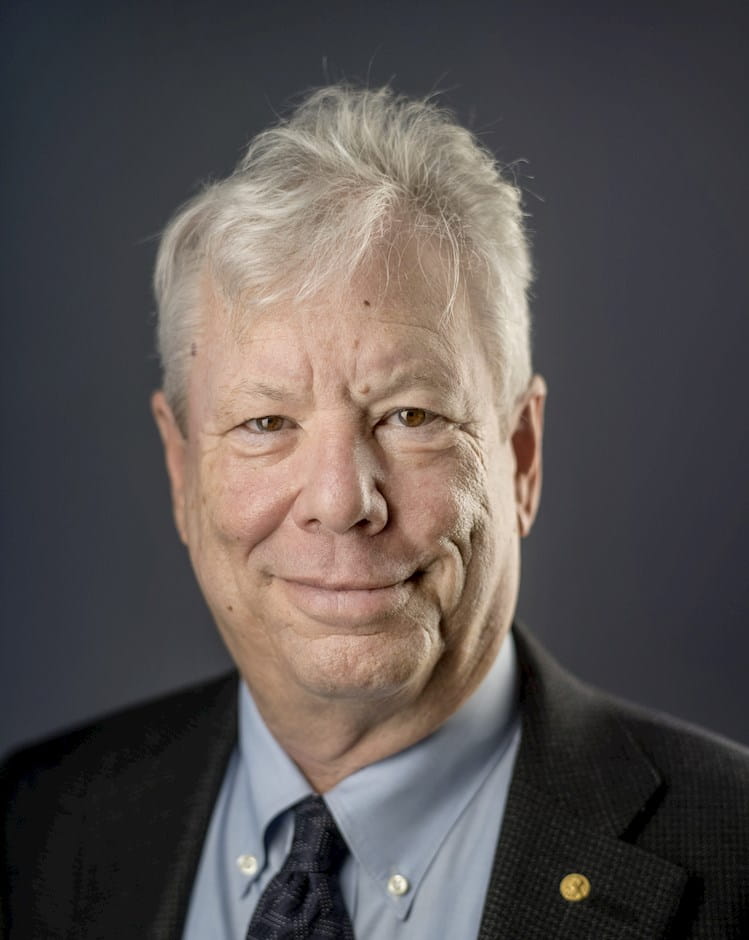
Richard H. Thaler
Behavioral economist who worked with Daniel Kahneman and Amos Tversky to define the field; president of the American Economic Association in 2015. The Anomalies series and Nudge are the primary sources for behavioral economics as an applied discipline in finance and public policy.


Start here
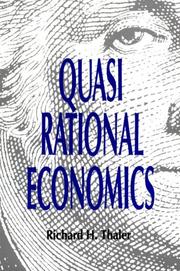
Why economic models fail when they assume people act fully rationally.
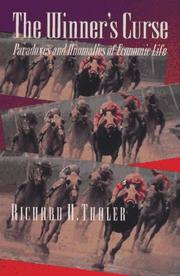
The Anomalies columns: systematic departures from standard economic theory.
“Richard H. Thaler, The Winner’s Curse: Paradoxes and Anomalies of Economic Life (Princeton, NJ: Princeton University Press, 1992, 157-158” — Michael Mauboussin
Source: Capital Ideas Revisited - Part 2: Thoughts on Beating a Mostly-Efficient Stock Market, page 9
Recommended by: Michael Mauboussin
The foundational papers of behavioural finance, collected.
A second collection of behavioural finance papers, more theoretical than the first.
How choice architecture can steer people to better choices without removing options.
“Introducing the idea of Libertarian Paternalism: influencing people's behavior for their own benefit, without forbidding any options or significantly changing their economic incentives.” — Derek Sivers
Source: Derek Sivers book notes (primary, rated list) · Rating: 5/10
Recommended by: Derek Sivers, Tristan Harris
How behavioural economics was built against economists who assumed rational agents.
“He opens his new book, Misbehaving, with Vilfredo Pareto’s assertion that “the foundation of political economy and, in general, of every social science, is evidently psychology.” — Howard Marks
Source: On the Couch, page 1
Recommended by: Howard Marks, Michael Mauboussin and 2 others
 Quasi Rational Economics | Why economic models fail when they assume people act fully rationally. | 1991 | – | |
 The Winner's Curse: Paradoxes and Anomalies of Economic Life | The Anomalies columns: systematic departures from standard economic theory. | 1992 | T4 | Michael Mauboussin |
 Advances in Behavioral Finance | The foundational papers of behavioural finance, collected. | 1993 | T4 | – |
 Advances in Behavioral Finance, Volume II | A second collection of behavioural finance papers, more theoretical than the first. | 2005 | T4 | – |
 Nudge: Improving Decisions About Health, Wealth, and Happiness | How choice architecture can steer people to better choices without removing options. | 2008 | T3 | Derek Sivers, Tristan Harris |
 Misbehaving: The Making of Behavioral Economics | How behavioural economics was built against economists who assumed rational agents. | 2015 | T2 | Howard Marks, Michael Mauboussin, Tyler Cowen and 1 others |
| Nudges and Choice Architecture in Organizations: New Frontiers | Organizational Behavior and Human Decision Processes (guest editorial, with Gretchen Chapman, Katherine L. Milkman, David Rand and Todd Rogers) | Research paper | 2020 |
| What's Next for Nudging and Choice Architecture? | Organizational Behavior and Human Decision Processes (guest editorial) | Research paper | 2020 |
| From Cashews to Nudges: The Evolution of Behavioral Economics (Nobel Prize lecture) | The Nobel Foundation | Speech | 2017 |
| Save More Tomorrow: Using Behavioral Economics to Increase Employee Saving | Journal of Political Economy | Research paper | 2004 |
| Anomalies: The Equity Premium Puzzle | Journal of Economic Perspectives | Research paper | 1997 |
| Anomalies: The Winner's Curse | Journal of Economic Perspectives | Research paper | 1988 |
| When Sunk Costs Take Flight | Choiceology with Katy Milkman | 2026-04-06 | 36 min | Have you ever bought a pair of shoes that never really fit, but you kept wearing them in hopes you’d break them in? All because you didn’t want to feel your money had gone to waste—even as you felt blisters forming? In this episode of Choiceology with Katy Milkman , we explore how focusing on past, irrecoverable costs can skew our judgment and future commitments. Bill Kolb takes us inside the Evergreen Aviation & Space Museum in McMinnville, Oregon. He shares the story of “ The Spruce Goose ” seaplane and why its creator, Howard Hughes, was so committed to the project despite many challenges and several opportunities to back out. Next, Katy speaks with Richard Thaler, economics Nobel laureate and Charles R. Walgreen Distinguished Service Professor of Behavioral Science and Economics at the University of Chicago Booth School of Business. Thaler reveals why we tend to dwell on sunk costs that cannot be recovered and shares insights from his updated book The Winner’s Curse: Behavioral Economics Anomalies, Then and Now . Check out the additional papers mentioned in this episode: “ Paying Not to Go to the Gym ” by Ulrike Malmendier and Stefano DellaVigna and “ The Realization Effect: Risk-Taking After Realized Versus Paper Losses ” by Alex Imas. Choiceology is an original podcast from Charles Schwab. For more on the show, visit schwab.com/choiceology . If you enjoy the show, please leave a rating or review on Apple Podcasts . |
| The Winner’s Curse: Why “Winning” Often Means You Just Lost with Nobel Laureate Richard Thaler (#288) | 3 Takeaways™ | 2026-02-10 | 23 min | We all love the thrill of winning - the house, the promotion, the deal. But as Nobel laureate Richard Thaler explains, some of our biggest “wins” are actually the moments we set ourselves up to lose. Thaler breaks down why we overbid, overpay, and talk ourselves into choices we regret. And he shares simple tricks to help you catch yourself before you make a mistake you can’t undo. |
| IL45: Where Markets Reveal Human Error ft. Alex Imas | Top Traders Unplugged | 2026-01-21 | 54 min | Today we discuss one of the most popular and influential economic books of the last few decades - The Winner’s Curse. Originally published in 1994, a new version has just been released and we are joined by co-author Alex Imas who wrote the new edition alongside Nobel Prize winner Richard Thaler. When are we likely to spend a windfall and when are we likely to save it? When is it most dangerous to bid for business against competitors? And are ‘arbitrage’ opportunities in markets really a free lunch? ----- JOIN THE TREND FOLLOWING MANIFESTO BOOK LAUNCH LIST TO GET SPECIAL LOW PRICE ON OUR UPCOMING BOOK DURING THE FIRST WEEK! - CLICK HERE ----- Follow Niels on Twitter , LinkedIn , YouTube or via the TTU website . IT’s TRUE ? – most CIO’s read 50+ books each year – get your FREE copy of the Ultimate Guide to the Best Investment Books ever written here . And you can get a free copy of my latest book “ Ten Reasons to Add Trend Following to Your Portfolio ” here . Learn more about the Trend Barometer here . Send your questions to info@toptradersunplugged.com And please share this episode with a like-minded friend and leave an honest Rating & Review on iTunes or Spotify so more people can discover the podcast. Follow Kevin on SubStack & read his Book . Follow Alex on X. |
| How Investors Fall Into Bias Traps with Economists Richard Thaler & Alex Imas | At the Money | Masters in Business | 2026-01-16 | 1:26 | Barry speaks with Richard Thaler and Alex Imas award winning economists and co-authors of "The Winner's Curse: Behavioral Economics Anomalies". They discuss the psychology of spending at auctions, and the effects of draft picks on NFL team spending. They also discuss the anomalies of human behavior and decision making that challenge classical economic theories. See omnystudio.com/listener for privacy information. |
| Richard Thaler | The Big Interview | 2026-01-09 | 35 min | Pioneer of behavioural economics Richard Thaler discusses the arc of his career, from ‘heretic’ to Nobel Prize winner, and why it was so difficult to convince economists that behaviour and human nature contradict their theories. Also: his rules for a better way to play Scrabble. See omnystudio.com/listener for privacy information. |
| The Economics Show: What economics gets wrong about human behaviour, with Richard Thaler | The Story of Money | 2025-12-24 | 34 min | Economists like to model people as rational creatures who make self-interested decisions. But humans don’t act that way. Why do investors, politicians and ordinary people act against their best interests – and how can they be nudged into making better decisions? To find out, FT economics commentator Chris Giles speaks to Richard Thaler, the founding father of behavioural economics. Thaler is a professor at the University of Chicago who won the 2017 Nobel Prize in Economics for his work on how humans make (often irrational) decisions. This is a repeat of an episode published on The Economics Show, a sister podcast of Behind the Money, on November 7, 2025. Subscribe to The Economics Show on Apple , Spotify , Pocket Casts or wherever you listen. Presented by Chris Giles. Produced by Mischa Frankl-Duval. Manuela Saragosa is the executive producer. Original music by Breen Turner. Sound design by Breen Turner and Samantha Giovinco. Our broadcast engineer is Andrew Georgiades. Hosted on Acast. See acast.com/privacy for more information. |
| How Behavioral Economics Shapes Our World with Richard Thaler and Alex Imas | Guy Kawasaki's Remarkable People | 2025-12-17 | 1:14 | What makes humans so predictably irrational? Nobel Laureate Richard Thaler and Alex Imas join Guy Kawasaki to reveal the quirks that shape our decisions—from golf greens to stock markets. Drawing from their new book, The Winner’s Curse: Then and Now, they revisit the field they helped pioneer: behavioral economics. This episode is a masterclass in understanding why the smartest people make the strangest choices—and how awareness turns mistakes into wisdom. --- Guy Kawasaki is on a mission to make you remarkable. His Remarkable People podcast features interviews with remarkable people such as Jane Goodall, Marc Benioff, Woz, Kristi Yamaguchi, and Bob Cialdini. Every episode will make you more remarkable. With his decades of experience in Silicon Valley as a Venture Capitalist and advisor to the top entrepreneurs in the world, Guy’s questions come from a place of curiosity and passion for technology, start-ups, entrepreneurship, and marketing. If you love society and culture, documentaries, and business podcasts, take a second to follow Remarkable People. Listeners of the Remarkable People podcast will learn from some of the most successful people in the world with practical tips and inspiring stories that will help you be more remarkable. Episodes of Remarkable People organized by topic: https://bit.ly/rptopology Listen to Remarkable People here: ** https://podcasts.apple.com/us/podcast/guy-kawasakis-remarkable-people/id1483081827** Like this show? |
| Richard Thaler on Why People are Much More Irrational than Economists Believe | The Good Fight | 2025-12-07 | 1:08 | Richard Thaler is the Charles R. Walgreen Distinguished Service Professor of Behavioral Science and Economics at the University of Chicago Booth School of Business. He is the co-author, with Cass Sunstein, of Nudge: Improving Decisions about Health, Wealth, and Happiness , and is the 2017 recipient of the Nobel Memorial Prize in Economic Sciences. In this week’s conversation, Yascha Mounk and Richard Thaler explore to what extent humans behave rationally, how nudge theory works, and whether we should outsource questions about life to ChatGPT. If you have not yet signed up for our podcast, please do so now by following this link on your phone . Email: leonora.barclay@persuasion.community Podcast production by Mickey Freeland and Leonora Barclay. Connect with us! Spotify | Apple | Google X: @Yascha_Mounk & @JoinPersuasion YouTube: Yascha Mounk , Persuasion LinkedIn: Persuasion Community Learn more about your ad choices. Visit megaphone.fm/adchoices |
| Special Edition: Nobel Prize Winner Richard Thaler Live from the Economic Club of New York | Masters in Business | 2025-11-20 | 1:01 | On this special edition of Masters in Business, Barry speaks with Nobel Prize winning economist Richard Thaler, along with Alex Imas, Professor of Behavioral Science, Economics, and Applied AI at the University of Chicago Booth School of Business about their book, "The Winner's Curse: Behavioral Economics Anomalies, Then and Now". Recorded live on stage at the Economic Club of New York. See omnystudio.com/listener for privacy information. |
| What economics gets wrong about human behaviour, with Richard Thaler | The Economics Show with Soumaya Keynes | 2025-11-07 | 33 min | Economists like to model people as rational creatures who make self-interested decisions. But humans don’t act that way. Why do investors, politicians and ordinary people act against their best interests – and how can they be nudged into making better decisions? To find out, FT economics commentator Chris Giles speaks to Richard Thaler, the founding father of behavioural economics. Thaler is a professor at the University of Chicago who won the 2017 Nobel Prize in Economics for his work on how humans make (often irrational) decisions. On November 28, the FT will be holding a live webinar on what the UK Budget will mean for your money. Viewers will be able to put their questions to FT journalists Claer Barrett, Stuart Kirk, Tej Parikh and special guest, tax expert Dan Neidle. To sign up, get your free pass here . Subscribe to The Economics Show on Apple , Spotify , Pocket Casts or wherever you listen. Presented by Chris Giles. Produced by Mischa Frankl-Duval. Manuela Saragosa is the executive producer. Original music by Breen Turner. Sound design by Breen Turner and Samantha Giovinco. Our broadcast engineer is Andrew Georgiades. Read a transcript of this episode on FT.com Hosted on Acast. See acast.com/privacy for more information. |
| Nobel Economist Reveals Why Economic Models Keep Failing Us - ft. Richard Thaler | Capitalisn't | Capitalisn't | 2025-10-30 | 46 min | Standard economic theory informs how we think about business strategy and the economy and presumes that people are selfish, have well-defined preferences, and consistently make welfare-maximizing choices. In other words, we are rational. But what if that is not the case? Nobel Prize-winning economist Richard Thaler is out with an updated edition of his bestselling 1991 book, "The Winner's Curse: Paradoxes and Anomalies of Economic Life." In the new edition, he and his co-author Alex Imas (both professors at the University of Chicago Booth School of Business) reflect on the last thirty years of behavioral economics and how it makes sense of tensions between our psychological biases and impulses that make us less than fully rational in practice. Using a wealth of empirical evidence, the authors explore the behavioral anomalies that contradict the expectations of standard economic theory and explain a wide range of real-world examples from banking crises to social media addiction. Earlier this month, Thaler joined Bethany and Luigi for a sold-out Capitalisn’t recording in front of a live audience in Chicago to walk through the anomalies of human behavior that have endured from biblical times to the age of Big Tech. Thaler reflects on how views and the adoption of behavioral economics have changed over the last thirty years, both within academia and beyond (wonder why you can’t put down your phone? Silicon Valley has read Thaler). |
| Getting to Yes, And… | Richard Thaler and Alex Imas – ‘The Winner’s Curse’ | Second City Works presents "Getting to Yes, And" | 2025-10-23 | Kelly welcomes Richard Thaler, the 2017 recipient of the Nobel Memorial Prize in Economic Sciences, to the podcast along with his co-author, Professor Alex Imas, to talk about their updated version of Thaler’s seminal book “The Winner’s Curse.” “Rationality is an assumption in economics, not a demonstrated fact.” “People are not thinking enough about what everyone else is thinking.” “Roughly speaking, losses hurt us about twice as much as gains.” | |
| Ep. 1355: Richard Thaler and Alex Imas with Michael Covel on Trend Following Radio | Michael Covel's Trend Following | 2025-09-08 | 47 min | My guests today are Richard Thaler and Alex Imas. Richard Thaler is a theorist in behavioral economics and a professor of Behavioral Science and Economics at the University of Chicago Booth School of Business. In 2017, he was awarded the Nobel Memorial Prize in Economic Sciences for his contributions to behavioral economics. Alex Imas is a professor of Behavioral Science, Economics and Applied AI and a Vasilou Faculty Scholar at the University of Chicago Booth School of Business. He studies behavioral economics with a focus on cognition and mental representation in dynamic decision-making. The topic is their book The Winner's Curse: Behavioral Economics Anomalies, Then and Now. In this episode of Trend Following Radio we discuss: Behavioral economics anomalies and their persistence Trend following, momentum, and mean reversion Nick Leeson and the Barings Bank collapse Development and evolution of their book Applications of behavioral economics in real-world decisions Jump in! --- I'm MICHAEL COVEL, the host of TREND FOLLOWING RADIO, and I'm proud to have delivered 10+ million podcast listens since 2012. Investments, economics, psychology, politics, decision-making, human behavior, entrepreneurship and trend following are all passionately explored and debated on my show. To start? I'd like to give you a great piece of advice you can use in your life and trading journey… cut your losses! |
| Richard Thaler | Nudge | Talks at Google | 2025-05-09 | 54 min | We make a countless number of decisions every day – but unfortunately, we often choose unwisely. Behavioral economist Richard Thaler has dedicated his life's work to understanding why that is. In 2017, Thaler received the Nobel Memorial Prize in Economic Sciences for his contributions to the field of behavioral economics. His book, "Nudge," co-authored by Cass R. Sunstein, shows that it's not possible for choices to be presented to us in a neutral way. The book demonstrates how to best nudge us in the right directions, without restricting our freedom of choice. Richard Thaler is a professor of behavioral science and economics at the University of Chicago Booth School of Business. He's a member of the National Academy of Science and the American Academy of Arts and Sciences. He's been published in many prominent journals, and he's also the author of "Misbehaving: The Making of Behavioral Economics." Originally published in December 2021. Watch this episode at youtube.com/TalksAtGoogle . |
| Drew Dickson on Navigating Behavioral Biases, U.S. vs. European Stocks, & Tesla | #520 | The Meb Faber Show - Better Investing | 2024-02-09 | 1:01 | Today’s guest is Drew Dickson , founder of Albert Bridge Capital and CIO of Alpha Europe funds. We talk a lot about global investing on this show and wanted to talk about that with Drew given his focus on European markets. Between the end of 1979 and the end of 2009, both the U.S. and Europe were 26 baggers and roughly had the same returns. Since then? The U.S. has returned 15% per year while Europe has returned just 8% per year. We spend a lot of time on whether this will continue. We also talk about the impact former guest and Nobel Laureate Richard Thaler had on his investment philosophy, the importance of shedding our biases to generate alpha, his valuation of Tesla, and much more. (1:32) - Welcome Drew the show (2:17) - Drew’s time learning from Richard Thaler (8:50) - Handling behavioral biases (11:39) - Experiencing the tech bubble in Europe (15:46) - Drew’s focus on investing in European firms (28:43) - Where Drew sees opportunity today (40:28) - Tesla (54:22) - Drew’s most memorable investment ----- Follow Meb on Twitter , LinkedIn and YouTube For detailed show notes, click here To learn more about our funds and follow us, subscribe to our mailing list or visit us at cambriainvestments.com ----- Sponsor: Today's episode is sponsored by YCharts . YCharts enables financial advisors to make smarter investment decisions and better communicate with clients. |
| A Sticky Situation: With Guests Richard Thaler, Wendy Wood & Susan Budowski | Choiceology with Katy Milkman | 2023-10-23 | 38 min | Filling out an overly complicated form or waiting on hold for hours to speak with a customer service rep is a frustrating experience. And sometimes it seems like the process itself is designed to be difficult. In this episode of Choiceology with Katy Milkman , we look at how friction––time, distance, complexity, or anything that gets in the way of your goals—can contribute to what Nobel Prize–winning economist Richard Thaler calls "sludge." A young couple walks into a theme park and they are offered a gift card. The only catch is that they have to watch a 90-minute presentation about timeshares. By the end of the presentation, they are the owners of a timeshare in the timeshare capital of the world, Orlando, Florida. Getting into a timeshare contract was easy, but getting out of it turned out to be much more of a grind. Susan Budowski tells the story of how her clients got out of a sticky situation, and she explains how many companies make it simple and quick to buy a timeshare but difficult and time-consuming to sell or get out of those contracts. Susan Budowski is an attorney in Florida and Maryland who specializes in resolving timeshare matters. Next, Katy speaks with Wendy Wood about her research on how people can leverage friction to help build positive habits and diminish negative ones. You can read more in her book Good Habits, Bad Habits: The Science of Making Positive Changes That Stick . |
| Richard Thaler & Cade Massey on the NFL Draft, Misbehaving GM's, & Exploiting Inefficiencies | The Meb Faber Show - Better Investing | 2023-04-19 | 1:00 | Today’s special episode is to prepare you for the NFL draft next week. Nobel laureate Richard Thaler is back with Wharton’s Cade Massey to talk about their famous paper on the NFL draft that even the GOAT Bill Belichick read. The guys share what they learned years ago – NFL teams overvalue the top picks, shouldn’t trade up, and even after all the scouting teams do, their ability to pick the best player at any pick is about the same as flipping a coin. We talk about why the Bears won the trade against the Panthers this year, what they think about Mr. Irrelevant Brock Purdy’s success last year, and the future of data analytics in sports. As we wind down, we dive into why this inefficiency still exists after they published a paper almost 20 years ago and how teams battle some of the same issues asset managers face – career risk, impatient stakeholders, and model aversion. *Click here to listen to Richard Thaler’s first appearance on the podcast **If you enjoyed this episode, listen to poker champion & decision-making expert Annie Duke on the show last year ----- Follow Meb on Twitter , LinkedIn and YouTube For detailed show notes, click here To learn more about our funds and follow us, subscribe to our mailing list or visit us at cambriainvestments.com ----- Today's episode is sponsored by YCharts . YCharts enables financial advisors to make smarter investment decisions and better communicate with clients. |
| Richard Thaler: Encore presentation of Nobel Prize Conversations | Nobel Prize Conversations | 2022-11-02 | 34 min | Nudges, sludges, and the connection between stubbornness and success. Join us for this encore presentation of our first episode of Nobel Prize Conversations, as host Adam Smith picks the brain of Richard Thaler, the 2017 laureate in Economic Sciences. Thaler's work has helped us to understand how people make choices in the real world and has also given us tools to nudge people towards better decisions. Hosted on Acast. See acast.com/privacy for more information. |
| Choiceology's Guide to Nudges | Choiceology with Katy Milkman | 2022-04-25 | 39 min | Nudges are all around you. They might help you choose your meal at a restaurant, navigate a busy airport terminal, or start saving for the future. But nudges are often subtle, so you might not notice them until they’re pointed out. In this episode of Choiceology with Katy Milkman , we’re doing things a little differently. This episode is your guide to the many ways nudges have changed the world for the better. We'll revisit examples of nudges you may recognize from previous episodes of Choiceology . UCLA professor Shlomo Benartzi explains why defaults help more people save for retirement. University of Chicago professor Ayelet Fishbach reminds us how making the best choice a fun one is a great way to encourage better decisions. Harvard professor Todd Rogers discusses how social norms can help people reduce water and energy usage in hotels. You'll hear a feature interview with Nobel Prize-winning economist Richard Thaler , who along with Harvard law professor Cass Sunstein popularized nudges more than a decade ago in their book Nudge: Improving Decisions About Health, Wealth, and Happiness . And Cass Sunstein himself talks about how simplifying application forms can have an outsized impact on financial aid programs for students. Richard Thaler is the Charles R. Walgreen Distinguished Service Professor of Behavioral Science and Economics at the University of Chicago's Booth School of Business . |
| Richard Thaler - The Birth, Growth & Future of Behavioral Economics | BE GOOD! | 2021-12-16 | 1:02 | Nobel-prize winning economist and co-author of “Nudge”, Professor Richard Thaler is our guest in this new episode of the B.E. GOOD! Podcast by BVA Nudge Unit. He is the Charles Walgreen Distinguished Service Professor of Behavioral Science Economics at the University of Chicago Booth School of Business and studies behavioral economics and finance as well as the psychology of decision making. Eric Singler and Scott Young speak with Professor Thaler about his most recent book "Nudge: The Final Edition", his personal journey and “greatest discovery”, and the biggest change he’s seen in the field of Behavioral Economics over the past decade. Hosted on Ausha. See ausha.co/privacy-policy for more information. |
| Business Weekly: Nudge Theory and How to Change Behaviours with Richard Thaler | Intelligence Squared | 2021-11-15 | 46 min | Since the original publication of Nudge more than a decade ago, the word that served as the title of the ground-breaking book has entered the vocabulary of businesspeople, policy makers, economists, engaged citizens and consumers everywhere. It has given rise to more than 400 nudge units in governments around the world and has influenced countless groups of behavioural scientists in every part of the economy. In October 2021 Richard Thaler, one of the co-authors of the book and winner of the 2017 Nobel Prize for economics, came to Intelligence Squared to talk with journalist and author Kamal Ahmed about Nudge: The Final Edition, a cover-to-cover refresh of the original publication. Support this show http://supporter.acast.com/intelligencesquared . See acast.com/privacy for privacy and opt-out information. Learn more about your ad choices. Visit podcastchoices.com/adchoices Hosted on Acast. See acast.com/privacy for more information. |
| Richard Thaler: Is a nudge enough to change our behaviour? | The Interview | 2021-10-07 | 23 min | From Covid to climate change, governments around the world face challenges which demand modifications of human behaviour. When it comes to getting people to do things differently, what works best: the carrot of persuasion, or the stick of coercion? Stephen Sackur speaks to Richard Thaler, the world renowned economist and behavioural scientist who believes a nudge often works better than a shove when change is needed. Does that hold good when the problems we face become urgent and existential? |
| Nudge with Richard Thaler | Commonwealth Club of California Podcast | 2021-08-26 | 1:07 | Since the 2008 publication of the global bestseller Nudge , co-authored by Richard Thaler and Cass Sunstein, the word “nudge” has entered the vocabulary of many businesspeople, policymakers, engaged citizens and consumers everywhere. It has taught us how to use thoughtful “choice architecture”—a concept the authors invented—to help us make better decisions for ourselves, our families and our society. "Nudging" is a simple change that alters people’s behavior in a predictable way without forbidding any options or significantly changing their economic incentives. It’s the option to opt out of your company’s 401k retirement program as opposed to opting in, or the placement of fruits and vegetables at eye level in grocery stores to encourage healthier eating. In 2021, the authors have rewritten the book from cover to cover, building Nudge: The Final Edition out of the last dozen years’ worth of new research, insight, and experience. The book touches on a wide variety of issues we face in our daily lives—COVID-19, personal finance, home mortgages, climate change and more. Co-author and economist Richard Thaler is the professor of Behavioral Science and Economics at the University of Chicago and, in 2017, won the Nobel Prize in Economic Sciences for his contributions to the field of behavioral economics. Join us as Thaler reveals the power of understanding decision-making in modern society, existing in the gap between economics and psychology. SPEAKERS Richard Thaler Charles R. |
| Nudge: The Final Edition Book Talk with Richard Thaler | The Pie: An Economics Podcast | 2021-08-05 | 35 min | How can a small nudge make a big impact? Since publishing the first edition of Nudge more than 10 years ago, Cass Sunstein and Richard Thaler have changed the way businesses and governments design rules and regulations to influence people’s behavior and decision making. Tess Vigeland sat down with Thaler to discuss new material covered in Nudge: The Final Edition , including COVID-19, healthcare, retirement savings, credit card debt, home mortgages, organ donation, climate change, and even “sludge.” |
| Fair Is Fair: With Guests John Thorn & Richard Thaler | Choiceology with Katy Milkman | 2020-08-31 | 33 min | “Mom! Janey got more ice cream than me! Not fair!” For kids—and many adults—the notion of what’s fair or not often involves comparing quantities of some valuable thing. But there’s another, more nuanced concept of fairness that crops up in certain types of negotiations. In this episode of Choiceology with Katy Milkman , we look at what people perceive as fair or not amid changing circumstances. At the turn of the 20th century, professional baseball had entered what came to be known as the dead-ball era. Pitchers had a distinct advantage over batters, resulting in low-scoring games and a substantial drop in attendance. Owners and league officials decided they needed to change some rules to entice fans back to their stadiums. One option on the table was to ban the spitball. John Thorn explains the history of the spitball and other doctored pitches and describes the state of baseball at the time. While empty bleachers were clearly bad for the bottom line, the owners also recognized the problem of implementing a rule change that would likely destroy some pitchers’ careers. You’ll hear about the clever solution that the league arrived at to ensure a more exciting game without alienating their players. John Thorn is the official historian for Major League Baseball and the author of Baseball in the Garden of Eden: The Secret History of the Early Game . |
| Richard Thaler: Nobel Prize Conversations | Nobel Prize Conversations | 2020-01-29 | 33 min | Nudges, sludges, and the connection between stubbornness and success - in this first episode of Nobel Prize conversations, host Adam Smith interviews Economic Sciences laureate Richard Thaler. His work has helped us to understand how people make choices in the real world and has also given us tools to nudge people towards better decisions. Hosted on Acast. See acast.com/privacy for more information. |
| SI69: Richard Thaler on the perils of overconfidence and how to overcome it | Top Traders Unplugged | 2020-01-05 | 1:17 | In this first episode of 2020, we discuss whether there any investment strategies that can work during all times, the recent Barron’s article featuring Richard Thaler on the perils of overconfidence, how Trend Following helps to prevent being too confident, the inherent negativity bias within most investors, the drawbacks of positivity when investing, and why you should consider the costs of being too cautious just as much as the costs of taking on too much risk. Questions covered this week include: Are CTAs becoming too cautious? Is it really worth diversifying away from developed markets? What causes you to make adjustments to your models? ----- JOIN THE TREND FOLLOWING MANIFESTO BOOK LAUNCH LIST TO GET SPECIAL LOW PRICE ON OUR UPCOMING BOOK DURING THE FIRST WEEK! - CLICK HERE ----- Follow Niels on Twitter , LinkedIn , YouTube or via the TTU website . IT’s TRUE ? – most CIO’s read 50+ books each year – get your FREE copy of the Ultimate Guide to the Best Investment Books ever written here . And you can get a free copy of my latest book “ Ten Reasons to Add Trend Following to Your Portfolio ” here . Learn more about the Trend Barometer here . Send your questions to info@toptradersunplugged.com And please share this episode with a like-minded friend and leave an honest Rating & Review on iTunes or Spotify so more people can discover the podcast. |
| Richard Thaler - Behavioural economist | The Interview | 2012-10-24 | 23 min | Stop smoking, eat less, exercise more, pay your taxes on time. So many things governments want us to do; so hard to get us to do them. Shaun Ley speaks to behavioural economist Richard Thaler who thinks he has the answer. It's called 'nudge' theory, but it's not just an academic idea. Britain's Prime Minister is so impressed, he's set up a whole 'nudge unit' in the heart of his government. If you live in Britain, you may unwittingly already be part of a nudge experiment. So is the nudge guru teaching those in power how to encourage us to live better; or helping politicians to control us? |
| Studying Economic Behavior in Unusual Places: From Deal or No Deal to the National Football League with Richard Thaler | Nobel Laureates (Audio) | 2011-01-10 | 59 min | Richard Thaler is renowned for his extremely influential contributions to the emerging field of behavioral economics over the last three decades. He has made it his habit to look for data in unusual places. Here he draws on the behavior of New York City taxi cab drivers, game show participants, and National Football League teams to see what can be learned about human behavior. Thaler is Professor of Behavioral Science and Economics, and Director of the Center for Decision Research, Graduate School of Business, University of Chicago. Series: "UC Berkeley Graduate Lectures" [Public Affairs] [Business] [Show ID: 20380] |
| A Conversation with Chris Gondek, Josh Ozersky and Richard Thaler | Yale University Press Podcast | 2008-05-12 | 28 min | Chris Gondek speaks with Josh Ozersky , about the history of the American hamburger, and with Richard Thaler, co-author with Cass Sunstein of Nudge, about the importance of structuring choices. |
| Richard Thaler on Libertarian Paternalism | EconTalk | 2006-11-06 | 1:03 | Richard Thaler of the U. of Chicago Graduate School of Business defends the idea of libertarian paternalism--how government might use the insights of behavioral economics to help citizens make better choices. Host Russ Roberts accepts the premise that individuals make imperfect choices but challenges Thaler on the likelihood that government, in practice, will improve matters. Along the way they discuss the design of Sweden's social security system, organ donations and whether professors at Cornell University are more or less like you and me. |
| A Conversation with Richard Thaler: Behavioral Economics and Nobel Prize Insights | Cornell University | |||
| The Irrational Economy with Nobel Laureate Richard Thaler | The Weekly Show with Jon Stewart | The Weekly Show with Jon Stewart | |||
| Richard H. Thaler — The Winner’s Curse and Going Against the Establishment (with Nick Kokonas) | The Tim Ferriss Show | |||
| Richard H. Thaler on nudges and choice architecture | Sydney Executive Plus | |||
| How to Spend Your Time & Money Better ft. Richard Thaler | Dr Laurie Santos' The Happiness Lab | Dr. Laurie Santos | |||
| Richard Thaler Discusses Doing Economics in the 21st Century | The Silk Lectures featuring Nobel Laureates | |||
| Are markets efficient? | Chicago Booth Review |
 CWhen Sunk Costs Take FlightChoiceology with Katy Milkman · 2026-04-06
 3The Winner’s Curse: Why “Winning” Often Means You Just Lost with Nobel Laureate Richard Thaler (#288)3 Takeaways™ · 2026-02-10
 TIL45: Where Markets Reveal Human Error ft. Alex ImasTop Traders Unplugged · 2026-01-21
 MHow Investors Fall Into Bias Traps with Economists Richard Thaler & Alex Imas | At the MoneyMasters in Business · 2026-01-16
 TRichard ThalerThe Big Interview · 2026-01-09
 TThe Economics Show: What economics gets wrong about human behaviour, with Richard ThalerThe Story of Money · 2025-12-24
 GHow Behavioral Economics Shapes Our World with Richard Thaler and Alex ImasGuy Kawasaki's Remarkable People · 2025-12-17
 TRichard Thaler on Why People are Much More Irrational than Economists BelieveThe Good Fight · 2025-12-07
 MSpecial Edition: Nobel Prize Winner Richard Thaler Live from the Economic Club of New YorkMasters in Business · 2025-11-20
 TWhat economics gets wrong about human behaviour, with Richard ThalerThe Economics Show with Soumaya Keynes · 2025-11-07
 CNobel Economist Reveals Why Economic Models Keep Failing Us - ft. Richard Thaler | Capitalisn'tCapitalisn't · 2025-10-30
 SGetting to Yes, And… | Richard Thaler and Alex Imas – ‘The Winner’s Curse’Second City Works presents "Getting to Yes, And" · 2025-10-23
 MEp. 1355: Richard Thaler and Alex Imas with Michael Covel on Trend Following RadioMichael Covel's Trend Following · 2025-09-08
 TRichard Thaler | NudgeTalks at Google · 2025-05-09
 TDrew Dickson on Navigating Behavioral Biases, U.S. vs. European Stocks, & Tesla | #520The Meb Faber Show - Better Investing · 2024-02-09
 CA Sticky Situation: With Guests Richard Thaler, Wendy Wood & Susan BudowskiChoiceology with Katy Milkman · 2023-10-23
 TRichard Thaler & Cade Massey on the NFL Draft, Misbehaving GM's, & Exploiting InefficienciesThe Meb Faber Show - Better Investing · 2023-04-19
 NRichard Thaler: Encore presentation of Nobel Prize ConversationsNobel Prize Conversations · 2022-11-02
 CChoiceology's Guide to NudgesChoiceology with Katy Milkman · 2022-04-25
 BRichard Thaler - The Birth, Growth & Future of Behavioral EconomicsBE GOOD! · 2021-12-16
 IBusiness Weekly: Nudge Theory and How to Change Behaviours with Richard ThalerIntelligence Squared · 2021-11-15
 TRichard Thaler: Is a nudge enough to change our behaviour?The Interview · 2021-10-07
 CNudge with Richard ThalerCommonwealth Club of California Podcast · 2021-08-26
 TNudge: The Final Edition Book Talk with Richard ThalerThe Pie: An Economics Podcast · 2021-08-05
 CFair Is Fair: With Guests John Thorn & Richard ThalerChoiceology with Katy Milkman · 2020-08-31
 NRichard Thaler: Nobel Prize ConversationsNobel Prize Conversations · 2020-01-29
 TSI69: Richard Thaler on the perils of overconfidence and how to overcome itTop Traders Unplugged · 2020-01-05TRichard Thaler - Behavioural economistThe Interview · 2012-10-24
 NStudying Economic Behavior in Unusual Places: From Deal or No Deal to the National Football League with Richard ThalerNobel Laureates (Audio) · 2011-01-10
 YA Conversation with Chris Gondek, Josh Ozersky and Richard ThalerYale University Press Podcast · 2008-05-12
 ERichard Thaler on Libertarian PaternalismEconTalk · 2006-11-06
 CA Conversation with Richard Thaler: Behavioral Economics and Nobel Prize InsightsCornell University
 TThe Irrational Economy with Nobel Laureate Richard Thaler | The Weekly Show with Jon StewartThe Weekly Show with Jon Stewart
 TRichard H. Thaler — The Winner’s Curse and Going Against the Establishment (with Nick Kokonas)The Tim Ferriss Show
 SRichard H. Thaler on nudges and choice architectureSydney Executive Plus
 DHow to Spend Your Time & Money Better ft. Richard Thaler | Dr Laurie Santos' The Happiness LabDr. Laurie Santos
 TRichard Thaler Discusses Doing Economics in the 21st CenturyThe Silk Lectures featuring Nobel Laureates
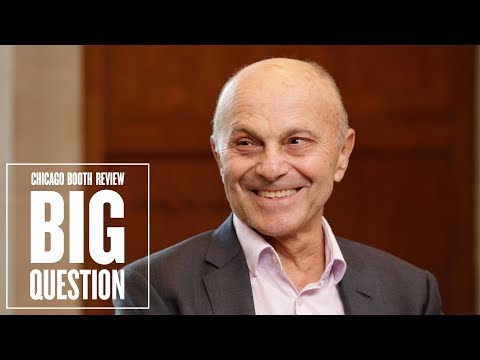 CAre markets efficient?Chicago Booth Review
| Class, Behave! | Chicago Booth Review | 2018 |
| Why Richard Thaler Deserved the Nobel in Economics Paywall | The Atlantic | 2017 |
| A Bowl of Cashews with Professor Richard H. Thaler | Chicago Booth Review | 2015 |