
The Winner's Curse: Paradoxes and Anomalies of Economic Life
The Anomalies columns: systematic departures from standard economic theory.
Summary
Richard Thaler collected the Anomalies columns he wrote for the Journal of Economic Perspectives, each documenting a systematic departure from what standard economic theory predicts.
The anomalies covered include the winner's curse, in which the winning bidder in a common value auction has by definition overestimated the value and therefore overpaid; the endowment effect, in which people demand more to give up an object than they would pay to acquire it; loss aversion and status quo bias; mental accounting, in which money is treated differently according to which notional account it sits in; preference reversals, in which the same person ranks options differently depending on how the choice is presented; intertemporal choice and the hyperbolic discounting that produces present bias; cooperation in situations where theory predicts defection; the January effect and other calendar anomalies; the equity premium puzzle; and the closed-end fund discount.
Thaler's method throughout is to state what the theory predicts, present the empirical evidence contradicting it, and then examine the explanations that have been offered including those that would rescue the theory. He is careful and even-handed, which is why the columns were influential in a profession that was hostile to them. Thaler received a Nobel prize in 2017. Several of the anomalies have been explained or have weakened since, and the calendar effects in particular have largely disappeared, which Thaler's framework predicts once they are known. The collection remains the best short introduction to the empirical case against the rational agent model.
Key takeaways 7
- The winning bidder in a common value auction has by definition the highest estimate of value and therefore systematically overpays.
- People demand substantially more to give up an object than they would pay to acquire the same object.
- Money is treated differently according to which mental account it sits in, contradicting the assumption that it is fungible.
- The same person ranks options differently depending on whether they are asked to choose or to price, which contradicts stable preferences.
- Discounting of future outcomes is hyperbolic rather than exponential, which produces preference reversals over time.
- People cooperate in situations where standard theory predicts universal defection, and the cooperation rate depends on framing.
- Anomalies that become widely known weaken or disappear, which the calendar effects demonstrate.
Who should read it
Investors and economists who want the empirical anomalies against the rational agent model documented individually and assessed fairly.
About Richard H. Thaler
Charles R. Walgreen Distinguished Service Professor of Behavioral Science and Economics, University of Chicago Booth School of Business; co-founder, Fuller & Thaler Asset Management; Nobel laureate in economics 2017
The Anomalies series and Nudge are the primary sources for behavioral economics as an applied discipline in finance and public policy.
Who recommended it 1 · 1 direct
“Richard H. Thaler, The Winner’s Curse: Paradoxes and Anomalies of Economic Life (Princeton, NJ: Princeton University Press, 1992, 157-158”
Similar books 6
Chosen by shared topics, the entries that hold them, and the people who recommended both.
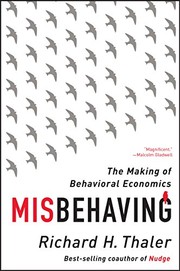
How behavioural economics was built against economists who assumed rational agents.
“He opens his new book, Misbehaving, with Vilfredo Pareto’s assertion that “the foundation of political economy and, in general, of every social science, is evidently psychology.” — Howard Marks
Source: On the Couch, page 1
Recommended by: Howard Marks, Michael Mauboussin and 2 others
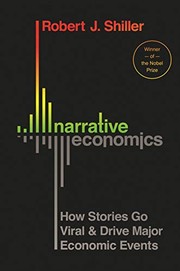
How popular stories spread like epidemics and drive economic events.
“Robert J. Shiller, Narrative Economics: How Stories Go Viral and Drive Major Economic Events (Princeton, NJ: Princeton University Press, 2019)” — Michael Mauboussin
Source: Who Is On the Other Side? A Framework for Understanding Market (In)Efficiency
Recommended by: Michael Mauboussin, Jackie Vullinghs
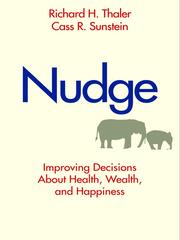
How choice architecture can steer people to better choices without removing options.
“Introducing the idea of Libertarian Paternalism: influencing people's behavior for their own benefit, without forbidding any options or significantly changing their economic incentives.” — Derek Sivers
Source: Derek Sivers book notes (primary, rated list) · Rating: 5/10
Recommended by: Derek Sivers, Tristan Harris
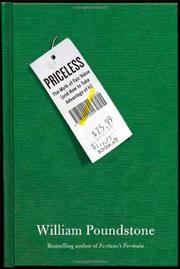
People have no fixed sense of value, so context and anchors set the prices they pay.
“For a good popular treatment of this topic, see William Poundstone, Priceless: The Myth of Fair Value (and How to Take Advantage of It) (New York: Hill and Wang” — Michael Mauboussin
Source: Blaming the Rat: Incentives, Motivation, and How They Interact, page 14
Recommended by: Michael Mauboussin, Mohnish Pabrai and 1 other
How psychology, which Keynes called animal spirits, drives the economy.
Recommended by: Jim Collins, Mohnish Pabrai
How positional spending on status goods drives American consumption.