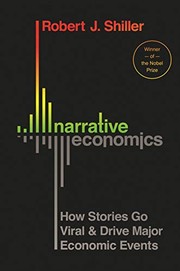
Narrative Economics
How popular stories spread like epidemics and drive economic events.
Summary
Shiller argues that popular stories spread through a population in a way that can be modelled epidemiologically, and that these narratives are a genuine cause of economic events rather than a description of them. He proposes that economists should study the spread of narratives with the same seriousness they apply to interest rates and money supply.
His method borrows from epidemiology directly: the Kermack-McKendrick model of contagion, with a contagion rate and a recovery rate, applied to the spread of an idea. He uses digitised text databases including Google Ngrams and newspaper archives to trace the frequency of specific phrases over time and to show that economic narratives rise and fall in patterns resembling epidemic curves.
He identifies nine perennial narratives that recur in different forms, including panic versus confidence, frugality versus conspicuous consumption, the gold standard versus bimetallism, labour-saving machines replacing jobs, real estate booms, stock market bubbles, boycotts and profiteers, and evil business and labour unions. He argues the 1920 to 1921 depression, the Depression, and the 2008 crisis each involved narrative contagion that the standard accounts omit.
The idea is important and Shiller's authority makes it worth taking seriously. The execution is the weak part. The evidence is largely word frequency counts, which establish that a phrase became common without establishing that it caused anything, and the epidemiological models are illustrative rather than fitted and tested. Shiller acknowledges this and presents the book as an agenda rather than a result, which is the right way to read it.
Key takeaways 7
- Popular narratives spread through a population in patterns that resemble epidemics, with identifiable contagion and recovery rates.
- Narratives cause economic events rather than merely describing them, because people act on the story they believe about what is happening.
- A small number of perennial narratives recur across centuries in updated forms, including panic and confidence, frugality, machines replacing jobs and real estate booms.
- Economic forecasting fails partly because it omits narrative contagion, which is a real variable that standard models do not include.
- The severity of the 1920 to 1921 depression and of the 1930s cannot be explained without accounting for the stories people told about them.
- Narratives mutate as they spread, and the version that becomes dominant is the one that is most repeatable rather than the most accurate.
- Digitised text archives make narrative spread measurable for the first time, which is what makes this a research programme rather than a speculation.
Who should read it
Investors interested in how stories move markets, read as a research agenda rather than as a demonstrated result.
About Robert J. Shiller
Sterling Professor of Economics Emeritus, Yale University; co-creator of the Case-Shiller home price indices; Nobel laureate in economics 2013
Excess-volatility work and Irrational Exuberance are the primary sources for the empirical case that asset prices move far more than fundamentals justify.
Who recommended it 2 · 1 direct
“Robert J. Shiller, Narrative Economics: How Stories Go Viral and Drive Major Economic Events (Princeton, NJ: Princeton University Press, 2019)”
Similar books 6
Chosen by shared topics, the entries that hold them, and the people who recommended both.

How psychology, which Keynes called animal spirits, drives the economy.
Recommended by: Jim Collins, Mohnish Pabrai
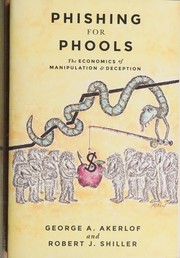
How free markets produce manipulation and deception as well as goods.
Why people mistake luck for skill, above all in markets.
“Fooled By Randomness was unquestionably the best non-fiction book I read in 2005.” — Brad Feld
Source: Book Review: Fooled By Randomness — Feld Thoughts
Recommended by: Barton Biggs, Brad Feld, Derek Sivers and 15 others

People have no fixed sense of value, so context and anchors set the prices they pay.
“For a good popular treatment of this topic, see William Poundstone, Priceless: The Myth of Fair Value (and How to Take Advantage of It) (New York: Hill and Wang” — Michael Mauboussin
Source: Blaming the Rat: Incentives, Motivation, and How They Interact, page 14
Recommended by: Michael Mauboussin, Mohnish Pabrai and 1 other

The Anomalies columns: systematic departures from standard economic theory.
“Richard H. Thaler, The Winner’s Curse: Paradoxes and Anomalies of Economic Life (Princeton, NJ: Princeton University Press, 1992, 157-158” — Michael Mauboussin
Source: Capital Ideas Revisited - Part 2: Thoughts on Beating a Mostly-Efficient Stock Market, page 9
Recommended by: Michael Mauboussin
How positional spending on status goods drives American consumption.