
University of Chicago Booth School of Business
universityPrivate
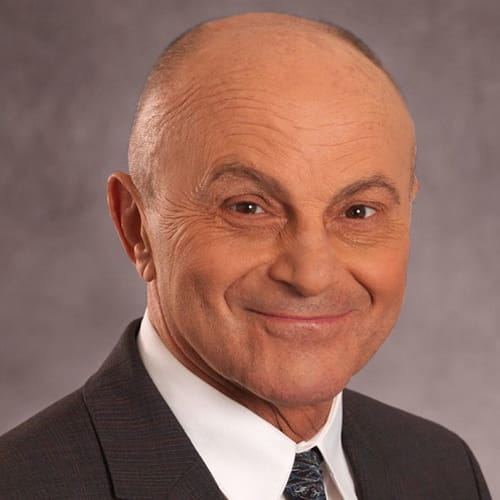
Business school of the University of Chicago, founded in 1898; associated with 10 Nobel laureates in economics, including Eugene Fama and Richard Thaler.
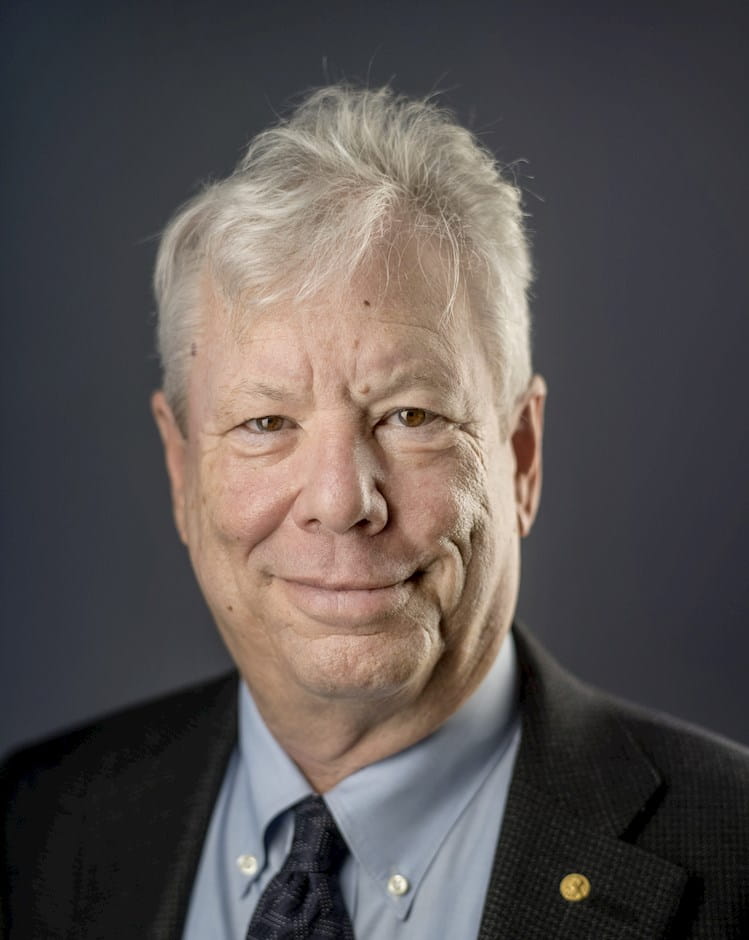
| When Sunk Costs Take Flight | Richard H. Thaler | Choiceology with Katy Milkman | 2026-04-06 | 36 min | Have you ever bought a pair of shoes that never really fit, but you kept wearing them in hopes you’d break them in? All because you didn’t want to feel your money had gone to waste—even as you felt blisters forming? In this episode of Choiceology with Katy Milkman , we explore how focusing on past, irrecoverable costs can skew our judgment and future commitments. Bill Kolb takes us inside the Evergreen Aviation & Space Museum in McMinnville, Oregon. He shares the story of “ The Spruce Goose ” seaplane and why its creator, Howard Hughes, was so committed to the project despite many challenges and several opportunities to back out. Next, Katy speaks with Richard Thaler, economics Nobel laureate and Charles R. Walgreen Distinguished Service Professor of Behavioral Science and Economics at the University of Chicago Booth School of Business. Thaler reveals why we tend to dwell on sunk costs that cannot be recovered and shares insights from his updated book The Winner’s Curse: Behavioral Economics Anomalies, Then and Now . Check out the additional papers mentioned in this episode: “ Paying Not to Go to the Gym ” by Ulrike Malmendier and Stefano DellaVigna and “ The Realization Effect: Risk-Taking After Realized Versus Paper Losses ” by Alex Imas. Choiceology is an original podcast from Charles Schwab. For more on the show, visit schwab.com/choiceology . If you enjoy the show, please leave a rating or review on Apple Podcasts . |
| Richard Thaler on Why People are Much More Irrational than Economists Believe | Richard H. Thaler | The Good Fight | 2025-12-07 | 1:08 | Richard Thaler is the Charles R. Walgreen Distinguished Service Professor of Behavioral Science and Economics at the University of Chicago Booth School of Business. He is the co-author, with Cass Sunstein, of Nudge: Improving Decisions about Health, Wealth, and Happiness , and is the 2017 recipient of the Nobel Memorial Prize in Economic Sciences. In this week’s conversation, Yascha Mounk and Richard Thaler explore to what extent humans behave rationally, how nudge theory works, and whether we should outsource questions about life to ChatGPT. If you have not yet signed up for our podcast, please do so now by following this link on your phone . Email: leonora.barclay@persuasion.community Podcast production by Mickey Freeland and Leonora Barclay. Connect with us! Spotify | Apple | Google X: @Yascha_Mounk & @JoinPersuasion YouTube: Yascha Mounk , Persuasion LinkedIn: Persuasion Community Learn more about your ad choices. Visit megaphone.fm/adchoices |
| Special Edition: Nobel Prize Winner Richard Thaler Live from the Economic Club of New York | Richard H. Thaler | Masters in Business | 2025-11-20 | 1:01 | On this special edition of Masters in Business, Barry speaks with Nobel Prize winning economist Richard Thaler, along with Alex Imas, Professor of Behavioral Science, Economics, and Applied AI at the University of Chicago Booth School of Business about their book, "The Winner's Curse: Behavioral Economics Anomalies, Then and Now". Recorded live on stage at the Economic Club of New York. See omnystudio.com/listener for privacy information. |
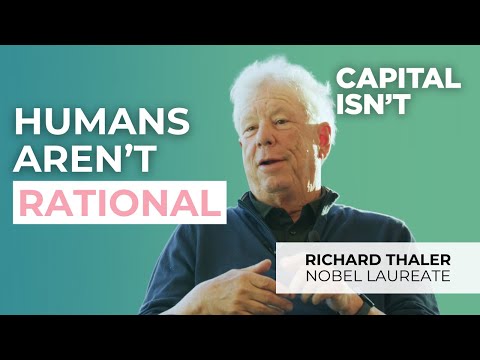
| Nobel Economist Reveals Why Economic Models Keep Failing Us - ft. Richard Thaler | Capitalisn't | Richard H. Thaler | Capitalisn't | 2025-10-30 | 46 min | Standard economic theory informs how we think about business strategy and the economy and presumes that people are selfish, have well-defined preferences, and consistently make welfare-maximizing choices. In other words, we are rational. But what if that is not the case? Nobel Prize-winning economist Richard Thaler is out with an updated edition of his bestselling 1991 book, "The Winner's Curse: Paradoxes and Anomalies of Economic Life." In the new edition, he and his co-author Alex Imas (both professors at the University of Chicago Booth School of Business) reflect on the last thirty years of behavioral economics and how it makes sense of tensions between our psychological biases and impulses that make us less than fully rational in practice. Using a wealth of empirical evidence, the authors explore the behavioral anomalies that contradict the expectations of standard economic theory and explain a wide range of real-world examples from banking crises to social media addiction. Earlier this month, Thaler joined Bethany and Luigi for a sold-out Capitalisn’t recording in front of a live audience in Chicago to walk through the anomalies of human behavior that have endured from biblical times to the age of Big Tech. Thaler reflects on how views and the adoption of behavioral economics have changed over the last thirty years, both within academia and beyond (wonder why you can’t put down your phone? Silicon Valley has read Thaler). |
| Ep. 1355: Richard Thaler and Alex Imas with Michael Covel on Trend Following Radio | Richard H. Thaler | Michael Covel's Trend Following | 2025-09-08 | 47 min | My guests today are Richard Thaler and Alex Imas. Richard Thaler is a theorist in behavioral economics and a professor of Behavioral Science and Economics at the University of Chicago Booth School of Business. In 2017, he was awarded the Nobel Memorial Prize in Economic Sciences for his contributions to behavioral economics. Alex Imas is a professor of Behavioral Science, Economics and Applied AI and a Vasilou Faculty Scholar at the University of Chicago Booth School of Business. He studies behavioral economics with a focus on cognition and mental representation in dynamic decision-making. The topic is their book The Winner's Curse: Behavioral Economics Anomalies, Then and Now. In this episode of Trend Following Radio we discuss: Behavioral economics anomalies and their persistence Trend following, momentum, and mean reversion Nick Leeson and the Barings Bank collapse Development and evolution of their book Applications of behavioral economics in real-world decisions Jump in! --- I'm MICHAEL COVEL, the host of TREND FOLLOWING RADIO, and I'm proud to have delivered 10+ million podcast listens since 2012. Investments, economics, psychology, politics, decision-making, human behavior, entrepreneurship and trend following are all passionately explored and debated on my show. To start? I'd like to give you a great piece of advice you can use in your life and trading journey… cut your losses! |
| Why Cliff Asness Believes Markets Are Getting Dumber | Eugene F. Fama | Capitalisn't | 2025-06-12 | 51 min | Are financial markets becoming less efficient? Famous investor Cliff Asness certainly thinks so. In his paper published last year, “ The Less-Efficient Market Hypothesis ,” Asness argues that social media and low interest rates, among other factors, have distorted market information so that stocks have become disconnected from their true values. This distortion has directed funds toward undeserving assets and firms and staved off necessary market corrections. Asness is the founder, managing principal, and chief investment officer at AQR Capital Management. He is an active researcher on various financial and investment topics and received an MBA and PhD in finance from the University of Chicago Booth School of Business. From her early days as a journalist reporting on Wall Street, Bethany recounts Asness as an outspoken, successful quant investor: one who invests based primarily on the fundamentals of the market rather than those of the firm. She also remembers him being “colloquial” and willing to be “experimental” with ideas. Asness’s recent paper continues that experimental style as he challenges the legacy of the efficient market hypothesis on which his PhD advisor, Nobel Prize laureate Eugene Fama, made his name, and which argues that asset prices reflect all available information, making it impossible to “beat” or outperform the market. |
| Richard Thaler | Nudge | Richard H. Thaler | Talks at Google | 2025-05-09 | 54 min | We make a countless number of decisions every day – but unfortunately, we often choose unwisely. Behavioral economist Richard Thaler has dedicated his life's work to understanding why that is. In 2017, Thaler received the Nobel Memorial Prize in Economic Sciences for his contributions to the field of behavioral economics. His book, "Nudge," co-authored by Cass R. Sunstein, shows that it's not possible for choices to be presented to us in a neutral way. The book demonstrates how to best nudge us in the right directions, without restricting our freedom of choice. Richard Thaler is a professor of behavioral science and economics at the University of Chicago Booth School of Business. He's a member of the National Academy of Science and the American Academy of Arts and Sciences. He's been published in many prominent journals, and he's also the author of "Misbehaving: The Making of Behavioral Economics." Originally published in December 2021. Watch this episode at youtube.com/TalksAtGoogle . |
| Episode 15 Eugene Fama, University of Chicago Booth School of Business | Eugene F. Fama | Middle Market Musings | 2022-01-21 | 42 min | Eugene Fama is the 2013 Nobel laureate in economic sciences, widely recognized as the “father of modern finance.” Professor Fama finds himself in the wrong part of town and ends up on a podcast with Andy and Charlie. Gene Fama is direct, funny, and generous in sharing insights on the evolution of financial markets dating back to his revolutionary efficient market hypothesis, the development of private equity as an asset class alongside of public equity, and a battery of current issues like inflation and cryptocurrency. How good is he? The MMM co-hosts are stunned into good behavior. |
| Richard Thaler - The Birth, Growth & Future of Behavioral Economics | Richard H. Thaler | BE GOOD! | 2021-12-16 | 1:02 | Nobel-prize winning economist and co-author of “Nudge”, Professor Richard Thaler is our guest in this new episode of the B.E. GOOD! Podcast by BVA Nudge Unit. He is the Charles Walgreen Distinguished Service Professor of Behavioral Science Economics at the University of Chicago Booth School of Business and studies behavioral economics and finance as well as the psychology of decision making. Eric Singler and Scott Young speak with Professor Thaler about his most recent book "Nudge: The Final Edition", his personal journey and “greatest discovery”, and the biggest change he’s seen in the field of Behavioral Economics over the past decade. Hosted on Ausha. See ausha.co/privacy-policy for more information. |
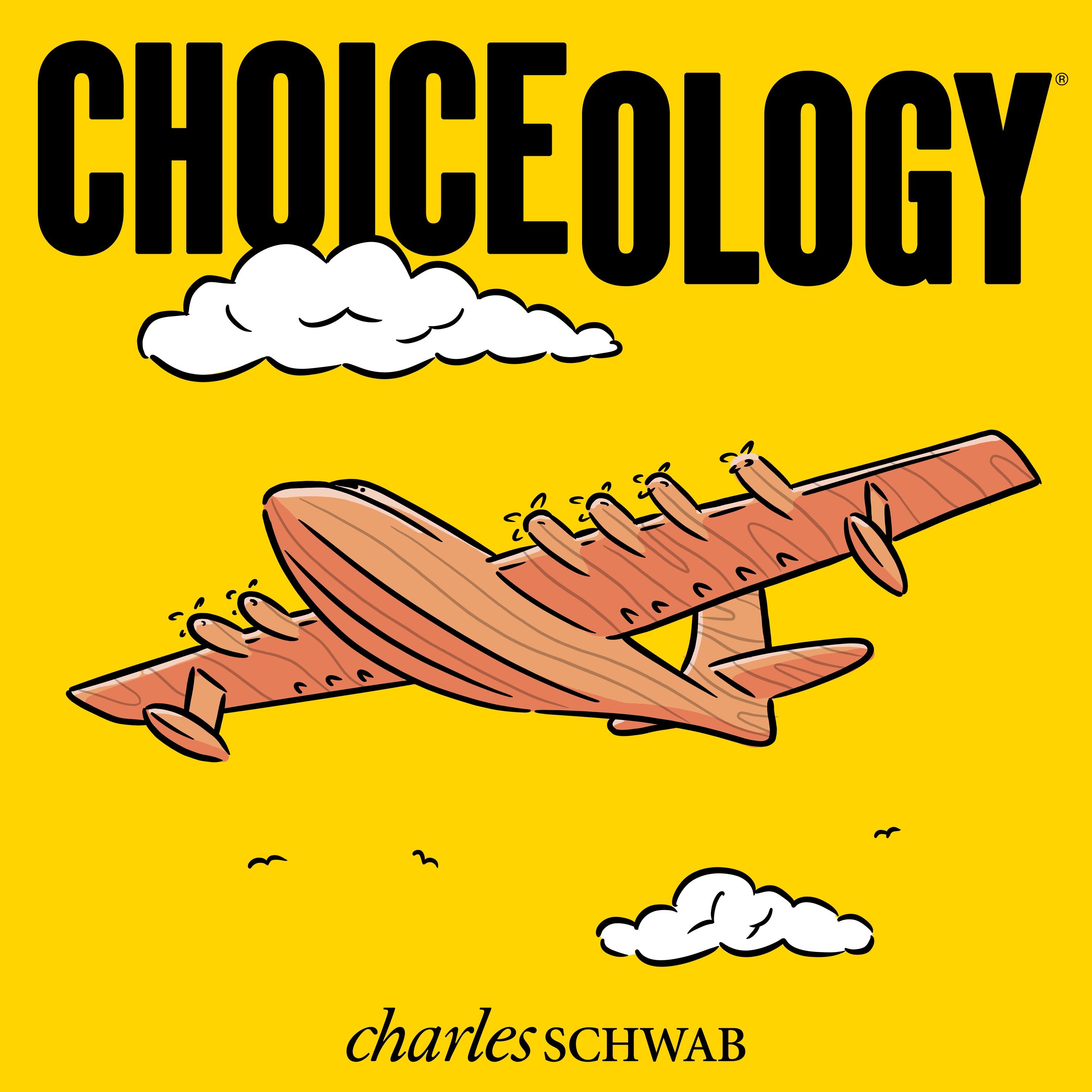 CWhen Sunk Costs Take FlightChoiceology with Katy Milkman · 2026-04-06
 TRichard Thaler on Why People are Much More Irrational than Economists BelieveThe Good Fight · 2025-12-07
 MSpecial Edition: Nobel Prize Winner Richard Thaler Live from the Economic Club of New YorkMasters in Business · 2025-11-20
 CNobel Economist Reveals Why Economic Models Keep Failing Us - ft. Richard Thaler | Capitalisn'tCapitalisn't · 2025-10-30
 MEp. 1355: Richard Thaler and Alex Imas with Michael Covel on Trend Following RadioMichael Covel's Trend Following · 2025-09-08
 CWhy Cliff Asness Believes Markets Are Getting DumberCapitalisn't · 2025-06-12
 TRichard Thaler | NudgeTalks at Google · 2025-05-09
 MEpisode 15 Eugene Fama, University of Chicago Booth School of BusinessMiddle Market Musings · 2022-01-21
 BRichard Thaler - The Birth, Growth & Future of Behavioral EconomicsBE GOOD! · 2021-12-16