Updates

  1. 137 new fund letters and reports, each with its own page: Kayne Anderson Rudnick (48 market briefings, KayneCast episodes and TV commentaries), Shelton Capital Management (48 shareholder reports and a commentary), Lakehouse Capital (10 Small Companies Fund letters), Smead (5 newsletters), RIT Capital Partners (5 monthly commentaries), Kovitz, Legal & General, Generation, Hosking, Marram, Munro, Oldfield and others.
  2. 200 new fund letters and reports, each with its own page: Spheria (41 monthly reports), Peapack Private (41 weekly recaps and planning newsletters), Fort Washington (23), Polen Capital (15), Aristotle Pacific (14), Riverwater (13), Chou (10), Apollo Asia Fund (8, back to 1998), Personal Asset Trust, Rockwood Strategic, J Capital Research, I/O Fund, Penn Davis McFarland, Pomona and others.
  3. Investor pages have one Investments tab with shares, changes, % owned, class, market cap and Market cap and Status filters, a Funds tab listing each fund the firm runs, and assets under management from Form ADV. The Investors table shows AUM and current investments, and its search finds investors by what they hold.
  4. Filters, search and sort stay as you left them when you come back to a section. Person cards look like book cards. Company pages name their Investors tab Ownership. Kind and Sector filters use four kinds and GICS sectors with industries. Dead links left the Links tabs.
  5. 190 more investors from fiscal.ai's list, with their sites, letters, partners and 13F holdings; 556 more partner descriptions. Experts now lists only people.
  6. Fund letters lists 144 new documents from 23 firms, each with its own page: a summary, key insights and quotes. Among them: 37 BlackRock articles, 21 Value Partners monthly notes, eight Baron Capital letters, six Stone Sentinel letters to partners, seven Value Line portfolio manager Q&As, BNY's 2026 earnings releases and Starboard Value's 2026 conference presentations.
  7. 584 more investors, with their websites, 6,776 letters from their own sites, 1,385 partners with pages and the 13F holdings of 213 firms. New letters arrive daily from 290 more archives.
  8. Media and Companies filter by GICS sector and industry group, taken from the companies an episode or page names. 1,860 more company pages show a logo, the SEC's list included.
  9. The home page counts what the platform holds and lists features such as the document reader, the player and saved marks. Settings sits at the foot of the rail. Book cards are a quarter wider, so rows hold fewer. Companies drops the Named in filter, and the Role list in your account runs A to Z.
  10. Investor pages of 13 firms show their newsroom's latest posts. New 13F filings are read as the SEC publishes them.
  11. Investor pages have an Investments tab: 13,975 holdings for 105 investors, from their 13F filings with the SEC and their own portfolio pages, with status and sector. 7,338 more companies have a page of their own.
  12. A podcast or YouTube episode keeps playing while you move around the site, in a bar with skip, speed and volume. Media tables show each episode's length and description.
  13. Press releases come from each company's own newsroom (167 companies); SEC filings sit on the Filings tab. Tickers name their exchange, and a company's Experts tab includes guests whose episode description names it.
  14. Letter types now include Market commentary, Fact sheet, Interim report, Annual report, Proxy circular and Governance document. The reader opens over the whole window.
  15. Partners of investment firms have 2,836 appearances and 580 pieces of writing on their pages; Derek Sivers's page lists every book he rates, with his rating.
  16. Fund letters lists three Akre Focus shareholder reports: the ETF's annual report for the year to July 2026, its semi-annual report to January 2026 and the fund's semi-annual report to January 2025, each with its own page: a summary, key insights and quotes.
  17. 837 partners of 73 investment firms now have their own pages, with title, description, photograph and social accounts; Andreessen Horowitz partners' pages also list their writing on a16z.com.
  18. Company pages have a Press releases tab: 8,229 releases for 203 companies, from SEC filings and company newsrooms. Companies filter by For-profit or Non-profit. Own media is a table with filters. Media filters by sector and industry. Publication pages link their publisher in the description.
  19. The Unilever page's Letters tab shows what each fund letter says about Unilever, word for word with its page, and whether the letter is bullish, bearish, mixed or neutral. Filter by sentiment, and see 10 letters at a time.
  20. 492 more fund letters and 3,183 more articles show the day they were published, read from each letter's first page or each article's own page.
  21. The PDF reader has a search box: type words to see every match in the document and step through them. About 540 letters that were web pages, among them Oakmark's commentaries, Bill Miller's letters and Howard Marks's memos, now open in the reader.
  22. Person pages: recommendations open with tier 1 books; one button per organisation; transcripts sit on their episodes; the books on 129 reading lists joined the Recommends tabs.
  23. Companies lists every company with a ticker on the SEC's list, with a Source filter. A quote on a company page opens the letter at that page with the words marked. A company's Media tab lists only episodes that name it, and a new Own media tab lists its podcasts, publications and YouTube channel. Show pages link their publisher. A page opened from a table no longer shows that table's filters beside it.
  24. Company, investor and person pages show more of their social accounts: Facebook, TikTok, Bluesky, Medium, GitHub, Discord and podcast shows. Investor pages list every partner the firm's own team page names: 965 people across 73 investors, 98 for Andreessen Horowitz.
  25. About 170 more letters and papers open in the reader: Mohnish Pabrai's letters and transcripts from his site's new folder, and free copies of papers by Asness, Harvey, Altman, Lo and others from their own or their schools' sites.
  26. Every company a fund letter names has a page, with the letters and quotes that name it: 47 new pages, among them Atom Computing, Hugging Face, Rolls-Royce Holdings and Westinghouse Electric. Company pages have a Quotes tab.
  27. A person's Writing tab has a Type column and filter (Article, Essay, Transcript, Speech, Foreword, Interview and the rest), and Publication names only the publication that published each piece.
  28. Fund letters opens on the newest published letter, and a letter or paper found by search opens its own page here instead of the publisher's site.
  29. A letter or paper with a copy on the site opens its PDF over its page, with a button to open it in a new tab. Select text to highlight or underline it; signed-in readers keep their marks in their account. Each quote opens the PDF at its page with its words marked, and a Source link leads to the publisher's original.
  30. Fund letters lists 61 more documents, each with its own page: Fairfax's 2025 and 2026 interim reports, proxy circulars and 2025 annual report (with their French editions), 26 Charlie Munger meeting transcripts, talks and essays, Third Point's 2026 monthly reports and Malibu Life's interim results, and a Seth Klarman interview. Papers adds Richard Thaler's two 2020 editorials on nudges.
  31. Fund letters lists Lux Capital's letters for Q2 and Q3 2026, by Josh Wolfe, each with its own page: a summary, key insights and quotes.
  32. Fund letters lists Brookfield's letter to shareholders for Q3 2026, by Bruce Flatt, with its own page: a summary, key insights and quotes.
  33. Fund letters lists Howard Marks's memo of 11 November 2026, A Layman Thinks About AI, with its own page: a summary, key insights and quotes.
  34. Fund letters lists 118 more letters, each with its own page: 44 weekly commentaries by Jeremy Siegel from 2026, 31 issues of Van Tharp's newsletter from 2018, 23 Pabrai Investment Funds letters from 2021 to Q3 2026, 13 Efficient Frontier essays by William Bernstein, Oakmark's three 3Q 2026 commentaries, two Lindsell Train reports, a John Hussman comment and Third Point's Q3 2026 letter.
  35. 2,027 more books carry a one-line description in the Books table and on their pages; 7,067 of 7,715 have one, every tier 1, 2 and 3 book among them.
  36. Fund letters lists 187 more letters from 19 firms, among them Permanent Equity, Social Capital, Lux Capital, Square Peg, Bestinver, Cobas, Sequoia Fund, Marketfield and EquityCompass; each shows on its investor's page and has a page of its own.
  37. 2,928 more books carry a one-line description in the Books table and on their pages, so every tier 1, 2 and 3 book has one; 5,040 in all.
  38. Every publication on Newsletters has its own page: its writing, its writers, its staff and who recommends it. Investor pages have a Management tab; a company's Experts tab now leaves out its own people, who list under Management. Tabs on a phone move sideways only.
  39. Every fund letter and research paper has its own page: the thesis, the PDF, the companies and books it names, and for 176 letters and 24 papers so far a summary, key insights and quotes with their page.
  40. 99 books that no page listed now sit under their topics in Books, among them Caste, American Prometheus and Pale Blue Dot.
  41. Newsletters lists every newspaper, magazine, investment newsletter, journal and blog the reference holds, 442 in all, with the people who write there. The search box keeps your last 20 searches. You can create an account.
  42. 283 books that fund managers recommend in their letters are on the shelf, each with the letter's own words and page; investor pages have a Recommends tab.
  43. Person, company, investor and show pages link their own accounts on X, Threads, Instagram, LinkedIn, YouTube and Substack: 275 people, 552 companies and organisations, 88 investors and 478 shows.
  44. 716 more book recommendations name their source: the person's own reading list, letter, blog post, speech or interview, or an article that reports it. 232 of them quote the person's own words about the book, on the book card and on the book's page.
  45. Every US-listed company has a page with its SEC filings. Company pages list their experts and their management, past and present. Fund managers sit under Investors. Each show has a page of its episodes, and an episode page names its guests and hosts. Biographies lists groups, then people. Breadcrumbs show where a page sits.
  46. Media lists every podcast episode, video, interview and talk, over 10,000, by person, company, publisher and event; each filter searches its own choices. Books opens on its table, then Browse, then Authors and Recommenders. A filter's count no longer covers its arrow.
  47. A book that no company, country or subject page lists shows its topics under Where it sits in the reference. On a phone, a page's tabs scroll sideways only. Descriptions read the same on every page. See them in the Experts tab lists every expert the page names.
  48. Every podcast episode, video and interview has its own page with a video or audio player and a link to the source. Investor pages show each company's sector and market cap; firms such as Berkshire Hathaway have one page that holds their letters and their company tabs. Letters tabs filter by company and search the theses. Companies filter by Public, Private and Defunct and link each company's website.
  49. Every tab, view and search has its own address, such as /books/table/asset or /letters/companies, so Back works and a link opens the same place. Page addresses no longer end in .html. Fund letters, Investors, Companies and Papers load about a fifth of the data they did.
  50. Fund letters has a Companies tab: every company the letters name, with its market cap, sector, country, and how many letters and investors name it. Investor pages link each investor's website. Lists in table cells end with “… and N more” at every width.
  51. 1,120 more book summaries; descriptions for 373 papers; pages for 137 more companies, each with the fund letters that discuss it; 215 official photographs; search has its own page.
  52. 411 more books have a summary; person pages list 930 more of the books they wrote; 147 people show their official photograph.
  53. Every investor has a page with its letters and the companies they discuss; company pages list the investors whose letters name them.
  54. A Companies section at the top of the rail lists every company the books, experts and fund letters name.
  55. Person pages list letters, writing, profiles and links as sortable tables with filters, and show each person's companies as links; Fund letters show each letter's description in its own column.
  56. Experts show a checked job title and a short description of each person; 30 more people have photographs.
  57. Every company, fund, university and publication the experts work for has a page listing the people there.
  58. Fund letters show each letter's thesis and filter by it; 225 person pages list the essays, columns and newsletter issues the person wrote.
  59. Person pages list every essay and newsletter issue a person wrote, and their own books as a table in List view.
  60. Recommends shows the five largest kinds of book and the rest under More; browse pictures load sooner.
  61. Podcasts and talks link the original episode, filter by Audio and video or Press, and list each publisher once.
  62. Pages are wider, Recommends has List and Grid, and a filter clicked again turns off.
  63. Book cards sit in a ruled grid with Open Library and Goodreads links and each book's one-line note.
  64. Funds is now Investors; each investor's styles are buttons that filter the table.
  65. Podcasts and talks on a person's page filter by year and publisher and show as a list or a grid of pictures.
  66. Quotes show only people's own words: 472 summaries written by list sites are gone.
  67. Country pages open from Browse again, and every link on the shelf lands on a page.
  68. Subject and person pages show their sections as tabs, and each book appears once on a person's page.
  69. Book cards show the quote, who said it and the source; grids show five cards to a row.
  70. On a phone, a menu holds the sections, search, Updates, Feedback and dark mode.
  71. Feedback takes a screenshot of the page with no browser prompt, opens a screenshot full size when you click it, and clears itself once sent.
  72. Book cards are centred, search names the topic each book sits in, and any text cut short shows whole on hover.
  73. Search groups its results by kind: people, companies, geographies, subjects, topics, books, funds, fund letters and papers.
  74. The Books table lists who recommended each book by name, and the browser tab names the section you are in.
  75. Feedback can take a screenshot of the page, or one you paste or choose, and opens in the corner beside Updates.
  76. Each rail button reopens its section where you left it, and Browse, Table and People show on every book and subject page.
  77. Filters grey out choices that hold nothing instead of hiding them, and Books › People filters by authors or recommenders.
  78. Feedback takes a subject line and up to three screenshots.
  79. Biographies are grouped by the person they are about: 41 new pages, from Abraham Lincoln to Lee Kuan Yew.
  80. Sport splits into 23 sports, and Religion into one topic per faith.
  81. Book lists show as cards: the cover, one recommendation quote and every recommender by name.
  82. Seventeen subjects that had two or three pages under different names now have one page each.
  83. Every page lists its Experts as authors and recommenders, with a link to them on the Experts tab.
  84. Economics, Financial history, Financial panics and Accounting are subjects of their own, with one page per financial crisis.
  85. Book, person and subject pages open inside the app, so the tabs stay in view.
  86. 996 more book covers, and photographs or logos for 227 more people and companies.
  87. Books › Browse shows every subject as cards, and the rail holds Fund letters, Papers, Experts, Books and Funds.
  88. Every topic over 150 books splits into narrower topics, each with a page of its own.

Send feedback

What is it?
Screenshots, up to 3 (optional)
or paste one with Ctrl+V

We use your email only to reply to you.

T

Podcast · 10 episodes in the reference, 2012 to 2026

The Interview

Published by BBC World Service

Episodes

Sophia Amoruso, Nasty Gal founder: I was out of my leagueSophia Amoruso10 September 202623 min“I had hired a CEO for the last two years. The company was at a place where revenue had plateaued. I wasn’t someone who could look at a spreadsheet 50 tabs wide and tell my CFO what to do. I was definitely out of my league and I didn’t like that job, and a lot of different things happened before we ended up filing for bankruptcy.” Leanna Byrne speaks to Sophia Amoruso, founder of online fashion retailer Nasty Gal. What began as a one-woman eBay shop selling vintage clothes became one of online fashion’s most recognisable brands. Within a few years, Nasty Gal was valued at $350 million, bringing expectations that it would grow like a technology company and become a billion-dollar business. Sophia reflects on feeling out of her depth running the company, criticism of its workplace culture and the decisions that led to bankruptcy. The Interview brings you conversations with people shaping our world, from all over the world. The best interviews from the BBC, including episodes with Sundar Pichai and Julia Gillard. You can listen on the BBC World Service on Mondays, Wednesdays and Fridays at 0800 GMT. Or you can listen to The Interview as a podcast, out three times a week on BBC Sounds or wherever you get your podcasts. Presenter: Leanna Byrne Producer: Osman Iqbal Editor: Farhana Haider and Damon Rose (Image: Sophia Amoruso. Credit: Araya Doheny/Getty)
Reid Hoffman, tech billionaire: AI job revolutionReid Hoffman2 June 202623 minAmol Rajan speaks to tech billionaire Reid Hoffman, about why he thinks artificial intelligence could transform the future of work. Reid Hoffman is best known for co-founding LinkedIn, the largest professional networking platform in the world, and revolutionising the world of work. He wants to do it again with a rapid adoption of AI in the workplace in a way he says is safe and ethical. As one of the world’s richest men he also gives his thoughts on tech billionaires and his former relationship with the late sex offender Jeffrey Epstein. Thank you to the Radical with Amol Rajan team for its help in making this programme. The Interview brings you conversations with people shaping our world, from all over the world. The best interviews from the BBC, including episodes with entrepreneur Emma Grede, CEO of Otter.ai Sam Liang, and First Lady of Sierra Leone Fatima Bio. You can listen on the BBC World Service on Mondays, Wednesdays and Fridays at 0800 GMT. Or you can listen to The Interview as a podcast, out three times a week on BBC Sounds or wherever you get your podcasts. Presenter: Amol Rajan Producer: Cordelia Hemming Editor: Farhana Haider Get in touch with us on email TheInterview@bbc.co.uk and use the hashtag #TheInterviewBBC on social media. (Image: Reid Hoffman. Credit: Jason Alden/Getty Images)
Melanie Perkins, Canva CEO: From information to imaginationMelanie Perkins5 December 202523 minZoe Kleinman, the BBC’s Technology editor, speaks to Canva CEO Melanie Perkins about the current tech and AI revolution that is transforming the internet and the world. Perkins, who is still only in her late-30s, is well-known for her entrepreneurial drive, having quit university at just 19 years old to launch her first venture. Unlike many of today’s Silicon Valley-based big tech companies, Canva started out in the Australian city of Perth with a mission to ‘empower the world to design’. It offers a variety of templates and tools to help users without technical skills or a design background to create a range of professional-looking graphics and presentations, from wedding invitations to business pitch decks. Since launching in 2013, it has grown to become a multi-billion dollar business used by around 250 million people every month. The success of Canva has catapulted Perkins into a number of lists ranking the world’s most powerful women, compiled by the likes of Forbes and Fortune. But it is a far cry from the very early days, when she was rejected by over 100 investors as she sought to get it off the ground. The Interview brings you conversations with people shaping our world, from all over the world. The best interviews from the BBC. You can listen on the BBC World Service on Mondays, Wednesdays and Fridays at 0800 GMT. Or you can listen to The Interview as a podcast, out three times a week on BBC Sounds or wherever you get your podcasts.
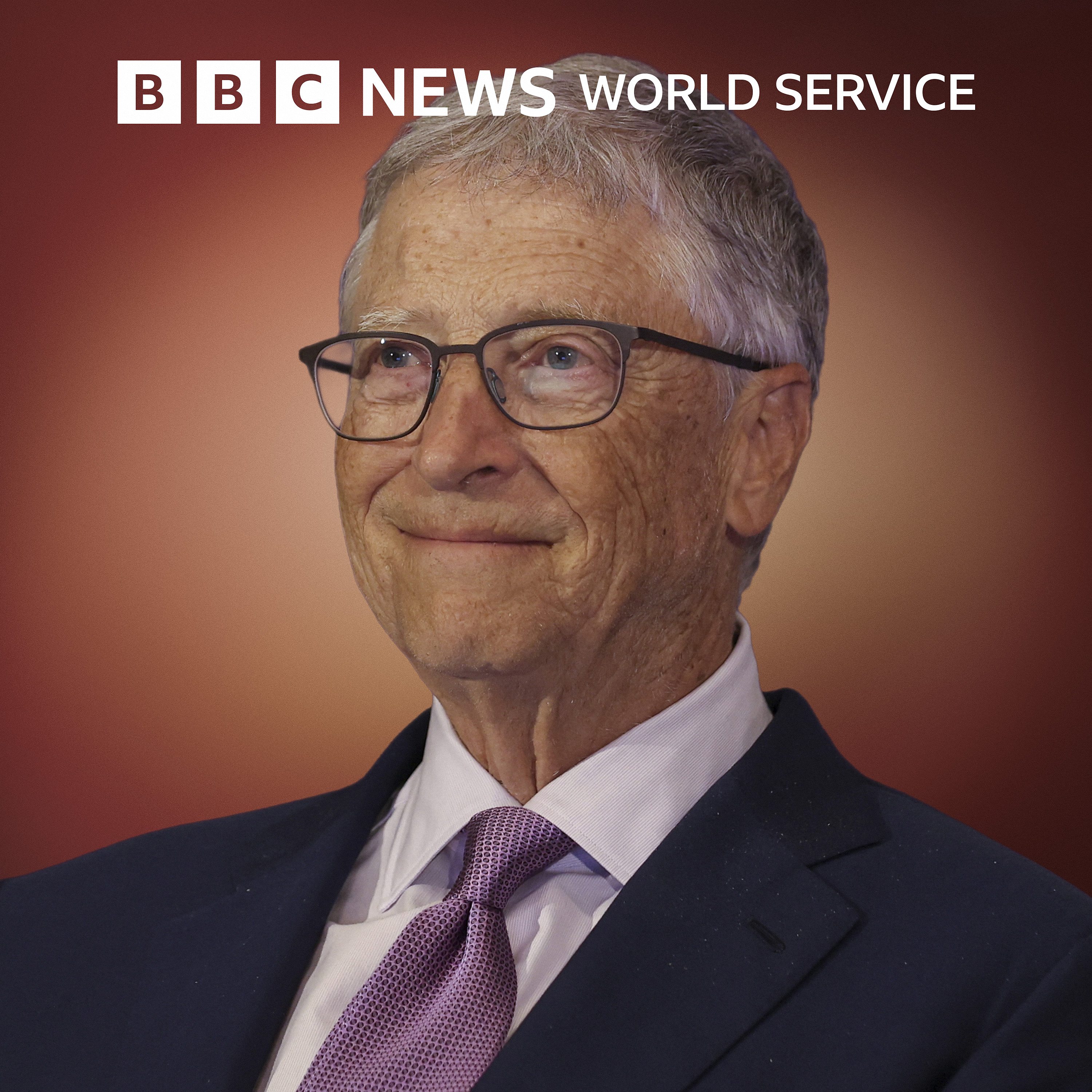
Bill Gates: The importance of aid and philanthropyBill Gates8 June 202523 minWaihiga Mwaura, presenter of the BBC’s Focus on Africa programme, speaks to Microsoft co-founder and global philanthropist, Bill Gates. Mr. Gates, who is 69 years old, announced last month that he plans to give away 99% of his vast fortune over the next 20 years, predominately through his Gates Foundation. The foundation has already given over 100 billion dollars since being established 25 years ago. He built his vast personal wealth through the software giant Microsoft, which he co-founded back in 1975. Mr. Gates has gradually stepped back from the company in recent decades, first resigning as its chief executive in 2000 and then later as its chairman in 2014. This has allowed him to turn his attention to global philanthropy, with a particular focus on health initiatives in lower-income countries. But Mr. Gates fears this work could be at risk as wealthier countries cut back on their own international aid commitments. The Interview brings you conversations with people shaping our world, from all over the world. The best interviews from the BBC. You can listen on the BBC World Service, Mondays and Wednesdays at 0700 GMT. Or you can listen to The Interview as a podcast, out twice a week on BBC Sounds, or wherever you get your podcasts. Presenter: Waihiga Mwaura Producer: Ben Cooper Editor: Nick Holland Get in touch with us on email TheInterview@bbc.co.uk and use the hashtag #TheInterviewBBC on social media. (Image: Bill Gates. Credit: Reuters)
Reid Hoffman: Should we trust the tech elite?Reid Hoffman19 March 202523 minStephen Sackur speaks to Reid Hoffman, the tech billionaire who co-founded LinkedIn and is a prophet of positivity about Artificial Intelligence.
Ngozi Okonjo-Iweala: Is global free trade possible?Ngozi Okonjo-Iweala18 January 202324 minStephen Sackur is in Geneva to speak to Ngozi Okonjo-Iweala, director general of the World Trade Organization. Her job is to maximise free and fair trade across the world. How is that possible in this age of big power tension and increased suspicion of globalisation?
David Friedberg: Can tech fix our biggest challenges?David Friedberg7 December 202224 minIn a special edition from San Francisco, Stephen Sackur speaks to billionaire tech investor David Friedberg. He’s convinced science and technology can fix the world’s biggest challenges – climate, sustainable food, and energy production. But will we use our knowledge wisely?
Richard Thaler: Is a nudge enough to change our behaviour?Richard H. Thaler7 October 202123 minFrom Covid to climate change, governments around the world face challenges which demand modifications of human behaviour. When it comes to getting people to do things differently, what works best: the carrot of persuasion, or the stick of coercion? Stephen Sackur speaks to Richard Thaler, the world renowned economist and behavioural scientist who believes a nudge often works better than a shove when change is needed. Does that hold good when the problems we face become urgent and existential?
Recep Tayyip Erdogan - President of TurkeyRecep Tayyip Erdoğan14 July 201724 minIn a special edition of the programme, Zeinab Badawi is in Istanbul to speak to Turkey's President Recep Tayyip Erdogan. It is a year since coup plotters tried to remove him from office in a series of events that were condemned by the international community and Turks from all backgrounds and political persuasions. But now hundreds of thousands of Turks have been on the march protesting at what they say is President Erdogan's purge of all opposition forces - not just the coup plotters. Is President Erdogan a danger to democracy in Turkey?
Richard Thaler - Behavioural economistRichard H. Thaler24 October 201223 minStop smoking, eat less, exercise more, pay your taxes on time. So many things governments want us to do; so hard to get us to do them. Shaun Ley speaks to behavioural economist Richard Thaler who thinks he has the answer. It's called 'nudge' theory, but it's not just an academic idea. Britain's Prime Minister is so impressed, he's set up a whole 'nudge unit' in the heart of his government. If you live in Britain, you may unwittingly already be part of a nudge experiment. So is the nudge guru teaching those in power how to encourage us to live better; or helping politicians to control us?