Updates

  1. 137 new fund letters and reports, each with its own page: Kayne Anderson Rudnick (48 market briefings, KayneCast episodes and TV commentaries), Shelton Capital Management (48 shareholder reports and a commentary), Lakehouse Capital (10 Small Companies Fund letters), Smead (5 newsletters), RIT Capital Partners (5 monthly commentaries), Kovitz, Legal & General, Generation, Hosking, Marram, Munro, Oldfield and others.
  2. 200 new fund letters and reports, each with its own page: Spheria (41 monthly reports), Peapack Private (41 weekly recaps and planning newsletters), Fort Washington (23), Polen Capital (15), Aristotle Pacific (14), Riverwater (13), Chou (10), Apollo Asia Fund (8, back to 1998), Personal Asset Trust, Rockwood Strategic, J Capital Research, I/O Fund, Penn Davis McFarland, Pomona and others.
  3. Investor pages have one Investments tab with shares, changes, % owned, class, market cap and Market cap and Status filters, a Funds tab listing each fund the firm runs, and assets under management from Form ADV. The Investors table shows AUM and current investments, and its search finds investors by what they hold.
  4. Filters, search and sort stay as you left them when you come back to a section. Person cards look like book cards. Company pages name their Investors tab Ownership. Kind and Sector filters use four kinds and GICS sectors with industries. Dead links left the Links tabs.
  5. 190 more investors from fiscal.ai's list, with their sites, letters, partners and 13F holdings; 556 more partner descriptions. Experts now lists only people.
  6. Fund letters lists 144 new documents from 23 firms, each with its own page: a summary, key insights and quotes. Among them: 37 BlackRock articles, 21 Value Partners monthly notes, eight Baron Capital letters, six Stone Sentinel letters to partners, seven Value Line portfolio manager Q&As, BNY's 2026 earnings releases and Starboard Value's 2026 conference presentations.
  7. 584 more investors, with their websites, 6,776 letters from their own sites, 1,385 partners with pages and the 13F holdings of 213 firms. New letters arrive daily from 290 more archives.
  8. Media and Companies filter by GICS sector and industry group, taken from the companies an episode or page names. 1,860 more company pages show a logo, the SEC's list included.
  9. The home page counts what the platform holds and lists features such as the document reader, the player and saved marks. Settings sits at the foot of the rail. Book cards are a quarter wider, so rows hold fewer. Companies drops the Named in filter, and the Role list in your account runs A to Z.
  10. Investor pages of 13 firms show their newsroom's latest posts. New 13F filings are read as the SEC publishes them.
  11. Investor pages have an Investments tab: 13,975 holdings for 105 investors, from their 13F filings with the SEC and their own portfolio pages, with status and sector. 7,338 more companies have a page of their own.
  12. A podcast or YouTube episode keeps playing while you move around the site, in a bar with skip, speed and volume. Media tables show each episode's length and description.
  13. Press releases come from each company's own newsroom (167 companies); SEC filings sit on the Filings tab. Tickers name their exchange, and a company's Experts tab includes guests whose episode description names it.
  14. Letter types now include Market commentary, Fact sheet, Interim report, Annual report, Proxy circular and Governance document. The reader opens over the whole window.
  15. Partners of investment firms have 2,836 appearances and 580 pieces of writing on their pages; Derek Sivers's page lists every book he rates, with his rating.
  16. Fund letters lists three Akre Focus shareholder reports: the ETF's annual report for the year to July 2026, its semi-annual report to January 2026 and the fund's semi-annual report to January 2025, each with its own page: a summary, key insights and quotes.
  17. 837 partners of 73 investment firms now have their own pages, with title, description, photograph and social accounts; Andreessen Horowitz partners' pages also list their writing on a16z.com.
  18. Company pages have a Press releases tab: 8,229 releases for 203 companies, from SEC filings and company newsrooms. Companies filter by For-profit or Non-profit. Own media is a table with filters. Media filters by sector and industry. Publication pages link their publisher in the description.
  19. The Unilever page's Letters tab shows what each fund letter says about Unilever, word for word with its page, and whether the letter is bullish, bearish, mixed or neutral. Filter by sentiment, and see 10 letters at a time.
  20. 492 more fund letters and 3,183 more articles show the day they were published, read from each letter's first page or each article's own page.
  21. The PDF reader has a search box: type words to see every match in the document and step through them. About 540 letters that were web pages, among them Oakmark's commentaries, Bill Miller's letters and Howard Marks's memos, now open in the reader.
  22. Person pages: recommendations open with tier 1 books; one button per organisation; transcripts sit on their episodes; the books on 129 reading lists joined the Recommends tabs.
  23. Companies lists every company with a ticker on the SEC's list, with a Source filter. A quote on a company page opens the letter at that page with the words marked. A company's Media tab lists only episodes that name it, and a new Own media tab lists its podcasts, publications and YouTube channel. Show pages link their publisher. A page opened from a table no longer shows that table's filters beside it.
  24. Company, investor and person pages show more of their social accounts: Facebook, TikTok, Bluesky, Medium, GitHub, Discord and podcast shows. Investor pages list every partner the firm's own team page names: 965 people across 73 investors, 98 for Andreessen Horowitz.
  25. About 170 more letters and papers open in the reader: Mohnish Pabrai's letters and transcripts from his site's new folder, and free copies of papers by Asness, Harvey, Altman, Lo and others from their own or their schools' sites.
  26. Every company a fund letter names has a page, with the letters and quotes that name it: 47 new pages, among them Atom Computing, Hugging Face, Rolls-Royce Holdings and Westinghouse Electric. Company pages have a Quotes tab.
  27. A person's Writing tab has a Type column and filter (Article, Essay, Transcript, Speech, Foreword, Interview and the rest), and Publication names only the publication that published each piece.
  28. Fund letters opens on the newest published letter, and a letter or paper found by search opens its own page here instead of the publisher's site.
  29. A letter or paper with a copy on the site opens its PDF over its page, with a button to open it in a new tab. Select text to highlight or underline it; signed-in readers keep their marks in their account. Each quote opens the PDF at its page with its words marked, and a Source link leads to the publisher's original.
  30. Fund letters lists 61 more documents, each with its own page: Fairfax's 2025 and 2026 interim reports, proxy circulars and 2025 annual report (with their French editions), 26 Charlie Munger meeting transcripts, talks and essays, Third Point's 2026 monthly reports and Malibu Life's interim results, and a Seth Klarman interview. Papers adds Richard Thaler's two 2020 editorials on nudges.
  31. Fund letters lists Lux Capital's letters for Q2 and Q3 2026, by Josh Wolfe, each with its own page: a summary, key insights and quotes.
  32. Fund letters lists Brookfield's letter to shareholders for Q3 2026, by Bruce Flatt, with its own page: a summary, key insights and quotes.
  33. Fund letters lists Howard Marks's memo of 11 November 2026, A Layman Thinks About AI, with its own page: a summary, key insights and quotes.
  34. Fund letters lists 118 more letters, each with its own page: 44 weekly commentaries by Jeremy Siegel from 2026, 31 issues of Van Tharp's newsletter from 2018, 23 Pabrai Investment Funds letters from 2021 to Q3 2026, 13 Efficient Frontier essays by William Bernstein, Oakmark's three 3Q 2026 commentaries, two Lindsell Train reports, a John Hussman comment and Third Point's Q3 2026 letter.
  35. 2,027 more books carry a one-line description in the Books table and on their pages; 7,067 of 7,715 have one, every tier 1, 2 and 3 book among them.
  36. Fund letters lists 187 more letters from 19 firms, among them Permanent Equity, Social Capital, Lux Capital, Square Peg, Bestinver, Cobas, Sequoia Fund, Marketfield and EquityCompass; each shows on its investor's page and has a page of its own.
  37. 2,928 more books carry a one-line description in the Books table and on their pages, so every tier 1, 2 and 3 book has one; 5,040 in all.
  38. Every publication on Newsletters has its own page: its writing, its writers, its staff and who recommends it. Investor pages have a Management tab; a company's Experts tab now leaves out its own people, who list under Management. Tabs on a phone move sideways only.
  39. Every fund letter and research paper has its own page: the thesis, the PDF, the companies and books it names, and for 176 letters and 24 papers so far a summary, key insights and quotes with their page.
  40. 99 books that no page listed now sit under their topics in Books, among them Caste, American Prometheus and Pale Blue Dot.
  41. Newsletters lists every newspaper, magazine, investment newsletter, journal and blog the reference holds, 442 in all, with the people who write there. The search box keeps your last 20 searches. You can create an account.
  42. 283 books that fund managers recommend in their letters are on the shelf, each with the letter's own words and page; investor pages have a Recommends tab.
  43. Person, company, investor and show pages link their own accounts on X, Threads, Instagram, LinkedIn, YouTube and Substack: 275 people, 552 companies and organisations, 88 investors and 478 shows.
  44. 716 more book recommendations name their source: the person's own reading list, letter, blog post, speech or interview, or an article that reports it. 232 of them quote the person's own words about the book, on the book card and on the book's page.
  45. Every US-listed company has a page with its SEC filings. Company pages list their experts and their management, past and present. Fund managers sit under Investors. Each show has a page of its episodes, and an episode page names its guests and hosts. Biographies lists groups, then people. Breadcrumbs show where a page sits.
  46. Media lists every podcast episode, video, interview and talk, over 10,000, by person, company, publisher and event; each filter searches its own choices. Books opens on its table, then Browse, then Authors and Recommenders. A filter's count no longer covers its arrow.
  47. A book that no company, country or subject page lists shows its topics under Where it sits in the reference. On a phone, a page's tabs scroll sideways only. Descriptions read the same on every page. See them in the Experts tab lists every expert the page names.
  48. Every podcast episode, video and interview has its own page with a video or audio player and a link to the source. Investor pages show each company's sector and market cap; firms such as Berkshire Hathaway have one page that holds their letters and their company tabs. Letters tabs filter by company and search the theses. Companies filter by Public, Private and Defunct and link each company's website.
  49. Every tab, view and search has its own address, such as /books/table/asset or /letters/companies, so Back works and a link opens the same place. Page addresses no longer end in .html. Fund letters, Investors, Companies and Papers load about a fifth of the data they did.
  50. Fund letters has a Companies tab: every company the letters name, with its market cap, sector, country, and how many letters and investors name it. Investor pages link each investor's website. Lists in table cells end with “… and N more” at every width.
  51. 1,120 more book summaries; descriptions for 373 papers; pages for 137 more companies, each with the fund letters that discuss it; 215 official photographs; search has its own page.
  52. 411 more books have a summary; person pages list 930 more of the books they wrote; 147 people show their official photograph.
  53. Every investor has a page with its letters and the companies they discuss; company pages list the investors whose letters name them.
  54. A Companies section at the top of the rail lists every company the books, experts and fund letters name.
  55. Person pages list letters, writing, profiles and links as sortable tables with filters, and show each person's companies as links; Fund letters show each letter's description in its own column.
  56. Experts show a checked job title and a short description of each person; 30 more people have photographs.
  57. Every company, fund, university and publication the experts work for has a page listing the people there.
  58. Fund letters show each letter's thesis and filter by it; 225 person pages list the essays, columns and newsletter issues the person wrote.
  59. Person pages list every essay and newsletter issue a person wrote, and their own books as a table in List view.
  60. Recommends shows the five largest kinds of book and the rest under More; browse pictures load sooner.
  61. Podcasts and talks link the original episode, filter by Audio and video or Press, and list each publisher once.
  62. Pages are wider, Recommends has List and Grid, and a filter clicked again turns off.
  63. Book cards sit in a ruled grid with Open Library and Goodreads links and each book's one-line note.
  64. Funds is now Investors; each investor's styles are buttons that filter the table.
  65. Podcasts and talks on a person's page filter by year and publisher and show as a list or a grid of pictures.
  66. Quotes show only people's own words: 472 summaries written by list sites are gone.
  67. Country pages open from Browse again, and every link on the shelf lands on a page.
  68. Subject and person pages show their sections as tabs, and each book appears once on a person's page.
  69. Book cards show the quote, who said it and the source; grids show five cards to a row.
  70. On a phone, a menu holds the sections, search, Updates, Feedback and dark mode.
  71. Feedback takes a screenshot of the page with no browser prompt, opens a screenshot full size when you click it, and clears itself once sent.
  72. Book cards are centred, search names the topic each book sits in, and any text cut short shows whole on hover.
  73. Search groups its results by kind: people, companies, geographies, subjects, topics, books, funds, fund letters and papers.
  74. The Books table lists who recommended each book by name, and the browser tab names the section you are in.
  75. Feedback can take a screenshot of the page, or one you paste or choose, and opens in the corner beside Updates.
  76. Each rail button reopens its section where you left it, and Browse, Table and People show on every book and subject page.
  77. Filters grey out choices that hold nothing instead of hiding them, and Books › People filters by authors or recommenders.
  78. Feedback takes a subject line and up to three screenshots.
  79. Biographies are grouped by the person they are about: 41 new pages, from Abraham Lincoln to Lee Kuan Yew.
  80. Sport splits into 23 sports, and Religion into one topic per faith.
  81. Book lists show as cards: the cover, one recommendation quote and every recommender by name.
  82. Seventeen subjects that had two or three pages under different names now have one page each.
  83. Every page lists its Experts as authors and recommenders, with a link to them on the Experts tab.
  84. Economics, Financial history, Financial panics and Accounting are subjects of their own, with one page per financial crisis.
  85. Book, person and subject pages open inside the app, so the tabs stay in view.
  86. 996 more book covers, and photographs or logos for 227 more people and companies.
  87. Books › Browse shows every subject as cards, and the rail holds Fund letters, Papers, Experts, Books and Funds.
  88. Every topic over 150 books splits into narrower topics, each with a page of its own.

Send feedback

What is it?
Screenshots, up to 3 (optional)
or paste one with Ctrl+V

We use your email only to reply to you.

C

Podcast · 8 episodes in the reference, 2020 to 2026

Commonwealth Club of California Podcast

Published by Commonwealth Club of California

Episodes

Jim Collins: What to Make Of A LifeJim Collins27 April 20261:12It is a question just about everyone confronts in their life, and it centers on how we find our way in the world. How do we deal with challenges that can radically change a life? And what comes next? Author Jim Collins returns to Commonwealth Club World Affairs to share his lessons on constructing—and reconstructing—a life through those “cliff moment” challenges and transitions that come up repeatedly in our lives. Collins devoted a decade to studying these questions and to minutely analyzing those moments when life flips from clarity to confusion and casts us into a befuddling fog. He followed people in side-by-side positions who shared “cliffs,” and he analyzes the different decisions people made and the divergent paths taken. Such as two rock musicians facing a future without the group that brought them success. Or two public figures who endured scandal and then had to figure out how to rebuild their lives. Two suffragists achieved their big goal—and then had to decide out what to do next. Then there are two figure skaters scoping out a new life’s purpose for their post-Olympic careers. From Collins’ studies, he developed a framework for figuring out how a life can be rebuilt and constantly renewed. Come hear him for yourself and hear his deeply researched prescription for discovering deeply fulfilling roles in life, enduring tough times and even pivotal events, and building personal momentum, decade after decade, throughout life. Learn more about your ad choices.
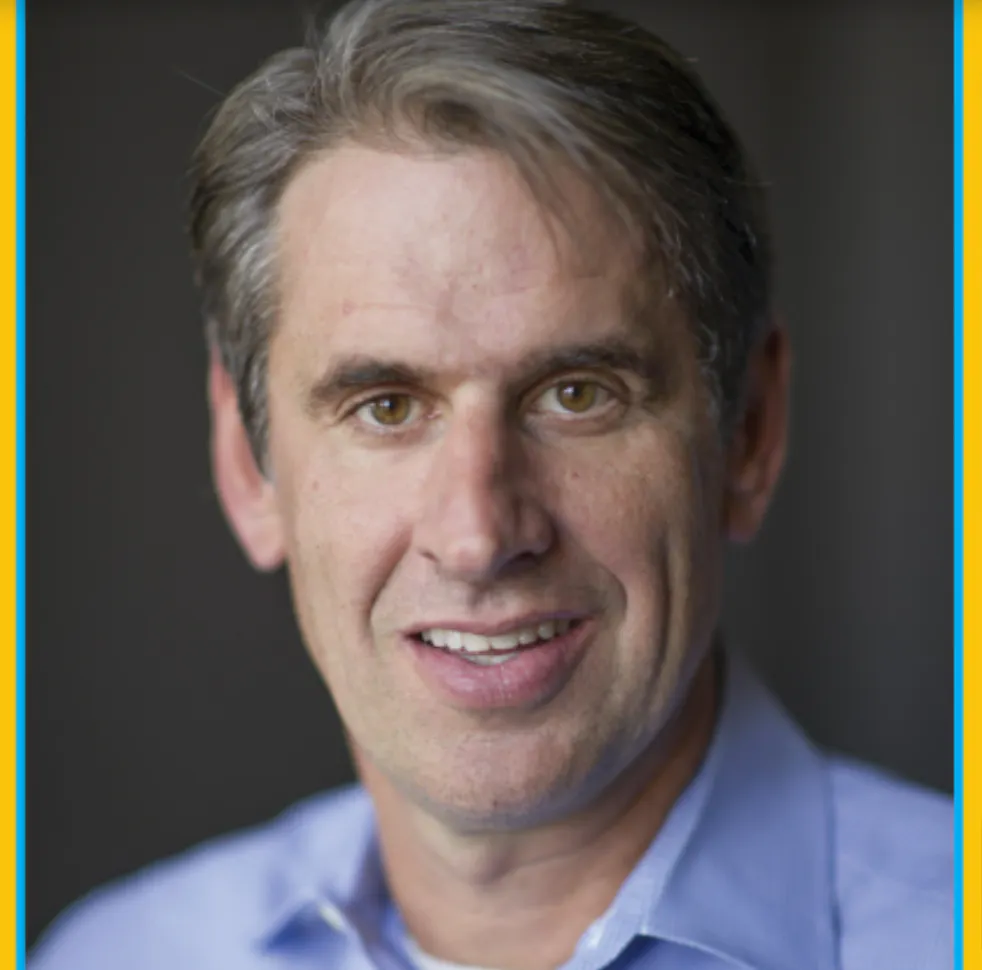
Bill Gurley: Thriving in a Career You Actually LoveBill Gurley8 March 20261:08Life is a use-it-or-lose-it situation, says our speaker. Shouldn't you try to spend it doing something you love? Venture capitalist Bill Gurley has set out to teach people his ideas for how to find your dream job and avoid a career you’ll regret. For lots of young people, career paths feel like conveyor belts—the next test, the next application, the next college—without a pause to ask what they really want to do with their lives. After Gurley went to college, he landed a job at a famous tech company. A dream job, right? But he was bored, so he took a chance and leapt into the unknown, eventually finding his place in the world of venture capital. Such a result is rare. He says nearly six in ten people would do things differently if they could start over. So how can you avoid career regret? What can people at the top of their fields teach you about loving what they do? Gurley has assembled six principles to flourish in your chosen career, and he has explained it all in his new book Runnin’ Down a Dream . Learn more about your ad choices. Visit megaphone.fm/adchoices
Joseph Stiglitz | Economics and The Good SocietyJoseph E. Stiglitz24 September 20241:07One of the world’s leading economists joins us to offer a compelling new vision of personal and economic freedom. Many Americans believe this nation was born from the conviction that people must be free. But since the middle of the last century, that idea has been co-opted. Forces on the political right have justified exploitation by cloaking it in the rhetoric of freedom, leading to pharmaceutical companies freely overcharging for medication, a Big Tech free from oversight, politicians free to incite rebellion, corporations free to pollute, and more. How did we get here? Whose freedom are we―and should we―be thinking about? In his new book The Road to Freedom , Nobel Prize winner Joseph E. Stiglitz dissects America’s current economic system and the political ideology that created it, laying bare what he identifies as their twinned failure. He says that “free” and unfettered markets have only succeeded in delivering a series of crises: the financial crisis, the opioid crisis, and the crisis of inequality. While a small portion of the population has amassed considerable wealth, wages for most people have stagnated. Free and unfettered markets have exploited consumers, workers, and the environment alike. Such failures have fed populist movements that believe being free means abandoning any obligations citizens have to one another. As they grow in strength, Stiglitz warns that these movements now pose a real threat to true economic and political freedom.
Jane McGonigal: How to See the Future ComingJane McGonigal10 April 20221:09In the fickle age of COVID-19, it is harder than ever to have assuredness, and confidence. A solution? "Radical imagination"—and with it the power to transform our present and see our future. Game-designer turned author Jane McGonical, wants to give people the key to unlock their imagination potential and in doing so design their own futures with limitless possibilities and creative certainty. In her newest book, Imaginable , McGonigal coaxes audiences to dive into the unimaginable as a way to problem solve, future-plan, and find transformative fulfillment. She uses psychological research to embolden readers and make real the possibilities that are unfathomable—but not for long. At INFORUM, the renowned future forecaster will invite audiences into her mind and lay out the daring vision necessary to give life to a book about imagination. McGonigal answers the age-old question, “How do we learn to feel at peace with the unknown?” and teaches how mental, imagination training can reduce anxiety and boost tenacity. SPEAKERS Jane McGonigal Future Forecaster; Game Designer; Author, Imaginable: How to See the Future Coming and Feel Ready for Anything—Even Things that Seem Impossible Today ; Twitter Twitter @avantgame In Conversation with Roy Bahat Head, Bloomberg Beta; Twitter @roybahat In response to the COVID-19 pandemic, we are currently hosting all of our live programming via YouTube live stream.
John Doerr and Ryan Panchadsaram: An Action Plan for Solving Our Climate Crisis NowJohn Doerr7 January 202256 minBeyond his position as chairman of the venture capital firm Kleiner Perkins, John Doerr rose to global prominence in the business world with his popularization of OKRs (Objectives and Key Results), which he promoted in his best-selling book, Measure What Matters . Could the same set of management tools be applied to preventing the growing climate crisis? In Speed & Scale: An Action Plan for Solving Our Climate Crisis Now , John Doerr and Kleiner Perkins advisor Ryan Panchadsaram argue that it can. For transcripts and other information, visit: https://www.climateone.org/watch-and-listen/podcasts Guests: John Doerr , Chairman, Kleiner Perkins Ryan Panchadsaram , Advisor, Kleiner Perkins Learn more about your ad choices. Visit megaphone.fm/adchoices
Nudge with Richard ThalerRichard H. Thaler26 August 20211:07Since the 2008 publication of the global bestseller Nudge , co-authored by Richard Thaler and Cass Sunstein, the word “nudge” has entered the vocabulary of many businesspeople, policymakers, engaged citizens and consumers everywhere. It has taught us how to use thoughtful “choice architecture”—a concept the authors invented—to help us make better decisions for ourselves, our families and our society. "Nudging" is a simple change that alters people’s behavior in a predictable way without forbidding any options or significantly changing their economic incentives. It’s the option to opt out of your company’s 401k retirement program as opposed to opting in, or the placement of fruits and vegetables at eye level in grocery stores to encourage healthier eating. In 2021, the authors have rewritten the book from cover to cover, building Nudge: The Final Edition out of the last dozen years’ worth of new research, insight, and experience. The book touches on a wide variety of issues we face in our daily lives—COVID-19, personal finance, home mortgages, climate change and more. Co-author and economist Richard Thaler is the professor of Behavioral Science and Economics at the University of Chicago and, in 2017, won the Nobel Prize in Economic Sciences for his contributions to the field of behavioral economics. Join us as Thaler reveals the power of understanding decision-making in modern society, existing in the gap between economics and psychology. SPEAKERS Richard Thaler Charles R.
Josh Mitchell: Inside the Student Loan Debt TrapBethany McLean20 August 20211:07Americans owe more than $1.5 trillion in student loan debt, almost $700 billion more than the total U.S. credit card debt. Student loans have proved to be one of the most pressing problems young Americans face, and critics say the college industry is in part to blame. Originally, well-intentioned government reforms for college access quickly turned into reckless lending and runaway tuition. Easy access to loans allowed colleges to raise tuition to soaring levels. Even the private banks that fronted the money made huge profits on interest. Together, everyone in this business formed an exploitative system that relies on students failing to pay back their debt. In his new book The Debt Trap: How Student Loans Became a National Catastrophe , Wall Street Journal reporter Josh Mitchell uncovers the broken student loan system that was created, and then exploited, by loan company Sallie Mae and the United States Congress. He explains what he says are the ill-advised decisions made that drove Americans into massive debt and continue to wreak havoc today. SPEAKERS Josh Mitchell Economy and Higher Education Reporter, The Wall Street Journal ; Author, The Debt Trap: How Student Loans Became a National Catastrophe In Conversation with Bethany McLean Contributing Editor, Vanity Fair In response to the COVID-19 pandemic, we are currently hosting all of our live programming via YouTube live stream.
Moral Leadership In A Time Of Crisis: Conversation With Jacqueline NovogratzJacqueline Novogratz29 May 20201:06Just as Jacqueline Novogratz’s groundbreaking new book Manifesto for a Moral Revolution: Practices to Build a Better World makes its way to readers, an international pandemic has thrown into sharp relief the gaping wounds of our era, from a broken health system to climate change and skyrocketing inequality and growing divisiveness. Our inadequate systems and institutions are slumping beneath a host of modern crises. Most urgently, moral leaders are proving a scarce commodity. In America and across the world, an anxious public is hungry for clear, conscientious guidance. The stakes are higher than ever. Please join Jacqueline Novogratz in conversation with Keith Yamashita about how we might use this moment of extreme uncertainty to reimagine our institutions and enact a moral revolution—a revolution of character, moral imagination, moral courage, and leadership that acts for the benefit of all of us. MLF ORGANIZER Elizabeth Carney NOTES MLF: Business & Leadership Learn more about your ad choices. Visit megaphone.fm/adchoices