 T
Podcast · 14 episodes in the reference, 2019 to 2025
The Rational Reminder Podcast
Published by Benjamin Felix, Cameron Passmore, and Dan Bortolotti
Host
BFBenjamin Felix
Episodes
 Michael Mauboussin: The One Job of an Equity Investor | Rational Reminder 344 | Michael Mauboussin | 13 February 2025 | 1:05 | What if the key to successful investing is about understanding how market expectations, intangible assets, and even your own biases shape the outcome? In this episode, Cameron sits down with Michael Mauboussin, a renowned expert in investment strategies and behavioural finance, to explore how the evolving dynamics of investing influence valuation, investor decision-making, and market efficiency. Michael is the head of Consilient Research at Counterpoint Global, part of Morgan Stanley Investment Management, and an adjunct professor at Columbia Business School, where he teaches courses on investing and decision-making. His work focuses on behavioural biases, skill versus luck, complex adaptive systems, and valuation. In our conversation, we discuss the core principles of equity investing, unpack the evolution of intangible assets, and explore how market dynamics are influenced by index funds. You'll learn about capital allocation strategies, the shifting landscape of private equity, accounting challenges with intangibles, and how traditional investment frameworks are being redefined. Michael also provides insight into the "free dividend" fallacy, the importance of understanding the basic unit of analysis, the paradox of skill in active management, and more. Join us to learn about market and investing fundamentals to improve your strategy with Michael Mauboussin. Tune in now! |
| Cameron in Norway: The Indexing Revolution, and Key Lessons from Past Guests | Antti Ilmanen | 14 November 2024 | 1:01 | In today's episode, Cameron sits down with Mark McGrath to talk about his trip to Trondheim, Norway, the event he attended there, and his presentation in which he shared top lessons from prestigious Rational Reminder Podcast guests. Tuning in, you'll hear Cameron's top takeaways from conversations with Nobel laureate Eugene Fama and his collaborator Kenneth French, as well as Robert Merton, Antti Ilmanen, Professor Ludovic Phalippou, and more. We also delve into the changing industry trends regarding index investing and the many benefits that come with embracing it, including how it helps financial advisors better serve their clients. Stay tuned for our after-show section, where we discuss advice for new advisors, from developing a robust investment philosophy to building a network, along with insights to help consumers navigate the industry and much more. To learn all about Cameron's trip to Norway, top guest takeaways, and industry trends around index investing, be sure to tune in! Key Points From This Episode: (0:01:13) An overview of today's episode and a discussion on industry trends. (0:03:56) Our conversation with Håkon Kavli on managing Reitan Kapital. (0:04:38) What it was like for Cameron to meet Håkon Kavli and Magnus Reitan in Norway. (0:05:42) The excellent event in Trondheim, Norway, and their impressive lineup of speakers. (0:08:56) Unpacking industry trends in index investing and why more people are embracing it. |
| 2022: A Year in Review | Antti Ilmanen | 29 December 2022 | 1:42 | It has been an amazing year for the podcast. We have had some incredible guests during 2022 who have provided us and listeners with insights and thought-provoking ideas about the world of finance. We covered a lot of ground and to wrap up the year we decided to recap some of our favourite moments for listeners. In this episode, we highlight the many themes covered during this year, such as the basics of investing, stocks and bonds, how to make wise investment decisions, gender inequality, asset management, index funds, market trends, and portfolio management. We also highlight some of the indirectly topics indirectly related to finance such as the value of happiness, enjoying the pursuit of happiness, the importance of goal setting, and much more. Join us as we reflect on some of our best moments from the year and provide an overview of the many vital lessons we have learned in this final episode of the year for the Rational Reminder podcast. Key Points From This Episode: Mac McQuown explains how the data revolution changed the game of investing. (0:09:05) Robin Wigglesworth and tracking the performance of portfolios in the 60s. (0:12:56) Professor Fama shares what it is like to see the impact of his academic work on the practice of asset management. (0:16:02) Gus Sauter tells us about the role the University of Chicago played in the index fund revolution. (0:18:41) Professor Fama unpacks what it means for a market to be efficient. |
 Prof. Campbell R. Harvey: DeFi and the Future of Finance (Rebroadcast) | RR: Understanding Crypto 9 | Campbell R. Harvey | 29 July 2022 | 47 min | For this week's episode, we are revisiting a portion of our conversation with the legendary Professor Campbell R. Harvey and and his more optimistic viewpoint on the crypto space. Campbell is the Professor of International Business at Duke University and is also a Research Associate at the National Bureau of Economic Research. In 2016 he served as the President of the American Finance Association, and from 2006 to 2012 he occupied the incredibly demanding role of Editor for the Journal of Finance. We hear about Campbell's latest book DeFi and the Future of Finance along with his most recent research. Discover how Campbell first became interested in the topic several years ago and decided to put together a course for his students. We also delve into the rise of decentralized finance (DeFi) and how we can expect it to shape global finance, trading, and the future of the internet. |
 Antti Ilmanen: The Building Blocks of Long-Run Returns | Rational Reminder 202 | Antti Ilmanen | 26 May 2022 | 1:10 | To carry on the trend of amazing guests on the show, today we welcome Antti Ilmanen. Antti is the co-head of the Portfolio Solutions Group at AQR, and the author of a couple of really impactful books that we highly recommend. His most recent is Investing Amid Low Expected Returns, and in today's chat, we get to hear all about the ideas contained in its pages, and the most important moments in his career that have shaped his philosophy. Antti received his PhD in Finance from the University of Chicago and has had a long career of working with high profile names that you might recognize from past episodes of this podcast. Our guest talks about the need for cultivating your patience in relation to your investment portfolio and shares many other great pieces of practical advice that you can implement today. We delve into some bad investment habits that Antti noted in his book and also touch on the usefulness of bonds, illiquid assets, trend following, and much more. Be sure to tune in today to hear all that this great mind has to offer. Key Points From This Episode: The power and limitations of using historical data for calculating expected returns. [0:04:17] Balancing historical data with market-implied expected returns. [0:07:47] Antti comments on shifting into higher expected return equity markets. [0:11:37] The role of bonds in revenue generation and why to not give up on them completely. [0:13:00] Locating the roots of the positive premium that Antti associates with bonds. |
| (Modern) Modern Portfolio Theory | Larry Swedroe | 24 March 2022 | 1:18 | Today on Rational Reminder we take a deep dive into the evolution of modern portfolio theory. We kick the show off with some updates and reviews on some of the brilliant shows and books we are watching right now. A key item from this selection is Stolen Focus: Why You Can't Pay Attention and the points it makes about the value of flow state for learning and creativity. After this week's news stories, we get into the main topic, and Ben starts with a breakdown of portfolio theory as it was laid out by Harry Markowitz in 1952. From there we talk about research that shaped the current understanding of portfolio theory, exploring the distinction between the mean-variance efficient portfolio and the multi-factor efficient portfolio, and how they theoretically combine to make the market portfolio. One of the biggest takeaways here is that your financial asset portfolios can look the same in terms of asset allocation but the person with more macroeconomic risk in the remainder of their financial situation is taking on more risk. Additionally, even if somebody is the perfect candidate to be the mean-variance investor and they could theoretically tilt toward value, it doesn't necessarily mean they have to. We wrap up our conversation by inviting our good friend Larry Swedroe onto the show to speak about his love of reading and share his methods for incorporating what he learns from books into his work and thinking. |
| A Year in Review | Robert D. Arnott | 23 December 2021 | 1:37 | We have reached the end of another year, our third while doing this podcast. We are spending this episode on our customary year-end review, and we will be pulling segments from some of the great interviews we hosted over the course of 2021. In doing so, we hope to create a bit of summary of the year and the biggest lessons we all learned together. The podcast has continued to grow beyond our wildest expectations and we are so grateful to be on this journey with our ever-increasing community and audience. We touch on many themes in this recap, moving from general ideas about life, goals, happiness, abundance, and purpose, to more financial subjects of money values, retirement, and crypto, and then into the deeper technical aspects of investment such as value premiums, factors, bonds, and much more. We have tried our best to focus on the segments that we found most enlightening and that changed our perspective, and have highlighted them with reflections and commentary. So to hear it all, join us today, and we'll see you next year, for more of the Rational Reminder Podcast. Key Points From This Episode: Looking at some of the amazing numbers around the growth of our community. [0:02:37.2] A few shoutouts to the wonderful people who make this podcast possible. [0:04:27.8] Bill Schultheis on how to find and fund a good life. [0:08:34.5] Hal Hershfield's thoughts on making better decisions with your future wellbeing in mind. |
 RR #171 - Campbell R. Harvey: The Past and Future of Finance | Campbell R. Harvey | 14 October 2021 | 2:01 | For this week's episode (our longest to date), we get together with the legendary Professor Campbell R. Harvey and take a deep dive into a diverse range of topics that draw on his incredible breadth of knowledge and extensive research. Campbell is the Professor of International Business at Duke University and is also a Research Associate at the National Bureau of Economic Research. In 2016 he served as the President of the American Finance Association, and from 2006 to 2012 he occupied the incredibly demanding role of Editor for the Journal of Finance. One of his earliest achievements was identifying the inverted yield curve's ability to predict a recession, a highly regarded metric that is near-ubiquitous in its implementation. For the first half of our conversation, we focus on his research in areas like skewness and emerging economies. We cover specific topics like the factor zoo, why it's problematic, and how Campbell, along with his student Yan Lui, found through their research that approximately half of the published empirical research in finance at the time was, in fact, false. We also unpack his most downloaded paper entitled The Golden Dilemma and get into the intricacies of why gold is an unreliable inflation hedge. For the latter half of our conversation, we hear about Campbell's latest book DeFi and the Future of Finance along with his most recent research. |
 RR #157 - Rob Arnott: Dissecting Smart Beta, Investing in Disruption, and Momentum | Robert D. Arnott | 8 July 2021 | 1:08 | Today we welcome Rob Arnott to the show! Rob is the founder of Research Affiliates and is a prolific writer who has published hundreds of articles for many different journals. We know firsthand, the power of Rob's work, and how it can alter the way you think about investing, and this depth of knowledge, coupled with his ability to make complex topics understandable makes him a dream guest for us! Rob is the co-author of The Fundamental Index, and we get some insight into this subject along with many other groundbreaking areas he has worked on. We cannot stress enough the rarity of Rob's gift for getting difficult ideas across in a deliberate and approachable way, and this is apparent through this illuminating conversation. For us, it was quite surreal to speak to someone so influential, and listeners can expect to come away with a greater understanding of 'smart-beta', intangible assets, forecasting, and some insight into the interesting areas of earnings dilution and 'the big market delusion', before Rob shares some very surprising information on factor momentum at the end of our chat. So for this and a whole lot more, in a truly stand-out episode, be sure to listen in! Key Points From This Episode: Rob's perspective on the drawbacks of cap-weighted indexing. [0:02:47.2] Getting to grips with 'smart-beta' and its links to RAFI. [0:06:21.6] Building a fundamental index and what the weights are based on. |
 Low Cost Index Investing: What You Need To Be a Successful Index Investor. | Rick Ferri | 14 February 2019 | 30 min | Today on the show we are joined by Rick Ferri. Anyone who follows or is interested in index investing will probably have read something of Rick's. He's written seven books, working on the eighth, and he's written a ton online as well. Rick opened Portfolio Solutions, the first low fee index fund based wealth management shop and built it up to over a billion dollar company. Rick created the model of low cost fiduciary advice, using index funds and putting the client first, so today we're chatting to him all about it. Inside this episode Rick shares why he is so passionate about low cost index investing, the four levels of an index investor, and the requirements for being a good index investor in the long term. We also talk about his relationship with John Bogle, who recently passed away. It was a pretty meaningful conversation! For this and more, be sure to join us on today's episode! Key Points From This Episode: Rick's passion for low cost index investing. [0:02:24.0] The four levels of an index investor. [0:05:0] Dimensional funds: active management that uses factor based investing principles.[0:10:29.0] None market risk factors fitting into a portfolio. [0:11:54.0] Rick's thoughts on the price and the value around behavioral coaching. [0:13:44.0] The future of robo-advisers. [0:18:14.0] Three things required for a person to be a good index investor in the long term. [0:18:54.0] Not indexing yet? - You need repetition, repetition, repetition. |
 Larry Swedroe: A Complete Guide to Investing and Retirement - Rational Reminder Podcast EP.30 | Larry Swedroe | 23 January 2019 | 45 min | Today we are joined by a friend, hero, and a legend in the field fact based investing. Larry Swedroe is here to discuss his latest book, some of the timeless concepts he has been espousing for many years, and to give out a few golden nuggets of advice for your finances and retirement. Larry is so generous with his time and wisdom and we chat about a ton of chapters from his book, Y our Complete Guide to a Successful and Secure Retirement, and he picks out a few ideas to focus on here in this quick discussion. Larry shares the biggest mistake he has noticed in retirement planning, lifestyle considerations moving into the final stages of life, estate transfer, underperforming stocks, and more! We draw on Larry's wealth of experience to get some perspective on more current trends in the industry such as the fixation on costs of advisors and we finish off hearing from Larry about how he defines success as he nears the end of his professional career. For all this and more, be sure to join us for an extra special episode! Key Points From This Episode: The four horsemen of the retirement apocalypse. [0:03:03.4] Larry's pick for the biggest mistake made in retirement planning. [0:06:32.9] Non-financial considerations for those heading into retirement. [0:09:22.7] Day to day preparations for finding meaning in the retirement years. [0:13:04.5] Why it is important to expose yourself to independent risk factors. [0:15:34.6] Understanding the reasons for never actually avoiding factors. |
 Bill Bernstein: The Money Decisions That Actually Matter | Rational Reminder 422 | William J. Bernstein | |||
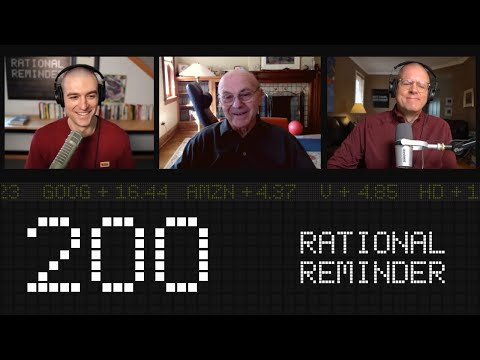 Prof. Eugene Fama | Rational Reminder 200 | Eugene F. Fama | |||
 Tim O'Reilly: How does Web3 Compare to Web 2.0? | RR: Understanding Crypto 8 | Tim O’Reilly |
TMichael Mauboussin: The One Job of an Equity Investor | Rational Reminder 344Michael Mauboussin · 13 February 2025TCameron in Norway: The Indexing Revolution, and Key Lessons from Past GuestsAntti Ilmanen · 14 November 2024T2022: A Year in ReviewAntti Ilmanen · 29 December 2022TProf. Campbell R. Harvey: DeFi and the Future of Finance (Rebroadcast) | RR: Understanding Crypto 9Campbell R. Harvey · 29 July 2022TAntti Ilmanen: The Building Blocks of Long-Run Returns | Rational Reminder 202Antti Ilmanen · 26 May 2022T(Modern) Modern Portfolio TheoryLarry Swedroe · 24 March 2022TA Year in ReviewRobert D. Arnott · 23 December 2021TRR #171 - Campbell R. Harvey: The Past and Future of FinanceCampbell R. Harvey · 14 October 2021TRR #157 - Rob Arnott: Dissecting Smart Beta, Investing in Disruption, and MomentumRobert D. Arnott · 8 July 2021TLow Cost Index Investing: What You Need To Be a Successful Index Investor.Rick Ferri · 14 February 2019TLarry Swedroe: A Complete Guide to Investing and Retirement - Rational Reminder Podcast EP.30Larry Swedroe · 23 January 2019TBill Bernstein: The Money Decisions That Actually Matter | Rational Reminder 422William J. BernsteinTProf. Eugene Fama | Rational Reminder 200Eugene F. FamaTTim O'Reilly: How does Web3 Compare to Web 2.0? | RR: Understanding Crypto 8Tim O’Reilly