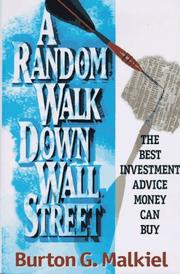
A Random Walk Down Wall Street
Stock prices follow a random walk, so a low-cost index fund beats stock picking.
Thirteenth edition published 2023; fiftieth-anniversary title.
Summary
Malkiel argues that stock prices follow a random walk, meaning that past price movements do not predict future ones, and that no method of security selection or market timing reliably beats a low-cost index fund after costs. The book was first published in 1973 and has been revised repeatedly.
His argument works by elimination. He examines technical analysis and reports that chart patterns have no predictive power once transaction costs are included. He examines fundamental analysis and reports that analyst earnings forecasts are poor and that funds employing analysts do not persistently outperform. He covers the history of speculative bubbles from tulips through the dot-com period and the housing bubble, using them to show that markets can be wrong while remaining impossible to beat systematically.
He presents the efficient market hypothesis in its weak, semi-strong and strong forms, and takes a moderate position, accepting that anomalies exist while arguing that they are too small and too unstable to exploit after costs. Later editions address the behavioural finance challenge and the documented factor premiums, and Malkiel concedes ground while maintaining the practical conclusion.
The final section is a practical guide covering life-cycle allocation, the treatment of bonds, real estate, international exposure and taxes. The efficient market framing has been substantially qualified since 1973, and Shiller's excess volatility work and the factor literature both cut against the strongest version. Malkiel's practical conclusion, that costs are certain and outperformance is not, does not depend on market efficiency and survives the theoretical dispute intact.
Key takeaways 8
- Past price movements do not predict future ones, which means chart patterns produce no advantage after transaction costs.
- Professional fund managers do not persistently outperform their benchmarks, and past outperformance does not predict future outperformance.
- Markets can be substantially wrong, as bubbles repeatedly demonstrate, while remaining impossible to beat systematically.
- New information is incorporated into prices quickly enough that acting on public information produces no reliable advantage.
- Costs are certain and outperformance is not, which makes the low-cost index fund the correct default regardless of how efficient markets are.
- Documented anomalies exist and are too small and too unstable to exploit reliably after costs and taxes.
- Asset allocation should follow the investor's time horizon and capacity to bear loss rather than any forecast about markets.
- The practical conclusion does not depend on the efficient market hypothesis being correct, which is why it survives the theoretical dispute.
Who should read it
Individual investors deciding whether to attempt active management, wanting the case against it laid out method by method.
About Burton G. Malkiel
Chemical Bank Chairman's Professor of Economics Emeritus, Princeton University; Chief Investment Officer, Wealthfront; former Vanguard director
A Random Walk Down Wall Street, now in its thirteenth edition after fifty years, is the primary popular source for the index-fund case.
Who recommended it 7 · 5 direct
“Even earlier, in 1973, in his classic A Random Walk Down Wall Street, Burton G. Malkiel had called for such a fund, although, alas, when we started it, I had yet to read his book.”
“Burton G. Malkiel, A Random Walk Down Wall Street, 6th ed. (New York: W.W. Norton & Company, 1996), 192”
“The short answer is "not much." Burton Malkiel, who has extensively researched the problem, concludes in A Random Walk Down Wall Street that yes, the funds with the best past returns will outperform their peers by a slight amount, but will not beat an index fund.”
Similar books 6
Chosen by shared topics, the entries that hold them, and the people who recommended both.
After costs, most investors trail the market, so hold a low-cost index fund.
“Bogle, John C., The Little Book of Common Sense Investing: The Only Way to Guarantee Your Fair Share of Stock Market Returns (Hoboken, NJ: John Wiley & Sons, 2007)” — Michael Mauboussin
Source: Untangling Skill and Luck: How to Think About Outcomes - Past, Present, and Future, page 33
Recommended by: Michael Mauboussin, Mohnish Pabrai and 6 others
How costs, turnover and fund structure decide what mutual fund investors earn.
“The founder of the Vanguard Group and father of the index-fund industry methodically sorts fact from fiction. Following his logical arguments can benefit you even if you never invest in a mutual fund, since Bogle touches on just about every crucial aspect of investing, including taxes, trading costs, diversification, performance measurement and the power of patience.” — Jason Zweig
Source: Best Books for Investors: A Short Shelf — jasonzweig.com
Recommended by: Jason Zweig, Michael Mauboussin and 4 others
How Markowitz, Sharpe, Fama, Black and Scholes built the theory of modern finance.
“But it was in his Capital Ideas, published in 1992, that I first learned of Louis Bachelier’s 1900 dissertation, The Theory of Speculation.” — John C. Bogle
Source: Success In Investment Management: What Can We Learn From Indexing?, page 1
Recommended by: John C. Bogle, Michael Mauboussin
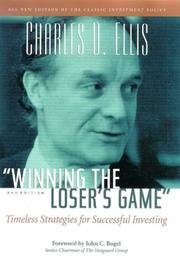
Why active investing became a loser's game, decided by errors, not by skill.
“In his marvelous book, Winning the Loser's Game, Charlie Ellis says” — Bill Miller
Source: Bill Miller 2Q 2020 Market Letter
Recommended by: Bill Miller, Michael Mauboussin and 2 others
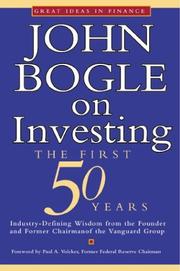
Fifty years of speeches and essays arguing for low-cost index funds.
Recommended by: Mohnish Pabrai, Mr. Money Mustache
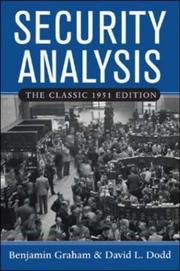
How to read financial statements sceptically and value bonds and stocks.
“I am reminded once again of the quote that sits in the front of Ben Graham’s Security Analysis, from Horace’s Ars Poetica: “Many shall be restored that now are fallen and many shall fall that now are in honor.” — Bill Miller
Source: 2007 Q3 Market Commentary
Recommended by: Bill Miller, Christopher Bloomstran and 18 others
Where it sits in the reference 5
Topics 1
As an Amazon Associate I earn from qualifying purchases.