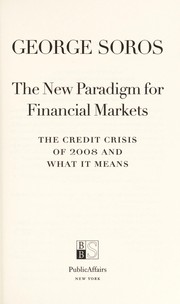
The New Paradigm for Financial Markets
Reflexivity applied to the credit crisis as it unfolded.
Summary
Soros wrote this during the first half of 2008, as the credit crisis was unfolding, and it combines three things: a restatement of his theory of reflexivity, a diagnosis of the crisis, and a real-time record of his own investment decisions during the year.
The theoretical section restates positions he first published in The Alchemy of Finance. Market participants act on fallible interpretations rather than on knowledge, their actions change the fundamentals they are trying to assess, and the resulting two-way feedback means markets can move far from any equilibrium. Soros contrasts this with the assumption of rational expectations and argues that the failure of that assumption explains why crises recur.
The diagnostic section advances his superbubble thesis. He argues that the mortgage bubble was the trigger but not the cause, and that a longer expansion of credit running from the early 1980s, sustained by successive interventions that rescued markets from each crisis and by faith in market discipline, had built leverage across the whole system. On this reading 2008 marked the end of a sixty-year credit expansion rather than an ordinary cycle.
The investment diary section is unusual and honest. Soros records his positions in oil, currencies, Indian and Chinese equities, and reports where he was wrong.
The book was written fast and reads that way, with repetition from his earlier work. Economists have generally not adopted reflexivity as a formal framework, partly because it is hard to specify in a way that generates testable predictions. His superbubble diagnosis has held up better than his forecasts of what would follow.
Key takeaways 7
- Market participants act on interpretations that are always incomplete, and those interpretations change the facts being interpreted.
- Prices do not converge to equilibrium because the feedback between belief and fundamentals has no fixed point.
- The 2008 crisis marked the end of a credit expansion running since the early 1980s, not merely a housing correction.
- Repeated official rescues of markets after each crisis encouraged the leverage that made the next crisis larger.
- Regulators cannot rely on market discipline because market participants collectively create the conditions they are supposed to discipline.
- A bubble requires both a trend in the real world and a misconception about that trend, and both must be present.
- Financial theory built on rational expectations produces models that cannot represent the crises they are asked to explain.
Who should read it
Investors who want Soros's theoretical framework and his crisis diagnosis in one place, with the trading diary as evidence of how he applied it.
About George Soros
Founder, Soros Fund Management and the Quantum Fund; founder, Open Society Foundations
The Alchemy of Finance introduced reflexivity, a primary-source framework macro traders and academics still build on.
Who recommended it 1 · 1 direct
Similar books 6
Chosen by shared topics, the entries that hold them, and the people who recommended both.
The rise and fall of the efficient market theory and the modern finance it built.
“Fox, Justin, The Myth of the Rational Market: A History of Risk, Reward, and Delusion on Wall Street (New York: HarperCollins, 2009)” — Michael Mauboussin
Source: Who Is On the Other Side? A Framework for Understanding Market (In)Efficiency
Recommended by: Michael Mauboussin, Mohnish Pabrai
Five lectures giving a compact overview of his thinking on economics and markets.
Long interviews on his life, his investing philosophy and his political views.
“George Soros, Soros on Soros (New York: John Wiley & Sons, 1995), 17” — Michael Mauboussin
Source: A Tail of Two Worlds: Fat Tails and Investing, page 4
Recommended by: Michael Mauboussin, Li Lu
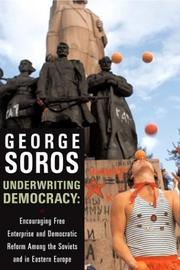
A financier's work to encourage free enterprise and democracy in Eastern Europe.
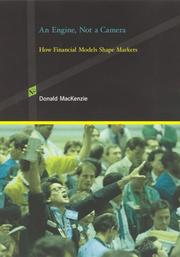
How financial economics changed the markets it set out to describe.
“There’s a wonderful chapter about LTCM in “An Engine, Not a Camera: How Financial Models Shape Markets” by Donald MacKenzie, a professor of sociology at the University of Edinburgh.15 The most recent issue of a bond is called on-the-run.” — Michael Mauboussin
Source: Animating Mr. Market: Adopting a Proper Psychological Attitude, page 6
Recommended by: Michael Mauboussin
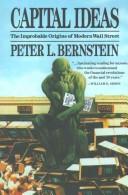
How Markowitz, Sharpe, Fama, Black and Scholes built the theory of modern finance.
“But it was in his Capital Ideas, published in 1992, that I first learned of Louis Bachelier’s 1900 dissertation, The Theory of Speculation.” — John C. Bogle
Source: Success In Investment Management: What Can We Learn From Indexing?, page 1
Recommended by: John C. Bogle, Michael Mauboussin