The Econometrics of Financial Markets
The statistical tools of empirical finance and the questions they test.
Summary
John Campbell, Andrew Lo and Craig MacKinlay wrote the standard graduate textbook on empirical finance, and it defined how the field is taught and practised.
The content covers the statistical tools and the substantive questions together. Early chapters address the predictability of asset returns, including variance ratio tests, autocorrelation and long-horizon regression, and the evidence on whether returns are forecastable. The book then covers event study methodology, the capital asset pricing model and its tests, multifactor models and the arbitrage pricing theory, and the intertemporal asset pricing models. Later chapters cover the term structure of interest rates, derivative pricing and its empirical testing, non-linear models including the modelling of volatility through ARCH and GARCH, and fixed income.
The authors take an explicit position on market efficiency: they argue that the efficient markets hypothesis in its strict form is not testable, because any test is a joint test of efficiency and of an asset pricing model, and that the productive question is how much predictability exists and whether it is economically exploitable after costs. The book is mathematically demanding and assumes graduate econometrics. It dates from 1997, so it precedes the enormous subsequent literature on factors, on high-frequency data and on machine learning methods, but it remains the reference for the core methodology.
Key takeaways 7
- Every test of market efficiency is a joint test of efficiency and of the asset pricing model used, so efficiency cannot be tested alone.
- Asset returns show statistically detectable predictability whose economic significance after costs is a separate question.
- Event study methodology measures the market's assessment of a specific piece of information and requires careful specification of the event window.
- Volatility is predictable even where returns are not, which is the empirical basis for the ARCH and GARCH family of models.
- The capital asset pricing model is rejected empirically, and multifactor models describe returns better without explaining why.
- Long-horizon return regressions suffer from severe small-sample problems that make their apparent findings unreliable.
- Non-linear dynamics in asset prices require methods that linear time series models cannot supply.
Who should read it
Quantitative researchers and practitioners who need the standard methodological reference for empirical asset pricing.
About Andrew W. Lo
Charles E. and Susan T. Harris Professor, MIT Sloan School of Management; Director, MIT Laboratory for Financial Engineering; founder of AlphaSimplex Group
The Econometrics of Financial Markets and the variance-ratio work with MacKinlay are primary sources the field builds on, and the Adaptive Markets Hypothesis is a named framework in its own right.
Who recommended it 2 · 2 direct
“Campbell, John Y., Andrew W. Lo, and A. Craig MacKinley, The Econometrics of Financial Markets (Princeton, NJ: Princeton University Press, 1996)”
“The Historical Data A nice summation of the autocorrelation data for US stocks is found in Campbell, Lo, and MacKinlay’s ("CLM") The Econometrics of Financial Markets.”
Similar books 6
Chosen by shared topics, the entries that hold them, and the people who recommended both.
Research papers showing that stock prices do not follow a random walk.
“Andrew W. Lo and A. Craig MacKinlay, A Non-Random Walk Down Wall Street (Princeton, NJ: Princeton University Press, 1999), 4-5” — Michael Mauboussin
Source: Capital Ideas Revisited - Part 2: Thoughts on Beating a Mostly-Efficient Stock Market, page 9
Recommended by: Michael Mauboussin
The adaptive markets hypothesis, joining efficient markets and behavioural finance.
“Lo, Andrew W., Adaptive Markets: Financial Evolution at the Speed of Thought (Princeton, NJ: Princeton University Press, 2017)” — Michael Mauboussin
Source: Who Is On the Other Side? You Need Good BAIT to Land a Winner, page 40
Recommended by: Michael Mauboussin
A formal model of markets whose efficiency shifts as participants adapt.
“Andrew W. Lo and Ruixun Zhang, The Adaptive Markets Hypothesis: An Evolutionary Approach to Understanding Financial System Dynamics (Oxford: Oxford University Press, 2024)” — Michael Mauboussin
Source: Who Is On the Other Side? A Framework for Understanding Market (In)Efficiency
Recommended by: Michael Mauboussin
Portfolio sorts and cross-sectional regressions: how to test what predicts returns.
How physicists and mathematicians brought their models into finance.
“But such oversimplification can—and did—create a flawed conclusion.3 2 I am indebted to James Owen Wetherall, physicist, philosopher, and mathematician at the University of California for telling Bachelier’s story in his book, “The Physics of Wall Street, A Brief History of Predicting the Unpredictable” (Houghton Mifflin Harcourt, 2015).” — John C. Bogle
Source: David and Goliath: Who Wins the Quantitative Battle?, page 8
Recommended by: John C. Bogle, Eric Weinstein
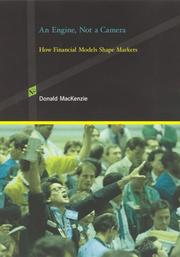
How financial economics changed the markets it set out to describe.
“There’s a wonderful chapter about LTCM in “An Engine, Not a Camera: How Financial Models Shape Markets” by Donald MacKenzie, a professor of sociology at the University of Edinburgh.15 The most recent issue of a bond is called on-the-run.” — Michael Mauboussin
Source: Animating Mr. Market: Adopting a Proper Psychological Attitude, page 6
Recommended by: Michael Mauboussin