
Systems Thinking
Seeing stocks, flows, delays and loops rather than isolated events, so that behaviour is explained by structure rather than by blame. Interventions at the wrong leverage point produce policy resistance, where the system pushes back and restores its old behaviour. For investors it reframes an industry as a set of relationships that will keep producing the same outcomes until the structure changes.
Start here
- Thinking in SystemsDonella H. Meadows, 2008
- The Fifth DisciplinePeter M. Senge, 1990
- The Origin of WealthEric D. Beinhocker, 2006

253 patterns for building, from the layout of towns down to a window seat.
Recommended by: Patrick Collison, Stewart Brand and 2 others

How a mind could arise from parts, traced through Godel, Escher and Bach.
Recommended by: Nat Eliason, Naval Ravikant, Demis Hassabis and 3 others
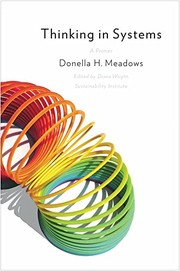
An introduction to systems: stocks, flows, feedback loops and where to intervene.
Recommended by: Patrick O'Shaughnessy, Daniel Burka and 3 others

Control and communication in animals and machines run on the same principles.
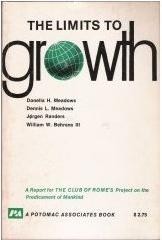
A computer model of world growth that overshoots its limits and then declines.
Recommended by: Bill Gates
Five disciplines, led by systems thinking, that let an organisation learn.
Recommended by: Jim Collins, Mohnish Pabrai, Sahil Lavingia and 1 other
The founding of the Santa Fe Institute and the people who built complexity science.
“Much of the work is being carried out in conjunction with a broad, interdisciplinary effort underway at the Santa Fe Institute, ably chronicled in a new book, Complexity by Mitchell Waldrop.” — Bill Miller
Source: 1992 Q4 Market Commentary
Recommended by: Bill Miller, Michael Mauboussin, Bill Gurley and 2 others
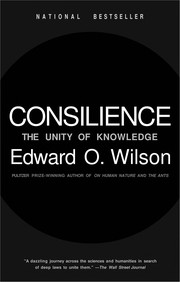
How the sciences and humanities can be unified by causal links from physics up.
“I was inspired by E. O. Wilson's book Consilience, which came out in 1998 and is a book I'd recommend.” — Michael Mauboussin
Source: MOI Global interview with Michael Mauboussin
Recommended by: Michael Mauboussin, Mohnish Pabrai
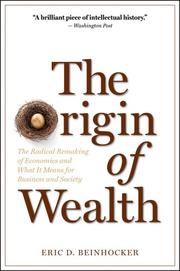
The economy as a complex evolving system rather than one in equilibrium.
“Eric D. Beinhocker, The Origin of Wealth: Evolution, Complexity, and the Radical Remaking of Economics (Boston: Harvard Business School Press, 2006)” — Michael Mauboussin
Source: Thirty Years: Reflections on the Ten Attributes of Great Investors, page 17
Recommended by: Michael Mauboussin, Ryan Peterson

How a honeybee colony allocates its foragers, as a decentralised system.
“As Thomas Seeley writes in his delightful book, The Wisdom of the Hive: 22 The most thought-provoking feature of a honey bee colony is its ability to achieve coordinated activity among tens of thousands of bees without central control.” — Michael Mauboussin
Source: Capital Ideas Revisited: The Prime Directive, Sharks, and The Wisdom of Crowds, page 7
Recommended by: Michael Mauboussin
Information theory as an idea that ties together three scientists' work.
Recommended by: Charlie Munger, Mohnish Pabrai
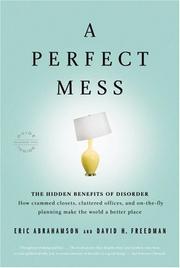
The case that disorder is often more efficient than imposed order.
“This idea comes from a wonderful book called A Perfect Mess” — Marc Andreessen
Source: The Pmarca Guide to Personal Productivity
Recommended by: Marc Andreessen
 Michael Mauboussinrecommends 4 books here
 Marc Andreessenrecommends 3 books here
 Mohnish Pabrairecommends 3 books here
 Naval Ravikantrecommends 2 books here
 Stewart Brandrecommends 2 books here
 Charlie Mungerrecommends 1 book here
 Jim Collinsrecommends 1 book here
 Bill Millerrecommends 1 book here
 Kevin Kellyrecommends 1 book here
 Bill Gurleyrecommends 1 book here
 Daniel Burkarecommends 1 book here
Show all 22
 Demis Hassabisrecommends 1 book here
 Jamie Dimonrecommends 1 book here
 John Maedarecommends 1 book here
 Nat Eliasonrecommends 1 book here
 Patrick Collisonrecommends 1 book here
 Ryan Petersenrecommends 1 book here
 Sam Altmanrecommends 1 book here
 Steve Jurvetsonrecommends 1 book here
- Feedback LoopsShane Parrish · essay · Balancing versus reinforcing loops, and how to tell.
- Externalities: Why We Can Never Do One ThingShane Parrish · essay · Every action has effects you did not price.
- Unintended ConsequencesShane Parrish · essay · How well-meant rules produce the opposite result.
- FeedbackMichael J. Mauboussin · paper · Positive and negative loops in markets and businesses.