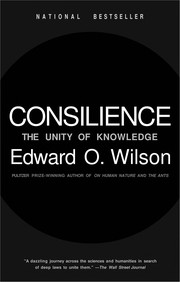
Consilience
How the sciences and humanities can be unified by causal links from physics up.
Wilson's argument for the unity of knowledge across disciplines
Summary
Wilson, the biologist who founded sociobiology, argues that the natural sciences, the social sciences and the humanities can and should be unified through causal explanations that connect across levels, from physics through chemistry and biology to mind and culture. He takes the term consilience from William Whewell, meaning a jumping together of knowledge across disciplines.
His argument is that the Enlightenment project of unified knowledge was abandoned prematurely, that the social sciences and humanities have operated without foundations in what is known about human biology, and that the connection can now be made. He works through the biological basis of mind, the gene-culture coevolution model in which cultural transmission and genetic evolution influence each other, the epigenetic rules that bias cultural development in predictable directions, and the application to ethics, religion and aesthetics.
The chapters on ethics and religion argue that moral intuitions are products of evolutionary history rather than of transcendent principle, and that this is an empirical claim that can be investigated rather than a philosophical position.
The book has been criticised heavily. Philosophers argue Wilson conflates explaining the origin of a moral intuition with establishing its validity. Social scientists argue that reduction to biology loses the phenomena they study. Wilson's confidence that unification is achievable is not shared by most working in the fields he proposes to unify, and the intervening decades have not produced the synthesis he anticipated. It remains the most ambitious statement of the position.
Key takeaways 7
- The natural sciences, social sciences and humanities can in principle be connected through causal explanations that link across levels of organisation.
- The social sciences and humanities have operated without foundations in what is known about human biology, which limits what they can explain.
- Human culture and genetic evolution influence each other, so cultural development is biased in predictable directions by inherited dispositions.
- Moral intuitions are products of evolutionary history, which makes their origin an empirical question rather than a philosophical one.
- Explanations at one level should connect to mechanisms at the level below, and a discipline that cannot make that connection has not explained anything.
- The Enlightenment project of unified knowledge was abandoned prematurely rather than refuted.
- Wilson's programme has not produced the synthesis he anticipated in the decades since, and most practitioners in the fields concerned do not accept its premise.
Who should read it
Readers interested in the strongest argument for unifying knowledge across the sciences and humanities, with the substantial objections noted.
Who recommended it 2 · 2 direct
“I was inspired by E. O. Wilson's book Consilience, which came out in 1998 and is a book I'd recommend.”
Similar books 6
Chosen by shared topics, the entries that hold them, and the people who recommended both.
Information theory as an idea that ties together three scientists' work.
Recommended by: Charlie Munger, Mohnish Pabrai
Knowledge can grow without limit through good explanations that are hard to vary.
“Favorites, I would say David Deutsch, "The Beginning of Infinity" is definitely one of my favorites.” — Albert Wenger
Source: Transcript: Albert Wenger
Recommended by: Albert Wenger, Derek Sivers and 9 others
Short essays on the scientific concepts that would improve everyone's thinking.
Recommended by: Morgan Housel, Patrick Collison
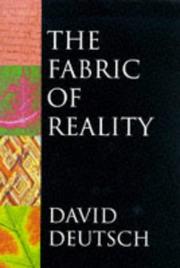
Reality through four strands: many-worlds physics, computation, evolution, Popper.
Recommended by: Naval Ravikant, Patrick Collison and 4 others
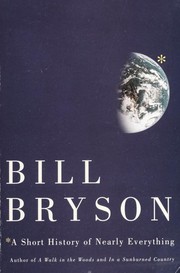
How scientists came to know what they know, from cosmology and geology to biology.
“Fun read of everything from the big bang to tectonic plates to the evolution of early man.” — Derek Sivers
Source: Derek Sivers book notes (primary, rated list) · Rating: 6/10
Recommended by: Balaji S. Srinivasan, Derek Sivers and 6 others
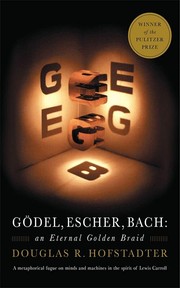
How a mind could arise from parts, traced through Godel, Escher and Bach.
Recommended by: Nat Eliason, Naval Ravikant, Demis Hassabis and 3 others
Where it sits in the reference 2
Topics 4
As an Amazon Associate I earn from qualifying purchases.