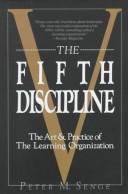
The Fifth Discipline
Five disciplines, led by systems thinking, that let an organisation learn.
Summary
Senge, who ran the organisational learning centre at MIT, argues that organisations must learn faster than their environment changes, and that this requires five disciplines practised together.
The five are personal mastery, meaning the individual commitment to clarifying what matters and seeing reality accurately; mental models, meaning the assumptions people hold that determine what they see and which must be surfaced and tested; shared vision, meaning a genuinely held common purpose rather than an imposed statement; team learning, meaning the capacity for dialogue in which people suspend assumptions and think together rather than defending positions; and systems thinking, which he calls the fifth discipline and which integrates the other four.
The systems material is the book's substance. Senge presents system archetypes, meaning recurring structures that produce predictable behaviour, including limits to growth, shifting the burden where a symptomatic solution undermines the fundamental one, eroding goals, escalation, success to the successful, and the tragedy of the commons. He teaches them through causal loop diagrams and through the beer game, a supply chain simulation in which participants reliably produce enormous oscillations that they attribute to each other rather than to the structure they are operating inside.
His central claim is that structure produces behaviour, which means that replacing the people in a system leaves the behaviour unchanged. The book is long and the language around personal mastery and shared vision is closer to organisational development than to analysis. The learning organisation concept has not been demonstrated empirically and Senge offers cases rather than evidence. The system archetypes and the beer game are the parts practitioners use.
Key takeaways 8
- Structure produces behaviour, so replacing the people in a system leaves the behaviour unchanged.
- Recurring system structures produce predictable behaviour, and a small number of archetypes describe most organisational problems.
- Symptomatic solutions that relieve a problem undermine the fundamental solution and produce dependence on the symptomatic one.
- Growth always encounters a limiting process, and effort should go to identifying and removing the limit rather than to pushing harder on growth.
- Delays between action and effect produce oscillation, which participants attribute to each other rather than to the structure.
- Mental models determine what people are able to see, which means they must be surfaced and tested rather than assumed.
- Dialogue in which people suspend assumptions and think together produces different results from discussion in which people defend positions.
- A shared vision must be genuinely held rather than imposed, and a statement everyone can recite is not one.
Who should read it
Executives who want systems thinking applied to organisations, particularly the archetypes and the supply chain simulation.
Who recommended it 4 · 3 direct
Similar books 6
Chosen by shared topics, the entries that hold them, and the people who recommended both.
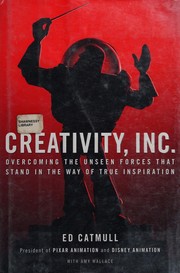
How Pixar kept a creative company working after success, and the habits it used.
“His book, Creativity, Inc.; an amazing, amazing book.” — Ezra Klein
Source: The Tim Ferriss Show Transcripts: Ezra Klein (#208)
Recommended by: Ezra Klein, Jim Collins, Michael Mauboussin and 12 others
How Google hires, manages and pays its people, with the data behind each choice.
Recommended by: Mohnish Pabrai, Changpeng Zhao, David Cancel and 3 others
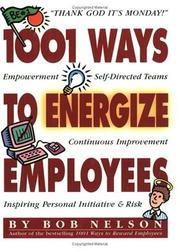
Ideas for empowering employees: self-directed teams, initiative and risk.
Recommended by: Mohnish Pabrai
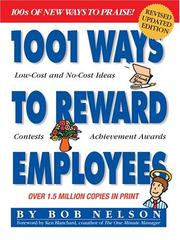
Rewards of every kind for employees, gathered from American businesses.
Recommended by: Mohnish Pabrai
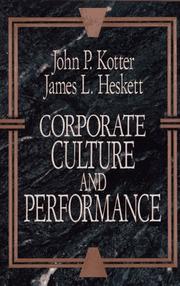
A study of over two hundred companies on whether culture drives performance.
Recommended by: Mohnish Pabrai