
Feedback Loops
Negative feedback pushes a system back toward balance - high margins invite competitors who compress them - while positive feedback amplifies, as deposits fleeing a weak bank weaken it further. Classify which loop governs a situation before acting: fade extremes only where a restoring force exists, and never stand in front of a self-reinforcing spiral. Every claim of a durable high return on capital is a claim that the negative loop has been blocked.
Start here
- Thinking in SystemsDonella H. Meadows, 2008
- The Fifth DisciplinePeter M. Senge, 1990
- CyberneticsNorbert Wiener, 1948

How a mind could arise from parts, traced through Godel, Escher and Bach.
Recommended by: Nat Eliason, Naval Ravikant, Demis Hassabis and 3 others
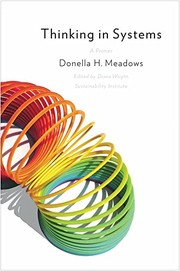
An introduction to systems: stocks, flows, feedback loops and where to intervene.
Recommended by: Patrick O'Shaughnessy, Daniel Burka and 3 others

Control and communication in animals and machines run on the same principles.
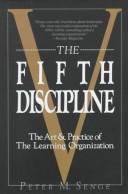
Five disciplines, led by systems thinking, that let an organisation learn.
Recommended by: Jim Collins, Mohnish Pabrai, Sahil Lavingia and 1 other

Computer tools that help people, even children, explore how complex systems work.
“The first challenge to the centralized mindset comes from a delightful book by MIT Professor Mitchel Resnick, “Turtles, Termites, and Traffic Jams.” — Michael Mauboussin
Source: The Invisible Lead Steer: New Answers to Old Questions About the Stock Market, page 3
Recommended by: Michael Mauboussin

How a honeybee colony allocates its foragers, as a decentralised system.
“As Thomas Seeley writes in his delightful book, The Wisdom of the Hive: 22 The most thought-provoking feature of a honey bee colony is its ability to achieve coordinated activity among tens of thousands of bees without central control.” — Michael Mauboussin
Source: Capital Ideas Revisited: The Prime Directive, Sharks, and The Wisdom of Crowds, page 7
Recommended by: Michael Mauboussin
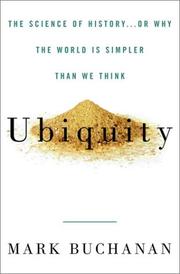
Self-organised criticality: why earthquakes and crashes come in all sizes.
“Mark Buchanan, Ubiquity: The Science of History . . . Or Why the World is Simpler Than We Think (New York: Crown Publishers, 2000)” — Michael Mauboussin
Source: Interdisciplinary Perspectives on Risk, page 5
Recommended by: Michael Mauboussin
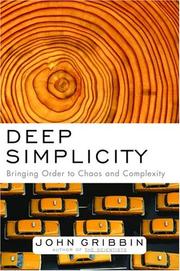
Chaos and complexity theory: how simple rules produce complex behaviour.
Recommended by: Charlie Munger
 Michael Mauboussinrecommends 3 books here
 Marc Andreessenrecommends 2 books here
 Charlie Mungerrecommends 1 book here
 Jim Collinsrecommends 1 book here
 Kevin Kellyrecommends 1 book here
 Mohnish Pabrairecommends 1 book here
 Daniel Burkarecommends 1 book here
 Demis Hassabisrecommends 1 book here
 John Maedarecommends 1 book here
 Nat Eliasonrecommends 1 book here
 Naval Ravikantrecommends 1 book here
Show all 15


- Feedback LoopsShane Parrish · essay · Balancing versus reinforcing loops, and how to tell.
- FeedbackMichael J. Mauboussin · paper · Positive and negative loops in markets and businesses.
- Vicious TrapsMorgan Housel · essay · Self-reinforcing loops that end badly.
- The Butterfly EffectShane Parrish · essay · Small initial differences lock in very different paths.