Odds On
The evidence-based case for passive over active investing.
Hall makes the evidence-based case for passive over active.
Summary
Matt Hall co-founded Hill Investment Group and wrote this as an argument for evidence-based investing aimed at individual investors and at advisers who want to change how they work. The position is the standard one derived from academic finance: markets are difficult to beat, costs and taxes are the reliably controllable variables, factor exposures explain most of the return differences between portfolios, and investor behaviour destroys more return than security selection creates.
Hall's contribution is less the argument than the account of adopting it. He describes his own start in a traditional brokerage environment selling active products, his encounter with the academic research and with Dimensional Fund Advisors, and the commercial difficulty of moving a practice to an approach that gives clients less to talk about. He argues that the adviser's real work is behavioural: preventing clients from acting on forecasts, from chasing performance, and from abandoning a plan during drawdowns.
The book is short and promotional in places, since Hall's firm sells the service he is describing. It contains no original research and readers wanting the evidence should go to the underlying academic work or to Swedroe and Berkin. Its value is as an accessible statement of the position and as an account of what changing an advisory practice actually costs.
Key takeaways 6
- Costs, taxes and investor behaviour are the variables an investor controls, and security selection is not among them.
- Factor exposures rather than manager skill explain most of the return differences between diversified portfolios.
- An adviser's principal work is preventing clients from acting on their own reactions to market movements.
- Hall argues that the commercial difficulty of evidence-based advice is that it gives the adviser little to appear busy about.
- Investors chase performance systematically, which means their realised returns fall below the returns of the funds they hold.
- A written plan agreed in advance is the only effective defence against decisions made during a drawdown.
Who should read it
Individual investors and advisers considering a move to a low-cost factor-based approach who want the argument stated plainly by a practitioner.
Similar books 6
Chosen by shared topics, the entries that hold them, and the people who recommended both.
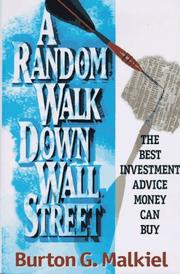
Stock prices follow a random walk, so a low-cost index fund beats stock picking.
“Even earlier, in 1973, in his classic A Random Walk Down Wall Street, Burton G. Malkiel had called for such a fund, although, alas, when we started it, I had yet to read his book.” — John C. Bogle
Source: CONVERGENCE!, page 1
Recommended by: Jason Zweig, John C. Bogle and 5 others
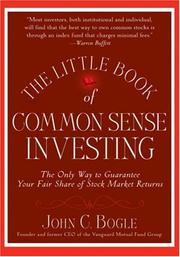
After costs, most investors trail the market, so hold a low-cost index fund.
“Bogle, John C., The Little Book of Common Sense Investing: The Only Way to Guarantee Your Fair Share of Stock Market Returns (Hoboken, NJ: John Wiley & Sons, 2007)” — Michael Mauboussin
Source: Untangling Skill and Luck: How to Think About Outcomes - Past, Present, and Future, page 33
Recommended by: Michael Mauboussin, Mohnish Pabrai and 6 others
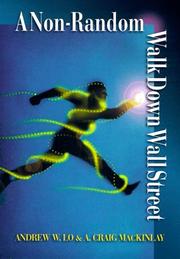
Research papers showing that stock prices do not follow a random walk.
“Andrew W. Lo and A. Craig MacKinlay, A Non-Random Walk Down Wall Street (Princeton, NJ: Princeton University Press, 1999), 4-5” — Michael Mauboussin
Source: Capital Ideas Revisited - Part 2: Thoughts on Beating a Mostly-Efficient Stock Market, page 9
Recommended by: Michael Mauboussin
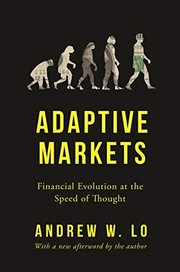
The adaptive markets hypothesis, joining efficient markets and behavioural finance.
“Lo, Andrew W., Adaptive Markets: Financial Evolution at the Speed of Thought (Princeton, NJ: Princeton University Press, 2017)” — Michael Mauboussin
Source: Who Is On the Other Side? You Need Good BAIT to Land a Winner, page 40
Recommended by: Michael Mauboussin
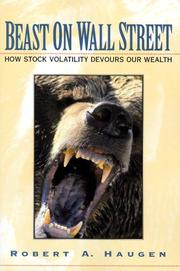
How price-driven volatility explains stock-price puzzles and why few beat the market.
Recommended by: Mohnish Pabrai
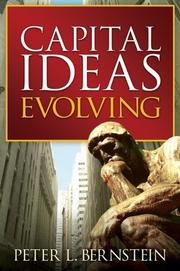
A sequel to Capital Ideas on how financial theory has developed since.
Where it sits in the reference 2
Topics 1
As an Amazon Associate I earn from qualifying purchases.