Red-Blooded Risk
A risk manager's history of quantitative risk and what value-at-risk is for.
A working risk manager on what value-at-risk is and is not for.
Summary
Aaron Brown has worked as a risk manager at trading firms and banks, and this book combines a personal history of quantitative risk management with an argument about what risk management is for. It is unconventional in form, with digressions on the history of gambling, on money, and on the culture of the people who built the field.
His central position is that risk management exists to enable risk-taking rather than to reduce it. A firm that manages risk well can take more of it, in the places where it is paid to, because it knows what it holds. He is critical of the compliance-oriented risk function that produces reports nobody uses, and of the belief that value at risk failed in 2008. His argument on value at risk is that the number was never meant to describe tail losses; it is a measure of whether the firm's models are working, and a breach frequency higher than the stated confidence level tells you the model is wrong, which is the information it was designed to produce.
The technical content covers the Kelly criterion and optimal bet sizing, the distinction between money and risk as separate quantities to manage, the use of risk limits as a control on model error rather than on loss, and the behaviour of markets with fat tails. Brown writes informally and the structure wanders. The book is best read for its arguments about what risk numbers mean and how a risk function should relate to a trading business, which are rarely stated as clearly elsewhere.
Key takeaways 7
- Risk management exists to allow a firm to take more risk where it is paid to, not to reduce risk generally.
- Value at risk is a test of whether the firm's models are working, and its breach frequency is the information it produces.
- Money and risk are separate quantities, and confusing them produces position sizing that ignores one or the other.
- The Kelly criterion gives the growth-optimal bet size and explains why over-betting destroys capital even with a positive edge.
- A risk function that produces reports nobody acts on is a compliance exercise rather than risk management.
- Brown argues that risk limits should constrain exposure to model error rather than to any particular loss amount.
- Historical data is a weak guide to tail behaviour because the periods that matter are the ones with fewest observations.
Who should read it
Risk managers and traders who want an argument about what risk measures actually tell you and how the risk function should relate to a trading business.
Similar books 6
Chosen by shared topics, the entries that hold them, and the people who recommended both.
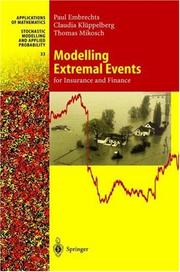
The graduate reference on extreme value theory for insurance and finance.
Recommended by: Nassim Nicholas Taleb
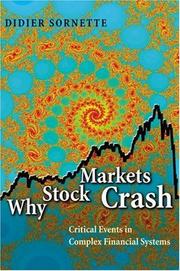
Why big crashes build up inside markets rather than follow the news.
“In an important and fascinating book, Why Stock Markets Crash, geophysicist Didier Sornette argues that stock market distributions comprise two different populations, the body (which you can model with standard theory) and the tail (which relies on completely different mechanisms).” — Michael Mauboussin
Source: Integrating the Outliers: Two Lessons from the St. Petersburg Paradox, page 3
Recommended by: Michael Mauboussin, Nassim Nicholas Taleb
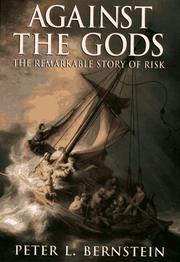
How people learned to measure risk, from early probability to portfolio theory.
“(Risk is the subject of Peter Bernstein’s wonderful new book, Against the Gods: The Remarkable Story of Risk.)” — Bill Miller
Source: 1996 Q3 Market Commentary
Recommended by: Bill Miller, Charles de Vaulx, Howard Marks and 9 others
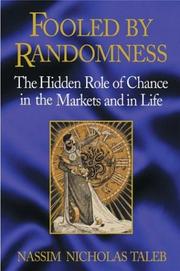
Why people mistake luck for skill, above all in markets.
“Fooled By Randomness was unquestionably the best non-fiction book I read in 2005.” — Brad Feld
Source: Book Review: Fooled By Randomness — Feld Thoughts
Recommended by: Barton Biggs, Brad Feld, Derek Sivers and 15 others
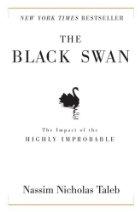
Rare, unforeseen, high-impact events drive history, explained only after the fact.
“The Black Swan U The best-known bird around today is The Black Swan, the second book from Nassim Nicolas Taleb.” — Howard Marks
Source: The Complete Collection, page 530
Recommended by: David Perell, Howard Marks, Marc Andreessen and 20 others
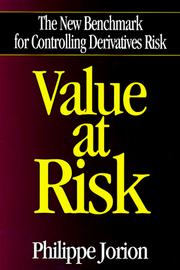
How value at risk sums up a portfolio's possible loss in one number, and its limits.
Where it sits in the reference 1
Topics 3
As an Amazon Associate I earn from qualifying purchases.