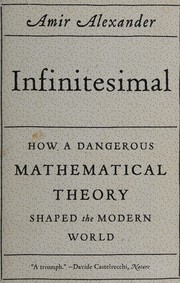
Infinitesimal
The fight over infinitely small quantities that shook the old order in Europe.
Summary
The reference has not verified this book in detail; the summary states only what the title, author and subject establish.
Amir Alexander describes a battle over a mathematical idea that, he argues, shook the old order and shaped the modern world. On 10 August 1632 five leaders of the Society of Jesus met in a Roman palazzo to judge a simple doctrine: that a continuous line is made up of distinct and infinitely tiny parts.
The doctrine would become the foundation of calculus, but the Jesuit judges ruled it forbidden, and with that decision, Alexander writes, they started a war for the soul of the modern world. The source read in this pass is a short publisher's description, which sets out the book's starting point but not how the conflict unfolded.
Key takeaways 4
- The idea of infinitely small parts of a line underlies calculus.
- Jesuit authorities banned the doctrine in 1632.
- Alexander treats a mathematical dispute as a struggle over the modern world.
- Religious and intellectual authority clashed over mathematics.
Who should read it
Readers interested in the history of mathematics and of science and religion.
Who recommended it 1
Similar books 6
Chosen by shared topics, the entries that hold them, and the people who recommended both.
The mathematicians whose logic led to the computer.
Recommended by: Patrick Collison
The centuries-long search for a proof of Fermat's Last Theorem.
“And then some blast from the past if you're interested, there's a great book called "Fermat's Enigma" by this guy Simon Singh, which is talking about, you know, Fermat has this theorem, which is X to the N plus Y to the N equal Z to the N.” — Chamath Palihapitiya
Source: Transcript: Chamath Palihapitiya
Recommended by: Chamath Palihapitiya, Mohnish Pabrai
How the concept of number evolved from prehistoric times to the twentieth century.
Recommended by: Bryan Johnson
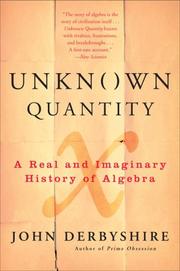
The story of algebra and the people behind its formulae, roots and radicals.
Recommended by: Patrick Collison
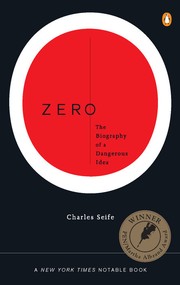
The history of zero, from the Babylonians to its threat to modern physics.
Recommended by: Matt Mullenweg, Bryan Johnson
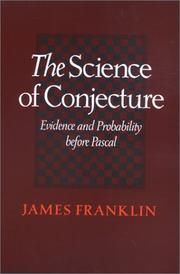
How judges, juries and scientists weighed evidence before formal statistics.
Recommended by: Nassim Nicholas Taleb