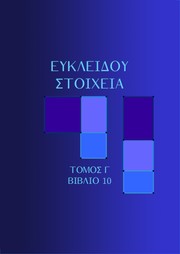
Euclid's Elements
The thirteen books of geometry and number theory, built by deduction.
Summary
Euclid wrote the Elements in Greek around 300 BC. It is the oldest surviving large-scale deductive treatment of mathematics: thirteen books of definitions, postulates, geometric constructions and theorems with their proofs, covering plane and solid geometry, elementary number theory and incommensurable magnitudes. It draws on earlier mathematicians including Hippocrates of Chios, Eudoxus of Cnidus and Theaetetus.
Its results include the Pythagorean theorem, Thales' theorem, the Euclidean algorithm for the greatest common divisor, Euclid's proof that there are infinitely many prime numbers, and the construction of regular polygons and polyhedra. Often called the most successful textbook ever written, it is still used to teach introductory geometry. Medieval translations into Arabic and Latin made it influential in the Islamic world and in Western Europe, and it shaped the development of logic and modern science; its standard of logical rigour was not surpassed until the nineteenth century.
Key takeaways 4
- The Elements builds geometry and number theory from a few definitions and postulates by proof.
- Its thirteen books include the Pythagorean theorem and the proof that the primes are infinite.
- Euclid gathered and systematised the work of earlier Greek mathematicians.
- Its deductive method set the model for mathematics and science for two thousand years.
Who should read it
Students, teachers and anyone who wants to read the source of geometry and of mathematical proof.
Who recommended it 1
Similar books 6
Chosen by shared topics, the entries that hold them, and the people who recommended both.
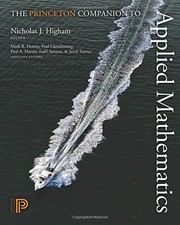
Expert entries on applied maths: concepts, modelling, simulation and applications.
Recommended by: Patrick Collison, Naval Ravikant
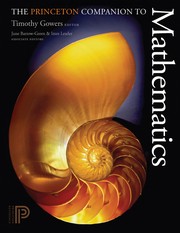
Nearly 200 entries by leading mathematicians on modern maths and its core ideas.
Recommended by: Patrick Collison, Balaji S. Srinivasan
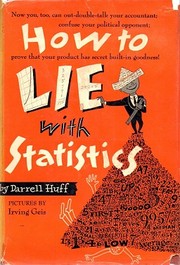
How biased samples, chosen averages and cut-off chart axes make numbers mislead.
“This puckish riff on how math can be manipulated is only 142 pages; most people could read it on a train ride or two, or in an afternoon at the beach. As light as the book is, however, it is nevertheless profound. In one short take after another, Huff picks apart the ways in which marketers use statistics, charts, graphics and other ways of presenting numbers to baffle and trick the public.” — Jason Zweig
Source: Best Books for Investors: A Short Shelf — jasonzweig.com
Recommended by: Bill Gates, Jason Zweig, Mohnish Pabrai and 7 others
A university text on the design and analysis of computer algorithms.
Recommended by: Patrick Collison
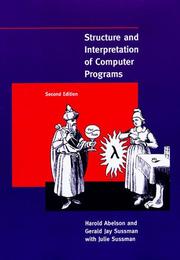
MIT's introductory computer science text, taught through Lisp and Scheme.
Recommended by: Bret Victor, Patrick Collison, Paul Graham and 1 other
Where it sits in the reference 4
As an Amazon Associate I earn from qualifying purchases.