e: The Story of a Number
The history of the number e, from compound interest to the Gateway Arch.
Summary
The reference has not verified this book in detail; the summary states only what the title, author and subject establish.
Maor writes a history of the number e for readers with only a modest mathematical background. He starts from the places e turns up: the interest earned on a bank account, the arrangement of seeds in a sunflower, and the shape of the Gateway Arch in St. Louis, and shows that these are connected through the same number.
The book is organised as a biography of e, presenting the mathematicians who worked with it and the mathematics behind it, and it covers what the publisher calls a golden era in the age of science. It appeared in 1994. The only source read in this pass is the publisher's description, so the individual chapters and mathematicians are not recorded here.
Key takeaways 3
- The number e links compound interest, natural growth patterns and curves such as the Gateway Arch.
- A single constant can be traced through the history of mathematics as a story of people and problems.
- The mathematics of e is accessible with a modest background.
Who should read it
Readers with school mathematics who want to understand where e comes from and why it matters, including in compound interest.
Who recommended it 1 · 1 direct
Similar books 6
Chosen by shared topics, the entries that hold them, and the people who recommended both.
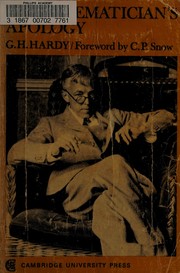
Why mathematics is worth doing for its beauty, apart from any use.
Recommended by: Patrick Collison, Paul Graham
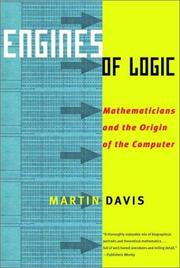
The mathematicians whose logic led to the computer.
Recommended by: Patrick Collison
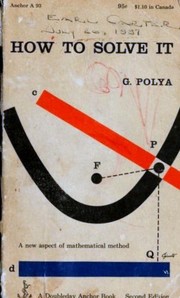
A guide to the method of solving mathematical problems.
Recommended by: Patrick Collison
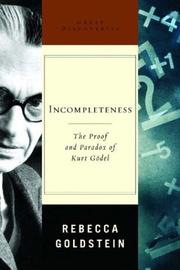
The life and thought of Kurt Gödel, whose theorems changed mathematics.
Recommended by: Patrick Collison
Design in art, science and mathematics: number, ratio, scale and their logic.
Recommended by: Patrick Collison, Bret Victor
Induction, analogy and the patterns of plausible inference in mathematics.
Recommended by: Patrick Collison