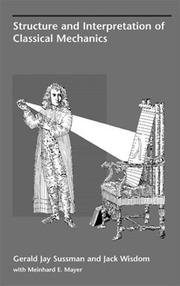
Structure and Interpretation of Classical Mechanics
Classical mechanics taught through computational tools for Hamiltonian systems.
Summary
Gerald Jay Sussman and his co-author teach classical mechanics by building general, practical intellectual tools for analysing nonlinear Hamiltonian systems. The textbook is organised around progressively more sophisticated analyses of particular natural systems, with examples woven through the presentation.
Students explore phenomena such as the transition to chaos, nonlinear resonances and resonance overlap, and develop analytic tools for understanding them. The methods of mechanics are expressed as computer programs and computational algorithms. The authors argue that writing the methods in a computer language forces them to be unambiguous and computationally effective, and that once a mathematical idea is formalised as a procedure it becomes a tool that can compute results directly. It was published in 2001 as a textbook for university courses in mechanics.
Key takeaways 4
- Writing physics as programs removes the ambiguity of conventional notation.
- A mathematical idea formalised as a procedure can be run to compute results.
- Nonlinear systems, chaos and resonance are central topics, not advanced extras.
- Working through particular natural systems builds general tools step by step.
Who should read it
Students of physics and computer science who want classical mechanics taught through executable programs.
Who recommended it 1 · 1 direct
Similar books 6
Chosen by shared topics, the entries that hold them, and the people who recommended both.
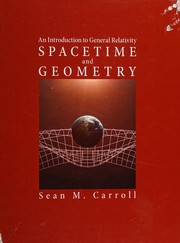
A textbook introduction to general relativity with modern techniques.
Recommended by: Patrick Collison
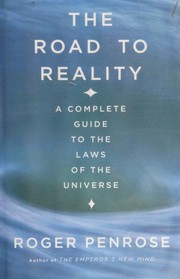
A complete guide in one volume to the laws of physics that govern the universe.
Recommended by: Patrick Collison
A first course in physics and its mathematics for the ardent amateur.
Recommended by: Patrick Collison, Eric Weinstein
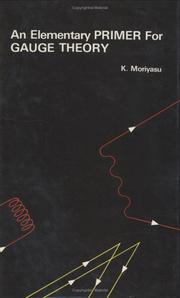
An elementary introduction to gauge theory in physics.
Recommended by: Eric Weinstein
A graduate reference on the analysis and geometry used in mathematical physics.
Recommended by: Eric Weinstein
General relativity presented for mathematicians.
Recommended by: Eric Weinstein