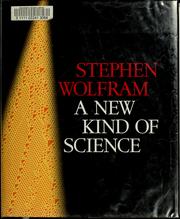
A New Kind of Science
How very simple programs produce complexity, and what that explains in nature.
Summary
Wolfram argues that the nature of computation must be explored by experiment, and that the results explain much of the physical world. Running very simple programs, he finds that many of them produce great complexity from simple rules. He studies cellular automata in one, two and three dimensions, mobile automata, Turing machines, substitution and network systems, recursive functions, combinators, tag systems and register machines, and treats the behaviour of these simple programs as a new basis for science.
He applies the approach to the origin of the second law of thermodynamics, the development of complexity in biology, the computational limits of mathematics, the possibility of a fundamental theory of physics, and free will and determinism. Wolfram self-published the book in 2002 under his imprint Wolfram Media, and it is illustrated throughout with computer graphics of the programs' output. A program counts as simple, in his definition, when a picture or a few sentences explain it, a few lines of code implement it, and all its variations can be computed.
Key takeaways 4
- Very simple rules, run repeatedly, can produce behaviour as complex as anything in nature.
- Wolfram treats computer experiments on simple programs as a method of science alongside equations.
- He argues that many systems cannot be predicted faster than by running them step by step.
- He applies cellular automata to thermodynamics, biology, mathematics and physics.
Who should read it
Readers curious about cellular automata and complexity who want Wolfram's full case that simple programs explain nature.
Who recommended it 2 · 1 direct
Similar books 6
Chosen by shared topics, the entries that hold them, and the people who recommended both.
Control and communication in animals and machines run on the same principles.
The science of networks, and why social networks, companies and organisms are alike.
“Barabasi, Albert-Laszlo, Linked: How Everything is Connected to Everything Else and What It Means (New York: Perseus Books, 2002)” — Michael Mauboussin
Source: Exploring Network Economics, page 15
Recommended by: Michael Mauboussin, Mohnish Pabrai
How scientists found order in chaos, from nonlinearity to the butterfly effect.
Recommended by: Jim Collins, Naval Ravikant, Stewart Brand
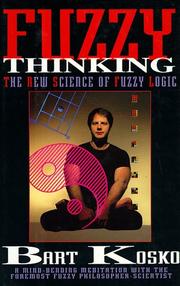
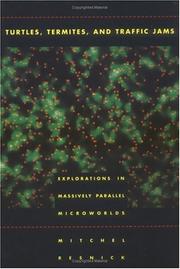
Computer tools that help people, even children, explore how complex systems work.
“The first challenge to the centralized mindset comes from a delightful book by MIT Professor Mitchel Resnick, “Turtles, Termites, and Traffic Jams.” — Michael Mauboussin
Source: The Invisible Lead Steer: New Answers to Old Questions About the Stock Market, page 3
Recommended by: Michael Mauboussin
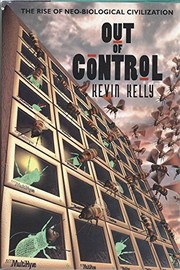
How machines and economies grow so complex that they behave like living systems.
“Had we read Kevin Kelly’s new book, Out of Control: The Rise of Neo- Biological Civilization, we would have realized that complex adaptive systems like the market need a long time to adjust to certain kinds of new information and they will do so in ways impossible to specify in advance.” — Bill Miller
Source: 1994 Q2 Market Commentary
Recommended by: Bill Miller, Cynthia Johnson and 3 others