
On Growth and Form
How mathematics and physical forces shape the forms of living things.
Summary
Thompson, a Scottish mathematical biologist, argues that biologists of his day overemphasised evolution as the determinant of living form and underemphasised physical laws and mechanics. He did not reject natural selection but treated it as secondary. With a mass of examples he matches biological forms to mechanical ones: jellyfish resemble drops of liquid falling into a viscous fluid, the struts inside birds' hollow bones resemble engineering trusses, the trabeculae of the human femur trace lines of stress like a crane, and spiral leaf arrangements follow the Fibonacci sequence.
The chapters move from magnitude, showing that surface grows with the square and volume with the cube of length, through growth rates, surface tension and cells as soap films, skeletons of diatoms and sponges, the logarithmic spiral in shells and horns, to Chapter 17, which transforms one species' outline into a related one's on a Cartesian grid. The first edition of 1917 ran to 793 pages and the second of 1942 to 1,116; John Tyler Bonner's abridgement is the usual one. Peter Medawar praised its prose but faulted its neglect of evolutionary history, and it influenced Alan Turing and generations of architects.
Key takeaways 5
- Size constrains shape, because surface area and volume scale differently as an organism grows.
- Many biological forms follow from physical forces such as surface tension and mechanical stress.
- The form of an object can be read as a diagram of the forces that acted on it.
- Related species' shapes can often be mapped onto one another by simple geometric transformations.
- Explanations that leave out evolutionary history miss part of why organisms look as they do.
Who should read it
Readers interested in how scale, geometry and physics constrain design, in biology and by extension in engineering and architecture.
Similar books 6
Chosen by shared topics, the entries that hold them, and the people who recommended both.
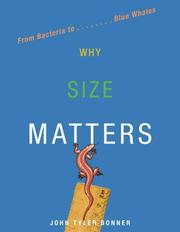
Why body size matters in living things.
“John Tyler Bonner, Why Size Matters (Princeton, NJ: Princeton University Press, 2006)” — Michael Mauboussin
Source: Importance of Diverse Thinking: Why the Santa Fe Institute Can Make You a Better Investor, page 10
Recommended by: Michael Mauboussin
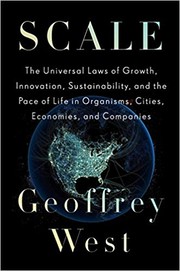
Why organisms, cities and companies follow power laws set by their supply networks.
“Geoffrey West, Scale: The Universal Laws of Growth, Innovation, Sustainability, and the Pace of Life in Organisms, Cities, Economies, and Companies (New York: Penguin Press, 2017), 26” — Michael Mauboussin
Source: Underestimating the Red Queen: Measuring Growth and Maintenance Investments, page 18
Recommended by: Michael Mauboussin, Nat Eliason and 4 others

An undergraduate biology textbook, from cells and genetics to evolution.
Recommended by: Mohnish Pabrai
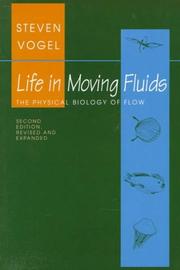
Fluid mechanics applied to how plants and animals live in moving air and water.
Recommended by: Patrick Collison

The university textbook of cell biology.
Recommended by: Laura Deming, Sam Altman
Where it sits in the reference 1
Topics 6
As an Amazon Associate I earn from qualifying purchases.