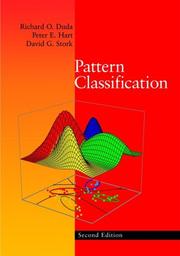
Pattern Classification
A text and reference on pattern recognition, from speech to character recognition.
Summary
Richard Duda, Peter Hart and David Stork's text and professional reference on pattern recognition is the second edition, of 2001, of a work first published in 1973 that helped define the field for more than a quarter of a century. It is written for people building or studying recognition systems in speech recognition, optical character recognition, image processing and signal analysis, who must choose among a wide range of techniques.
The book gives a systematic, in-depth account of the major topics in pattern classification and helps readers pick the right method for a class of problems. The second edition adds neural networks and statistical pattern recognition, the theory of machine learning, and the theory of invariances. It includes worked examples, comparisons between methods, extensive graphics, expanded exercises and computer project topics; Wiley offers an instructor's manual with solutions to every problem. The Open Library subjects place it under statistical decision theory and Bayesian decision making.
Key takeaways 4
- The first edition of 1973 became a standard reference in pattern recognition.
- The authors compare methods so that readers can choose one for a given problem.
- The second edition adds neural networks and machine learning theory.
- Statistical and Bayesian decision theory underlie classification.
Who should read it
Students and engineers who build classification systems and need a rigorous reference.
Who recommended it 1
Similar books 6
Chosen by shared topics, the entries that hold them, and the people who recommended both.
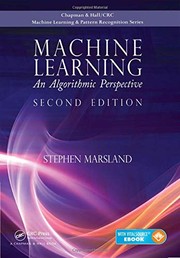
A textbook on machine learning built around its algorithms.
Recommended by: Patrick Collison
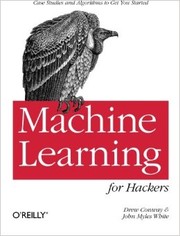
An introduction to machine learning through case studies and algorithms.
Recommended by: Patrick Collison
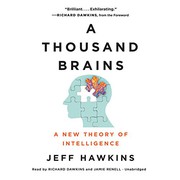
The theory that the neocortex works through thousands of models of the world.
Recommended by: Bill Gates
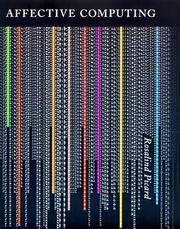
Why computers must recognise and express emotion to be intelligent.
“And so I was looking for a thesis topic and my fiance at the time went on Amazon and he said, "Oh, there's this really interesting book by this MIT professor called Rosalind Picard called Affective Computing.” — Rana el Kaliouby
Recommended by: Rana el Kaliouby
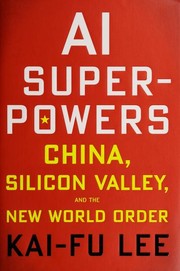
Why China may match the US in AI now that applying it matters more than research.
“Kai-Fu Lee, AI Superpowers: China, Silicon Valley, and the New World Order (Boston: Houghton Mifflin Harcourt Publishing, 2018), 22-26” — Michael Mauboussin
Source: One Job: Expectations and the Role of Intangible Investments, page 21
Recommended by: Balaji S. Srinivasan, Michael Mauboussin and 3 others
AI research from Dartmouth in 1956 to the funding cuts, told by the field's leaders.