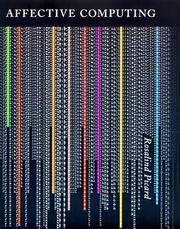
Affective Computing
Why computers must recognise and express emotion to be intelligent.
Summary
Picard argues that if computers are to be intelligent and to interact naturally with people, they must be able to recognise, understand, and even have and express emotions. She calls this field affective computing: the study and building of systems that can recognise, interpret, process and simulate human emotion, so that a machine can read a person's emotional state and adapt its behaviour to it.
The book has two parts. Part 1 sets out the intellectual framework for affective computing; Part 2 discusses the design and construction of affective computers. It followed Picard's 1995 paper of the same name, and MIT Press published it in 1997. The paper and the book mark the start of the modern field, which spans computer science, psychology and cognitive science.
Key takeaways 3
- Emotion is part of intelligence, so machines that ignore it will interact poorly with people.
- A computer can be built to detect a user's emotional state and respond to it.
- Picard's 1995 paper and 1997 book founded affective computing as a research field.
Who should read it
Researchers and engineers in human-computer interaction and AI who want the founding text on machines that recognise emotion.
Who recommended it 1 · 1 direct
“And so I was looking for a thesis topic and my fiance at the time went on Amazon and he said, "Oh, there's this really interesting book by this MIT professor called Rosalind Picard called Affective Computing.”
Similar books 6
Chosen by shared topics, the entries that hold them, and the people who recommended both.
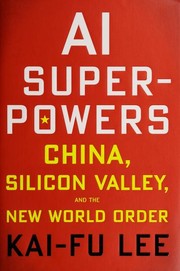
Why China may match the US in AI now that applying it matters more than research.
“Kai-Fu Lee, AI Superpowers: China, Silicon Valley, and the New World Order (Boston: Houghton Mifflin Harcourt Publishing, 2018), 22-26” — Michael Mauboussin
Source: One Job: Expectations and the Role of Intangible Investments, page 21
Recommended by: Balaji S. Srinivasan, Michael Mauboussin and 3 others
AI research from Dartmouth in 1956 to the funding cuts, told by the field's leaders.
The AI boom after ChatGPT, reported from inside Silicon Valley's funding rounds.
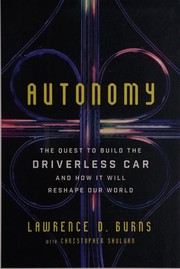
How driverless cars were built, and how they will change commuting, jobs and safety.

Khan Academy's founder on artificial intelligence in education and parenting.
Recommended by: Bill Gates
The textbook on deep learning: how machines learn layered concepts from data.
Recommended by: Vinod Khosla, Elon Musk and 2 others