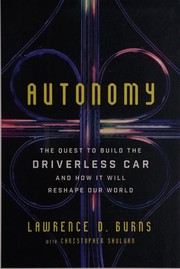
Autonomy: The Quest to Build the Driverless Car
How driverless cars were built, and how they will change commuting, jobs and safety.
Autonomy from the incumbent and Waymo side.
Summary
Burns ran research and development at General Motors and later advised Google's self-driving programme, and wrote this with Christopher Shulgan as both a history of autonomous vehicle development and an argument about what it would mean.
The history covers the DARPA Grand Challenges of 2004, 2005 and the 2007 Urban Challenge, which brought together the researchers who subsequently built the commercial programmes, including Sebastian Thrun's Stanford team, Chris Urmson's Carnegie Mellon team and the participants who later founded or led most of the industry. Burns covers the founding of Google's programme, the technical approach based on detailed prior mapping combined with lidar and machine learning, and the internal debates about whether to pursue driver assistance or full autonomy.
His argument about the industry is that the incumbent automakers were structurally unable to pursue this. He describes his own attempts inside General Motors and the reasons they failed: the business model depends on selling vehicles to individuals, the engineering organisation was built around mechanical systems, and the investment required had no return within the planning horizon.
His economic argument is that autonomy combined with electrification and shared ownership would reduce the cost per mile of transport by an order of magnitude, which would change urban form, vehicle ownership and the automobile industry's structure entirely.
The book was published in 2018 and the timeline it implies has not been met. Full autonomy proved far harder than the participants expected, several well-funded programmes closed, and deployment has been limited to defined areas with extensive mapping. Burns is an advocate and a participant, and the book's confidence about the transition should be read against what has happened since.
Key takeaways 7
- The DARPA challenges assembled the researchers who subsequently built nearly every commercial autonomous vehicle programme.
- Google's approach combined detailed prior mapping with lidar and machine learning rather than attempting to drive from sensors alone.
- Incumbent automakers could not pursue full autonomy because their business model, engineering organisation and planning horizon all worked against it.
- Driver assistance and full autonomy are different technical problems, and pursuing one does not lead to the other.
- Autonomy combined with electrification and shared use would reduce cost per mile by an order of magnitude if it worked.
- A cost per mile reduction of that scale would change vehicle ownership and urban form rather than only the automobile industry.
- The timeline the book implies has not been met, and deployment has been limited to extensively mapped defined areas.
Who should read it
Investors and operators in transport and automation who want the technical history and the incumbent's account of why established firms could not pursue it.
Similar books 6
Chosen by shared topics, the entries that hold them, and the people who recommended both.
The people behind self-driving cars, from the DARPA Grand Challenge onward.
The race between DeepMind and OpenAI, told through Demis Hassabis and Sam Altman.
Recommended by: Andrew Wilkinson
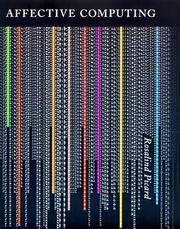
Why computers must recognise and express emotion to be intelligent.
“And so I was looking for a thesis topic and my fiance at the time went on Amazon and he said, "Oh, there's this really interesting book by this MIT professor called Rosalind Picard called Affective Computing.” — Rana el Kaliouby
Recommended by: Rana el Kaliouby
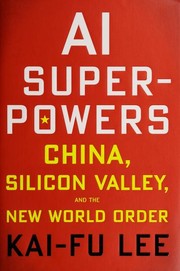
Why China may match the US in AI now that applying it matters more than research.
“Kai-Fu Lee, AI Superpowers: China, Silicon Valley, and the New World Order (Boston: Houghton Mifflin Harcourt Publishing, 2018), 22-26” — Michael Mauboussin
Source: One Job: Expectations and the Role of Intangible Investments, page 21
Recommended by: Balaji S. Srinivasan, Michael Mauboussin and 3 others
AI research from Dartmouth in 1956 to the funding cuts, told by the field's leaders.