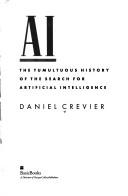
AI: The Tumultuous History of the Search for Artificial Intelligence
AI research from Dartmouth in 1956 to the funding cuts, told by the field's leaders.
Written after the second AI winter; the corrective to every cycle of enthusiasm.
Summary
Crevier, who worked in machine vision, wrote a history of artificial intelligence research from the 1950s to the early 1990s, based on interviews with most of the field's leading figures.
The narrative covers the founding period at the 1956 Dartmouth workshop, the early symbolic programs including the Logic Theorist and the General Problem Solver, the optimism of the 1960s and the forecasts that turned out to be badly wrong, the Lighthill report in Britain and the funding cuts that followed, the first winter, the expert systems boom of the 1980s in which commercial applications encoded domain knowledge as rules, the Japanese Fifth Generation programme and the American response, the collapse of the expert systems industry, and the second winter.
The intellectual history covers the recurring dispute between symbolic approaches, which represent knowledge as explicit structures and reason over them, and connectionist approaches using neural networks, which learn from data. Crevier documents Minsky and Papert's Perceptrons and its effect on neural network funding, the backpropagation work that revived the approach in the 1980s, and the state of the argument as it stood when he wrote.
He also covers the practical lesson the field learned repeatedly: tasks that appear difficult to humans, such as chess and theorem proving, turned out to be tractable, while tasks any child performs, such as vision, language understanding and movement, proved extremely hard.
The book was published in 1993 and stops before the statistical machine learning turn, before the data and compute scale that made deep learning work, and before everything that followed. Its value now is as a record of the cycles of expectation and disappointment, which the field has repeated, and of how the researchers of that period understood their own problem.
Key takeaways 7
- Tasks difficult for humans such as chess proved tractable while tasks any child performs such as vision and language proved extremely hard.
- Forecasts made in the 1960s about human-level machine intelligence within a generation were confidently wrong and damaged the field's credibility.
- The Lighthill report and the funding cuts that followed produced the first artificial intelligence winter in Britain.
- Expert systems encoded domain knowledge as explicit rules and worked commercially in narrow domains before the industry collapsed.
- Expert systems failed to scale because the knowledge required could not be elicited and maintained as rule bases grew.
- The dispute between symbolic representation and connectionist learning has recurred throughout the field's history without resolution.
- Cycles of overpromising followed by funding collapse have happened repeatedly, which is the pattern the history documents.
Who should read it
Anyone assessing current artificial intelligence claims who wants the documented record of the field's previous cycles of expectation and disappointment.
Similar books 6
Chosen by shared topics, the entries that hold them, and the people who recommended both.
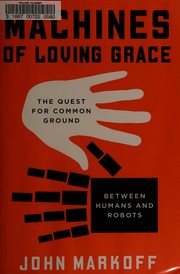
Whether robots and intelligent machines will replace people or work with them.
“And now, that has been played out, and John Markoff came out with his good book a year or two ago called Machines of Loving Grace, which basically spells out the ongoing debate between artificial intelligence and intelligence augmentation - I.A. and A.I.” — Stewart Brand
Source: The Tim Ferriss Show Transcripts: Stewart Brand (#281)
Recommended by: Stewart Brand

The founding of AI research, from interviews with McCarthy, Minsky and others.
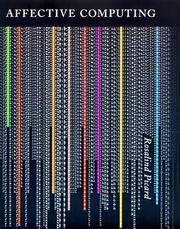
Why computers must recognise and express emotion to be intelligent.
“And so I was looking for a thesis topic and my fiance at the time went on Amazon and he said, "Oh, there's this really interesting book by this MIT professor called Rosalind Picard called Affective Computing.” — Rana el Kaliouby
Recommended by: Rana el Kaliouby
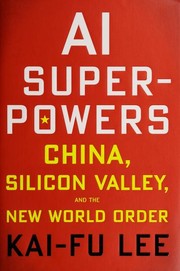
Why China may match the US in AI now that applying it matters more than research.
“Kai-Fu Lee, AI Superpowers: China, Silicon Valley, and the New World Order (Boston: Houghton Mifflin Harcourt Publishing, 2018), 22-26” — Michael Mauboussin
Source: One Job: Expectations and the Role of Intangible Investments, page 21
Recommended by: Balaji S. Srinivasan, Michael Mauboussin and 3 others
The AI boom after ChatGPT, reported from inside Silicon Valley's funding rounds.
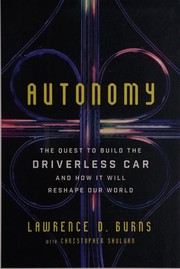
How driverless cars were built, and how they will change commuting, jobs and safety.