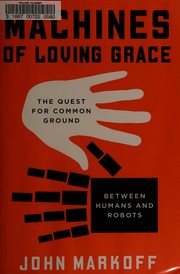
Machines of Loving Grace
Whether robots and intelligent machines will replace people or work with them.
Summary
Markoff, a Pulitzer Prize-winning New York Times science writer and the first reporter to cover the World Wide Web, asks whether robots and intelligent machines will help people or replace them, as they spread onto the battlefield and the road and into business, education and health. In the past decade Google introduced driverless cars, Apple put a personal assistant in people's pockets and the Internet of Things connected everyday tasks to the internet; cheap sensors and powerful computers mean machines will soon act on their own.
He writes a history of the relationship between humans and computers, from the birth of artificial intelligence and of intelligence augmentation, and argues that accelerating change has revived a question first raised more than half a century ago: will we control these systems, or will they control us? It was published in 2015.
Key takeaways 3
- Computing has long split between building machines that replace people and tools that augment them.
- Robots are moving into war, transport, business, education and health.
- The question of who controls intelligent machines dates back to the birth of AI.
Who should read it
Readers interested in AI and robotics who want a reporter's history of the argument over automation versus augmentation.
Who recommended it 1 · 1 direct
“And now, that has been played out, and John Markoff came out with his good book a year or two ago called Machines of Loving Grace, which basically spells out the ongoing debate between artificial intelligence and intelligence augmentation - I.A. and A.I.”
Similar books 6
Chosen by shared topics, the entries that hold them, and the people who recommended both.
AI research from Dartmouth in 1956 to the funding cuts, told by the field's leaders.
The founding of AI research, from interviews with McCarthy, Minsky and others.
Why computers must recognise and express emotion to be intelligent.
“And so I was looking for a thesis topic and my fiance at the time went on Amazon and he said, "Oh, there's this really interesting book by this MIT professor called Rosalind Picard called Affective Computing.” — Rana el Kaliouby
Recommended by: Rana el Kaliouby
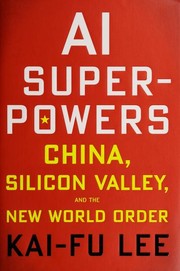
Why China may match the US in AI now that applying it matters more than research.
“Kai-Fu Lee, AI Superpowers: China, Silicon Valley, and the New World Order (Boston: Houghton Mifflin Harcourt Publishing, 2018), 22-26” — Michael Mauboussin
Source: One Job: Expectations and the Role of Intangible Investments, page 21
Recommended by: Balaji S. Srinivasan, Michael Mauboussin and 3 others
The AI boom after ChatGPT, reported from inside Silicon Valley's funding rounds.
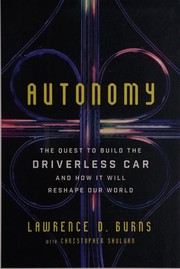
How driverless cars were built, and how they will change commuting, jobs and safety.