AI Valley
The AI boom after ChatGPT, reported from inside Silicon Valley's funding rounds.
The founder scene around OpenAI, reported from inside the funding rounds.
Summary
Rivlin, a technology journalist who has covered Silicon Valley for decades, followed the artificial intelligence boom from the release of ChatGPT through the subsequent funding and product cycle, with particular access to Reid Hoffman and to the founders of Inflection AI.
The reporting covers the period's characteristic dynamics: the speed at which capital moved into the sector, the valuations achieved by companies with no revenue, the competition for a small number of researchers and the compensation that resulted, the dependence on a small number of infrastructure and model providers, and the strategic positions of the large technology companies that supplied both the capital and the compute.
The Inflection AI story is the narrative centre and is instructive as a case. The company raised very large sums, built a consumer conversational product, and was then effectively absorbed by Microsoft in a transaction that hired the founders and licensed the technology without acquiring the company, leaving investors with a return but ending the independent business. Rivlin uses this to illustrate the structural problem for well-funded startups in this field: the compute costs are enormous, the models are not clearly differentiated, distribution belongs to the incumbents, and the most likely outcome is absorption.
He also covers the venture capital dynamics, the founders who moved between organisations, and the debates within the industry about safety and deployment.
The book is reported journalism rather than technical or economic analysis. It says little about the underlying technology or about the unit economics of the model businesses. Its subject is a period that is still developing, and any account written during it will be overtaken. The value is in the documented account of how capital and talent behaved during the first two years after the technology became commercially visible.
Key takeaways 7
- Capital moved into artificial intelligence companies at valuations that did not depend on revenue or on a demonstrated business model.
- Compute costs mean an independent model company must raise sums that only the largest technology firms can supply, which creates dependence on them.
- Distribution belongs to incumbents, so a well-funded startup with a comparable model still cannot reach users at competitive cost.
- Inflection AI's absorption by Microsoft through hiring and licensing rather than acquisition became a template for exits in this sector.
- Competition for a small number of researchers produced compensation that made the talent cost comparable to the compute cost.
- Model capability alone did not produce differentiation, because competitors reached comparable capability within months.
- An account written during an ongoing boom cannot assess which of the period's assumptions will prove correct.
Who should read it
Investors and founders in artificial intelligence who want a reported account of how capital, talent and strategic dependence actually behaved in the first years of the boom.
Similar books 6
Chosen by shared topics, the entries that hold them, and the people who recommended both.
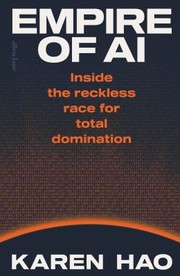
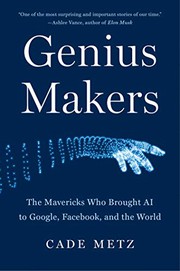
How Hinton, LeCun and Bengio kept neural networks alive until deep learning took off.
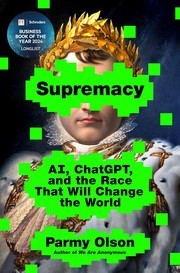
The race between DeepMind and OpenAI, told through Demis Hassabis and Sam Altman.
Recommended by: Andrew Wilkinson
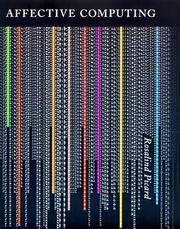
Why computers must recognise and express emotion to be intelligent.
“And so I was looking for a thesis topic and my fiance at the time went on Amazon and he said, "Oh, there's this really interesting book by this MIT professor called Rosalind Picard called Affective Computing.” — Rana el Kaliouby
Recommended by: Rana el Kaliouby
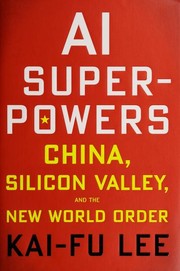
Why China may match the US in AI now that applying it matters more than research.
“Kai-Fu Lee, AI Superpowers: China, Silicon Valley, and the New World Order (Boston: Houghton Mifflin Harcourt Publishing, 2018), 22-26” — Michael Mauboussin
Source: One Job: Expectations and the Role of Intangible Investments, page 21
Recommended by: Balaji S. Srinivasan, Michael Mauboussin and 3 others
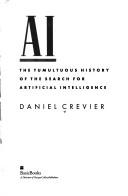
AI research from Dartmouth in 1956 to the funding cuts, told by the field's leaders.