Updates

  1. 137 new fund letters and reports, each with its own page: Kayne Anderson Rudnick (48 market briefings, KayneCast episodes and TV commentaries), Shelton Capital Management (48 shareholder reports and a commentary), Lakehouse Capital (10 Small Companies Fund letters), Smead (5 newsletters), RIT Capital Partners (5 monthly commentaries), Kovitz, Legal & General, Generation, Hosking, Marram, Munro, Oldfield and others.
  2. 200 new fund letters and reports, each with its own page: Spheria (41 monthly reports), Peapack Private (41 weekly recaps and planning newsletters), Fort Washington (23), Polen Capital (15), Aristotle Pacific (14), Riverwater (13), Chou (10), Apollo Asia Fund (8, back to 1998), Personal Asset Trust, Rockwood Strategic, J Capital Research, I/O Fund, Penn Davis McFarland, Pomona and others.
  3. Investor pages have one Investments tab with shares, changes, % owned, class, market cap and Market cap and Status filters, a Funds tab listing each fund the firm runs, and assets under management from Form ADV. The Investors table shows AUM and current investments, and its search finds investors by what they hold.
  4. Filters, search and sort stay as you left them when you come back to a section. Person cards look like book cards. Company pages name their Investors tab Ownership. Kind and Sector filters use four kinds and GICS sectors with industries. Dead links left the Links tabs.
  5. 190 more investors from fiscal.ai's list, with their sites, letters, partners and 13F holdings; 556 more partner descriptions. Experts now lists only people.
  6. Fund letters lists 144 new documents from 23 firms, each with its own page: a summary, key insights and quotes. Among them: 37 BlackRock articles, 21 Value Partners monthly notes, eight Baron Capital letters, six Stone Sentinel letters to partners, seven Value Line portfolio manager Q&As, BNY's 2026 earnings releases and Starboard Value's 2026 conference presentations.
  7. 584 more investors, with their websites, 6,776 letters from their own sites, 1,385 partners with pages and the 13F holdings of 213 firms. New letters arrive daily from 290 more archives.
  8. Media and Companies filter by GICS sector and industry group, taken from the companies an episode or page names. 1,860 more company pages show a logo, the SEC's list included.
  9. The home page counts what the platform holds and lists features such as the document reader, the player and saved marks. Settings sits at the foot of the rail. Book cards are a quarter wider, so rows hold fewer. Companies drops the Named in filter, and the Role list in your account runs A to Z.
  10. Investor pages of 13 firms show their newsroom's latest posts. New 13F filings are read as the SEC publishes them.
  11. Investor pages have an Investments tab: 13,975 holdings for 105 investors, from their 13F filings with the SEC and their own portfolio pages, with status and sector. 7,338 more companies have a page of their own.
  12. A podcast or YouTube episode keeps playing while you move around the site, in a bar with skip, speed and volume. Media tables show each episode's length and description.
  13. Press releases come from each company's own newsroom (167 companies); SEC filings sit on the Filings tab. Tickers name their exchange, and a company's Experts tab includes guests whose episode description names it.
  14. Letter types now include Market commentary, Fact sheet, Interim report, Annual report, Proxy circular and Governance document. The reader opens over the whole window.
  15. Partners of investment firms have 2,836 appearances and 580 pieces of writing on their pages; Derek Sivers's page lists every book he rates, with his rating.
  16. Fund letters lists three Akre Focus shareholder reports: the ETF's annual report for the year to July 2026, its semi-annual report to January 2026 and the fund's semi-annual report to January 2025, each with its own page: a summary, key insights and quotes.
  17. 837 partners of 73 investment firms now have their own pages, with title, description, photograph and social accounts; Andreessen Horowitz partners' pages also list their writing on a16z.com.
  18. Company pages have a Press releases tab: 8,229 releases for 203 companies, from SEC filings and company newsrooms. Companies filter by For-profit or Non-profit. Own media is a table with filters. Media filters by sector and industry. Publication pages link their publisher in the description.
  19. The Unilever page's Letters tab shows what each fund letter says about Unilever, word for word with its page, and whether the letter is bullish, bearish, mixed or neutral. Filter by sentiment, and see 10 letters at a time.
  20. 492 more fund letters and 3,183 more articles show the day they were published, read from each letter's first page or each article's own page.
  21. The PDF reader has a search box: type words to see every match in the document and step through them. About 540 letters that were web pages, among them Oakmark's commentaries, Bill Miller's letters and Howard Marks's memos, now open in the reader.
  22. Person pages: recommendations open with tier 1 books; one button per organisation; transcripts sit on their episodes; the books on 129 reading lists joined the Recommends tabs.
  23. Companies lists every company with a ticker on the SEC's list, with a Source filter. A quote on a company page opens the letter at that page with the words marked. A company's Media tab lists only episodes that name it, and a new Own media tab lists its podcasts, publications and YouTube channel. Show pages link their publisher. A page opened from a table no longer shows that table's filters beside it.
  24. Company, investor and person pages show more of their social accounts: Facebook, TikTok, Bluesky, Medium, GitHub, Discord and podcast shows. Investor pages list every partner the firm's own team page names: 965 people across 73 investors, 98 for Andreessen Horowitz.
  25. About 170 more letters and papers open in the reader: Mohnish Pabrai's letters and transcripts from his site's new folder, and free copies of papers by Asness, Harvey, Altman, Lo and others from their own or their schools' sites.
  26. Every company a fund letter names has a page, with the letters and quotes that name it: 47 new pages, among them Atom Computing, Hugging Face, Rolls-Royce Holdings and Westinghouse Electric. Company pages have a Quotes tab.
  27. A person's Writing tab has a Type column and filter (Article, Essay, Transcript, Speech, Foreword, Interview and the rest), and Publication names only the publication that published each piece.
  28. Fund letters opens on the newest published letter, and a letter or paper found by search opens its own page here instead of the publisher's site.
  29. A letter or paper with a copy on the site opens its PDF over its page, with a button to open it in a new tab. Select text to highlight or underline it; signed-in readers keep their marks in their account. Each quote opens the PDF at its page with its words marked, and a Source link leads to the publisher's original.
  30. Fund letters lists 61 more documents, each with its own page: Fairfax's 2025 and 2026 interim reports, proxy circulars and 2025 annual report (with their French editions), 26 Charlie Munger meeting transcripts, talks and essays, Third Point's 2026 monthly reports and Malibu Life's interim results, and a Seth Klarman interview. Papers adds Richard Thaler's two 2020 editorials on nudges.
  31. Fund letters lists Lux Capital's letters for Q2 and Q3 2026, by Josh Wolfe, each with its own page: a summary, key insights and quotes.
  32. Fund letters lists Brookfield's letter to shareholders for Q3 2026, by Bruce Flatt, with its own page: a summary, key insights and quotes.
  33. Fund letters lists Howard Marks's memo of 11 November 2026, A Layman Thinks About AI, with its own page: a summary, key insights and quotes.
  34. Fund letters lists 118 more letters, each with its own page: 44 weekly commentaries by Jeremy Siegel from 2026, 31 issues of Van Tharp's newsletter from 2018, 23 Pabrai Investment Funds letters from 2021 to Q3 2026, 13 Efficient Frontier essays by William Bernstein, Oakmark's three 3Q 2026 commentaries, two Lindsell Train reports, a John Hussman comment and Third Point's Q3 2026 letter.
  35. 2,027 more books carry a one-line description in the Books table and on their pages; 7,067 of 7,715 have one, every tier 1, 2 and 3 book among them.
  36. Fund letters lists 187 more letters from 19 firms, among them Permanent Equity, Social Capital, Lux Capital, Square Peg, Bestinver, Cobas, Sequoia Fund, Marketfield and EquityCompass; each shows on its investor's page and has a page of its own.
  37. 2,928 more books carry a one-line description in the Books table and on their pages, so every tier 1, 2 and 3 book has one; 5,040 in all.
  38. Every publication on Newsletters has its own page: its writing, its writers, its staff and who recommends it. Investor pages have a Management tab; a company's Experts tab now leaves out its own people, who list under Management. Tabs on a phone move sideways only.
  39. Every fund letter and research paper has its own page: the thesis, the PDF, the companies and books it names, and for 176 letters and 24 papers so far a summary, key insights and quotes with their page.
  40. 99 books that no page listed now sit under their topics in Books, among them Caste, American Prometheus and Pale Blue Dot.
  41. Newsletters lists every newspaper, magazine, investment newsletter, journal and blog the reference holds, 442 in all, with the people who write there. The search box keeps your last 20 searches. You can create an account.
  42. 283 books that fund managers recommend in their letters are on the shelf, each with the letter's own words and page; investor pages have a Recommends tab.
  43. Person, company, investor and show pages link their own accounts on X, Threads, Instagram, LinkedIn, YouTube and Substack: 275 people, 552 companies and organisations, 88 investors and 478 shows.
  44. 716 more book recommendations name their source: the person's own reading list, letter, blog post, speech or interview, or an article that reports it. 232 of them quote the person's own words about the book, on the book card and on the book's page.
  45. Every US-listed company has a page with its SEC filings. Company pages list their experts and their management, past and present. Fund managers sit under Investors. Each show has a page of its episodes, and an episode page names its guests and hosts. Biographies lists groups, then people. Breadcrumbs show where a page sits.
  46. Media lists every podcast episode, video, interview and talk, over 10,000, by person, company, publisher and event; each filter searches its own choices. Books opens on its table, then Browse, then Authors and Recommenders. A filter's count no longer covers its arrow.
  47. A book that no company, country or subject page lists shows its topics under Where it sits in the reference. On a phone, a page's tabs scroll sideways only. Descriptions read the same on every page. See them in the Experts tab lists every expert the page names.
  48. Every podcast episode, video and interview has its own page with a video or audio player and a link to the source. Investor pages show each company's sector and market cap; firms such as Berkshire Hathaway have one page that holds their letters and their company tabs. Letters tabs filter by company and search the theses. Companies filter by Public, Private and Defunct and link each company's website.
  49. Every tab, view and search has its own address, such as /books/table/asset or /letters/companies, so Back works and a link opens the same place. Page addresses no longer end in .html. Fund letters, Investors, Companies and Papers load about a fifth of the data they did.
  50. Fund letters has a Companies tab: every company the letters name, with its market cap, sector, country, and how many letters and investors name it. Investor pages link each investor's website. Lists in table cells end with “… and N more” at every width.
  51. 1,120 more book summaries; descriptions for 373 papers; pages for 137 more companies, each with the fund letters that discuss it; 215 official photographs; search has its own page.
  52. 411 more books have a summary; person pages list 930 more of the books they wrote; 147 people show their official photograph.
  53. Every investor has a page with its letters and the companies they discuss; company pages list the investors whose letters name them.
  54. A Companies section at the top of the rail lists every company the books, experts and fund letters name.
  55. Person pages list letters, writing, profiles and links as sortable tables with filters, and show each person's companies as links; Fund letters show each letter's description in its own column.
  56. Experts show a checked job title and a short description of each person; 30 more people have photographs.
  57. Every company, fund, university and publication the experts work for has a page listing the people there.
  58. Fund letters show each letter's thesis and filter by it; 225 person pages list the essays, columns and newsletter issues the person wrote.
  59. Person pages list every essay and newsletter issue a person wrote, and their own books as a table in List view.
  60. Recommends shows the five largest kinds of book and the rest under More; browse pictures load sooner.
  61. Podcasts and talks link the original episode, filter by Audio and video or Press, and list each publisher once.
  62. Pages are wider, Recommends has List and Grid, and a filter clicked again turns off.
  63. Book cards sit in a ruled grid with Open Library and Goodreads links and each book's one-line note.
  64. Funds is now Investors; each investor's styles are buttons that filter the table.
  65. Podcasts and talks on a person's page filter by year and publisher and show as a list or a grid of pictures.
  66. Quotes show only people's own words: 472 summaries written by list sites are gone.
  67. Country pages open from Browse again, and every link on the shelf lands on a page.
  68. Subject and person pages show their sections as tabs, and each book appears once on a person's page.
  69. Book cards show the quote, who said it and the source; grids show five cards to a row.
  70. On a phone, a menu holds the sections, search, Updates, Feedback and dark mode.
  71. Feedback takes a screenshot of the page with no browser prompt, opens a screenshot full size when you click it, and clears itself once sent.
  72. Book cards are centred, search names the topic each book sits in, and any text cut short shows whole on hover.
  73. Search groups its results by kind: people, companies, geographies, subjects, topics, books, funds, fund letters and papers.
  74. The Books table lists who recommended each book by name, and the browser tab names the section you are in.
  75. Feedback can take a screenshot of the page, or one you paste or choose, and opens in the corner beside Updates.
  76. Each rail button reopens its section where you left it, and Browse, Table and People show on every book and subject page.
  77. Filters grey out choices that hold nothing instead of hiding them, and Books › People filters by authors or recommenders.
  78. Feedback takes a subject line and up to three screenshots.
  79. Biographies are grouped by the person they are about: 41 new pages, from Abraham Lincoln to Lee Kuan Yew.
  80. Sport splits into 23 sports, and Religion into one topic per faith.
  81. Book lists show as cards: the cover, one recommendation quote and every recommender by name.
  82. Seventeen subjects that had two or three pages under different names now have one page each.
  83. Every page lists its Experts as authors and recommenders, with a link to them on the Experts tab.
  84. Economics, Financial history, Financial panics and Accounting are subjects of their own, with one page per financial crisis.
  85. Book, person and subject pages open inside the app, so the tabs stay in view.
  86. 996 more book covers, and photographs or logos for 227 more people and companies.
  87. Books › Browse shows every subject as cards, and the rail holds Fund letters, Papers, Experts, Books and Funds.
  88. Every topic over 150 books splits into narrower topics, each with a page of its own.

Send feedback

What is it?
Screenshots, up to 3 (optional)
or paste one with Ctrl+V

We use your email only to reply to you.

FP

Founder Profiles and Startup Stories

Journalists and biographers report the rise, and sometimes the collapse, of particular founders and companies, from Amazon and PayPal to Theranos and WeWork.

Start here

  1. Howard Hughes: His Life and MadnessDonald L. Barlett, James B. Steele, 2004
  2. Hatching TwitterNick Bilton, 2013
  3. Bad Blood: Secrets and Lies in a Silicon Valley StartupJohn Carreyrou, 2018
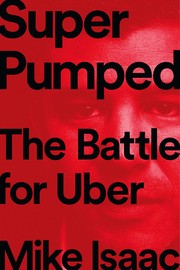
  4. Super PumpedMike Isaac, 2019
  5. The Little KingdomMichael Moritz, 1984
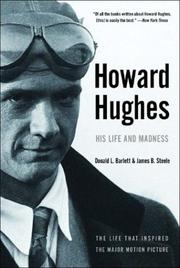
Donald L. Barlett, James B. Steele · 2004

Howard Hughes as aviator, film producer and Las Vegas hotel owner, and his decline.

Recommended by: Elon Musk
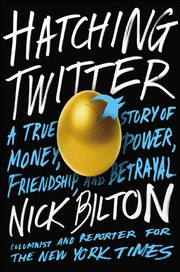
Nick Bilton · 2013

The story of how Twitter was founded and of the founders who built it.

“Hatching Twitter tried to do this around the story of Twitter but had to do this at the expense of the depth of the characters to fit into the 300 pages that a non-fiction book like this ends up being due to publishing industry constraints so it has a chance of ending up on a best seller list.” — Brad Feld

Source: Book: Hatching Twitter — Feld Thoughts

Recommended by: Brad Feld, Alexis Ohanian, Casey Neistat and 2 others
John Carreyrou · 2018

How Theranos reached a $9 billion value with blood tests that never worked.

Mike Isaac · 2019

How Uber grew on subsidies and aggression until its founder was pushed out in 2017.

“But, the best book of last weekend was Super Pumped: The Battle for Uber by Mike Isaac.” — Brad Feld

Source: Book: Super Pumped: The Battle for Uber — Feld Thoughts

Recommended by: Brad Feld, Alexis Ohanian, Andrew Wilkinson and 4 others
Michael Moritz · 1984

Apple's growth from a garage workshop to a company with over $1 billion in sales.

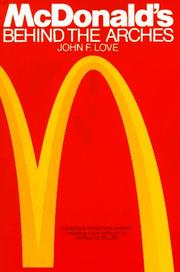
John F. Love · 1986

McDonald's to the mid-1980s, from the brothers' stand to Kroc's franchise system.

Recommended by: Mohnish Pabrai
Frederick Lewis Allen, Frederick Allen · 1994

How Asa Candler built Coca-Cola and Robert Woodruff made it a global brand.

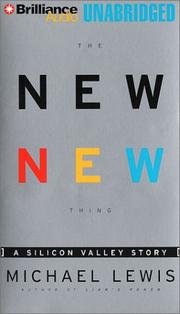
Michael Lewis · 1999

Jim Clark, founder of Silicon Graphics and Netscape, starts a third company in 1999.

“The recent book "The New, New Thing" by Michael Lewis, about the career of venture capitalist Jim Clark (Silicon Graphics, Netscape, Healtheon), makes it clear that in many cases, today's entrepreneur isn't thinking idea/startup/company as might have been the case in the past; rather, it's idea/startup/IPO.” — Howard Marks

Source: bubble.com, page 7

Recommended by: Austen Allred, Howard Marks, Jim Collins and 4 others
Walter Isaacson · 2011

Steve Jobs's life and Apple's products, from forty interviews with him and many more.

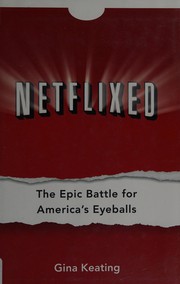
Gina Keating · 2012

Netflix from its 1997 founding to Qwikster in 2011, and its war with Blockbuster.

Recommended by: Balaji S. Srinivasan
Brad Stone · 2013

Amazon's first two decades, from an online bookshop to selling nearly everything.

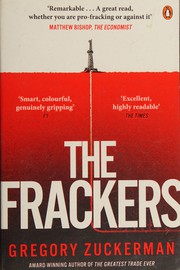
Gregory Zuckerman · 2013

The wildcatters, from George Mitchell to Harold Hamm, who started the shale boom.

Recommended by: Mohnish Pabrai
Ashlee Vance · 2015

Musk's life from South Africa and PayPal to running SpaceX and Tesla at once.

“Last night I finished Elon Musk: Tesla, SpaceX, and the Quest for a Fantastic Future by Ashlee Vance.” — Brad Feld

Source: Book: Elon Musk: Tesla, SpaceX, and the Quest for a Fantastic Future — Feld Thoughts

Recommended by: Austen Allred, Brad Feld, David Perell and 12 others
Leigh Gallagher · 2017

Airbnb from three air mattresses in 2007 to a global lodging business.

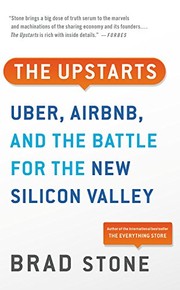
Brad Stone · 2017

How Uber and Airbnb built businesses in regulated markets by acting first.

Recommended by: Sean Ellis
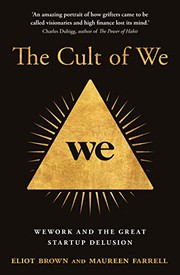
Eliot Brown, Maureen Farrell · 2021

WeWork's rise under Adam Neumann, the failed 2019 IPO and SoftBank's rescue.
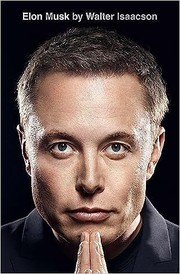
Walter Isaacson · 2023

Two years shadowing Musk, across SpaceX, Tesla, Neuralink and the buying of Twitter.

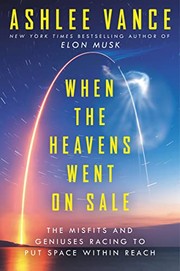
Ashlee Vance · 2023

Four companies, from Planet Labs to Rocket Lab, racing to build cheap satellites.

Lionel Barber · 2024

Masayoshi Son's rise from Kyushu to SoftBank, Yahoo Japan and the Vision Fund.

Recommended by: Andrew Wilkinson
Anthony B. Chan · 1995

Li Ka-shing's rise from a poor family that fled to Hong Kong to billionaire.

Recommended by: Mohnish Pabrai
Gail DeGeorge · 1996

Wayne Huizenga's roll-ups of waste hauling, video rental and car dealerships.

“The Wayne Huizenga Story. On my Top Ten List. Awesome. An inspiration.” — Mohnish Pabrai

Source: Mohnish's Bookshelf — Books on Entrepreneurship, Management and Leadership, entry 270

Recommended by: Mohnish Pabrai
Eric M. Jackson · 2004

PayPal from its founding to the eBay sale, told by an early employee.

Recommended by: Sahil Lavingia
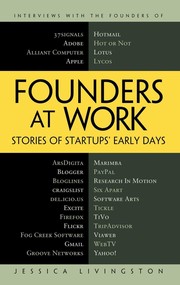
Jessica Livingston · 2007

Interviews with 32 founders about the early days of their companies, before success.

“Long in-depth interviews with company founders, telling their tales of how they started. Lots of stories with a few usable gems.” — Derek Sivers

Source: Derek Sivers book notes (primary, rated list) · Rating: 1/10

Recommended by: Derek Sivers, Paul Graham, Ryan Holiday and 8 others

James L. Witherell · 2011

Leon Leonwood Bean and the Maine outfitter he founded.

Recommended by: Mohnish Pabrai
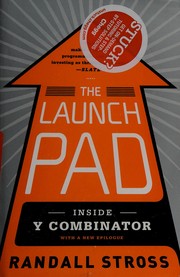
Randall E. Stross · 2012

A summer inside Y Combinator, watching how the accelerator shapes its startups.

Recommended by: Garry Tan, Paul Graham
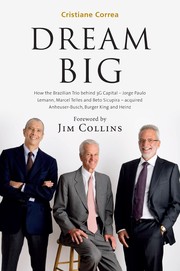
Cristiane Correa · 2013

How three Brazilians built Garantia, AmBev and 3G Capital on meritocracy and thrift.

Recommended by: Warren Buffett
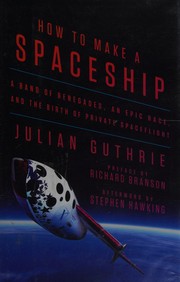
Julian Guthrie · 2016

The Ansari X Prize and the start of commercial human spaceflight.
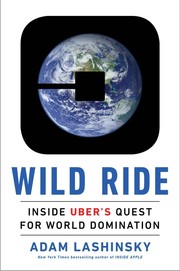
Adam Lashinsky · 2017

Uber under Travis Kalanick, reported just before he was forced out.

Recommended by: Alfred Lin
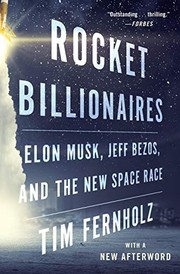
Tim Fernholz · 2018

SpaceX, Blue Origin and the policy fights that opened space to private launchers.

Christian Davenport · 2018

Musk, Bezos, Branson and others in the race to open space to private companies.
Atsuo Inoue · 2021

Masayoshi Son's life, from a Korean immigrant family in Japan to building SoftBank.

Gary Rivlin · 2025

The AI boom after ChatGPT, reported from inside Silicon Valley's funding rounds.

Alfred Lief · 1951

A biography of Harvey Firestone, founder of the Firestone Tire and Rubber Company.

Recommended by: Mohnish Pabrai
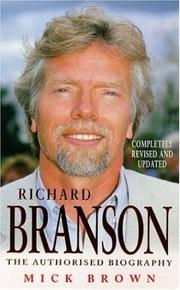
Mick Brown · 1988

The authorised life of Richard Branson, founder of Virgin Music and Virgin Atlantic.

Recommended by: Mohnish Pabrai

R.M. Lala · 1995

Conversations with the man who led India's largest conglomerate for six decades.

Recommended by: Mohnish Pabrai

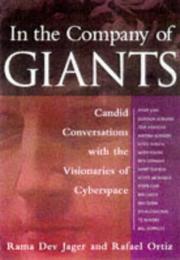
Rama Dev Jager · 1997

Interviews with the founders of the digital world's largest companies.

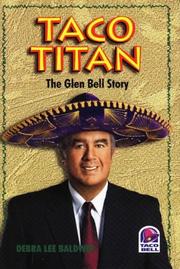
Debra Lee Baldwin · 1999

Glen Bell's rise from poverty to build Taco Bell and sell it for $130 million.

Recommended by: Mohnish Pabrai

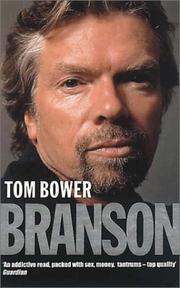
Tom Bower · 2000

A biography of Richard Branson focused on how he created and sold himself.

Recommended by: The Barefoot Investor
Po Bronson · 2000

True tales of the young entrepreneurs, engineers and dreamers of Silicon Valley.

Recommended by: Mohnish Pabrai
Timothy L. O’Brien · 2001

A business journalist on the reality behind Donald Trump's public image.

Recommended by: The Barefoot Investor
Barbara Peterson · 2004

The history and management of JetBlue Airways and its challenge to older airlines.

Recommended by: Mohnish Pabrai
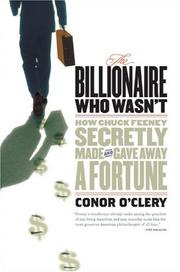
Conor O'Clery · 2007

How Chuck Feeney made a fortune from Duty Free Shoppers and gave it away in secret.

“I just finished it and it's incredibly inspiring. He died last year, giving away over $8 billion in his lifetime.” — Andrew Wilkinson

Source: Newsletter

Recommended by: Andrew Wilkinson, Mohnish Pabrai
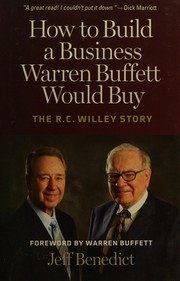
Jeff Benedict · 2009

The Utah furniture retailer R.C. Willey and how it came to be bought by Berkshire.

Recommended by: Mohnish Pabrai

Colin Cameron · 2009

The history of Betfair, the internet betting exchange.

Recommended by: Mohnish Pabrai
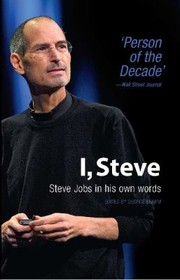
George Beahm · 2011

Steve Jobs's own words on business, technology, Apple and life.

Recommended by: Mohnish Pabrai

Suchitra Shenoy, Pavithra K. Mehta · 2011

How Aravind Eye Hospital became the world's largest provider of eye care.

Recommended by: Mohnish Pabrai
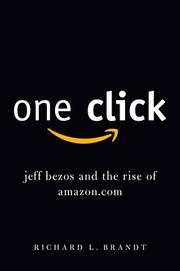
Richard L. Brandt · 2011

Jeff Bezos and Amazon's early years, from D. E. Shaw to the founding in 1994.

Recommended by: Mohnish Pabrai
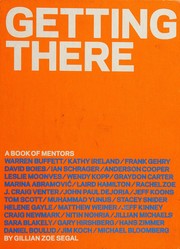
Gillian Zoe Segal · 2015

Thirty leaders in diverse fields on their paths to success.

Recommended by: Mohnish Pabrai

Grace Bonney · 2016

Over 100 women makers, artists and entrepreneurs on creativity and business.

Recommended by: Sheryl Sandberg
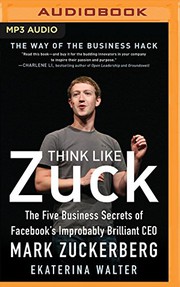
Ekaterina Walter · 2016

The five business principles behind Mark Zuckerberg's success with Facebook.

Recommended by: Gary Vaynerchuk

Alex Banayan · 2018

A student tracks down Bill Gates, Lady Gaga and others to learn how they broke in.

Recommended by: Ran Segall

Adriana Gascoigne · 2019

The founder of Girls in Tech on the realities of start-up life for women.

Recommended by: Arianna Huffington
More entrepreneurship and startups