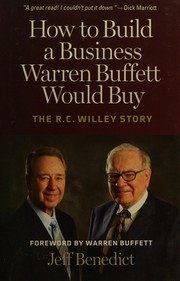
How to Build a Business Warren Buffett Would Buy: The R. C. Willey Story
The Utah furniture retailer R.C. Willey and how it came to be bought by Berkshire.
Summary
Benedict tells the history of R.C. Willey Home Furnishings, a Utah furniture retailer that Berkshire Hathaway acquired in 1995, centred on Bill Child, who took over his father-in-law's small appliance store and built it into the dominant furniture retailer in the state.
The operating decisions are the content. Child grew the business slowly and from cash flow rather than debt, held a conservative balance sheet, and expanded only into locations he could supervise. He closed on Sundays for religious reasons and maintained the policy through the growth, which competitors treated as a handicap. The most cited episode concerns the expansion into Boise: Buffett was sceptical that the Sunday closure would work outside Utah, and Child offered to build the store with his own money and sell it to Berkshire at cost if it succeeded, which is what happened.
The book also covers the acquisition itself, in which Buffett bought the company after a short meeting and without an auction, and the arrangement under which Child continued running it with no interference.
The reference has not verified the specific figures in this account, which is written with the company's cooperation and is admiring throughout. It is a business biography rather than an analysis, and the lessons are stated rather than examined. Its interest is as a documented example of the kind of business Berkshire acquires and of an owner willing to bear personal risk to test a disagreement with his acquirer.
Key takeaways 7
- R.C. Willey grew from retained cash flow rather than debt, which limited the growth rate and made the business survivable through downturns.
- Closing on Sundays was maintained through the company's growth despite competitors treating it as a handicap, and sales did not suffer.
- Child financed the Boise store personally and offered to sell it to Berkshire at cost if it succeeded, which resolved a disagreement about strategy by bearing the risk himself.
- Berkshire acquired the company after a short meeting without an auction, and the owner continued running it without interference.
- Expanding only into locations the owner could personally supervise limited growth and preserved the execution quality that the business depended on.
- An owner willing to take personal financial risk to test a disagreement demonstrates conviction in a way no argument can.
- The reference has not verified the specific figures in this cooperative account.
Who should read it
Founders of owner-operated businesses and investors interested in what Berkshire acquires and why.
Who recommended it 1 · 1 direct
Similar books 6
Chosen by shared topics, the entries that hold them, and the people who recommended both.
Why barriers to entry are the one force that matters in business strategy.
“Bruce Greenwald and Judd Kahn, Competition Demystified: A Radically Simplified Approach to Business Strategy (New York: Portfolio, 2005), 52-76” — Michael Mauboussin
Source: New Business Boom and Bust: How Capitalism Experiments, page 9
Recommended by: Li Lu, Michael Mauboussin, Mohnish Pabrai
Why well-run firms lose to cheaper, worse products that enter at the market's bottom.
“Clayton Christensen's big "aha" in Innovator's Dilemma is that eventually a product will become over-featured and as a result feature growth will slow, and along with it innovation.” — Bill Gurley
Source: Picture Proof of the Innovator’s Dilemma: SlideRocket
Recommended by: Bill Gurley, Drew Houston, Jim Collins and 29 others
How to spot a durable economic moat from public information, and what isn't one.
Recommended by: Mohnish Pabrai
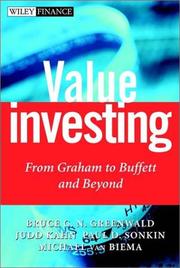
Columbia's value investing method: a valuation in three stages, most reliable first.
“In the book, Value Investing–From Graham to Buffett and Beyond, by Greenwald, Kahn, Sonkin and Van Biema, there are discussions of NAV.” — Martin J. Whitman
Source: Third Avenue Funds Q3 2003 Shareholder Letters (Chairman's letter by Martin J. Whitman)
Recommended by: Martin J. Whitman, Michael Mauboussin and 5 others
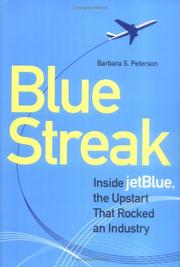
The history and management of JetBlue Airways and its challenge to older airlines.
Recommended by: Mohnish Pabrai
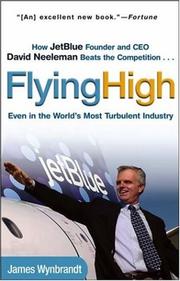
The career of David Neeleman, from teenage ventures to founding JetBlue.
Recommended by: Mohnish Pabrai
Where it sits in the reference 2
Topics 4
As an Amazon Associate I earn from qualifying purchases.