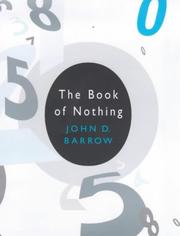
The Book of Nothing
How people have understood nothing, from zero in India to the vacuum in physics.
Summary
John D. Barrow, an English mathematician and cosmologist, explores the ways people have understood nothing. He begins with the origins of zero in ancient India, its troubled reception in Europe, and Christianity's early horror of the void and its eventual acceptance. He asks why the ancient Greeks, unlike the Indians and the Maya, did not develop a concept of zero, and why St Augustine equated nothingness with the Devil.
Barrow follows the idea through writers and thinkers from the Greeks to the present, across mathematics, theology, philosophy, literature, particle physics and cosmology, from the null set to Shakespeare and from the ether to the quantum vacuum. He describes the means seventeenth-century scientists used to try to create a vacuum and explains why quantum physicists believe the void is full of subatomic activity. He ends with recent ideas of nothing that bear on the search for the origins and structure of the universe. References range from Isaac Newton and Albert Einstein to Freddie Mercury.
Key takeaways 4
- Zero came from India and met resistance in Europe.
- Religious objections long shaped thinking about the void.
- Physicists now see the vacuum as full of activity rather than empty.
- Ideas about nothing bear on how the universe began.
Who should read it
Readers of popular mathematics, physics and the history of ideas.
Who recommended it 1
Similar books 6
Chosen by shared topics, the entries that hold them, and the people who recommended both.
The hypothesis that physical reality is a mathematical structure, through physics.
Recommended by: Mark Cuban
How scientists found order in chaos, from nonlinearity to the butterfly effect.
Recommended by: Jim Collins, Naval Ravikant, Stewart Brand
How very simple programs produce complexity, and what that explains in nature.
Recommended by: Mohnish Pabrai, Steve Jurvetson
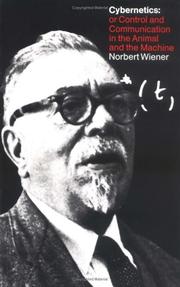
Control and communication in animals and machines run on the same principles.
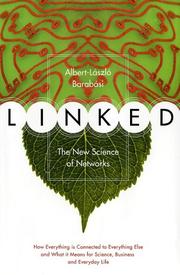
The science of networks, and why social networks, companies and organisms are alike.
“Barabasi, Albert-Laszlo, Linked: How Everything is Connected to Everything Else and What It Means (New York: Perseus Books, 2002)” — Michael Mauboussin
Source: Exploring Network Economics, page 15
Recommended by: Michael Mauboussin, Mohnish Pabrai