The Annotated Flatland
A mathematician's notes on a satire set in a two-dimensional world.
Summary
Ian Stewart, a mathematician, annotates Edwin A. Abbott's Flatland, the satire published in 1884 by an English clergyman and headmaster. Abbott's narrator, A. Square, lives in a two-dimensional world in which women are line segments and men are polygons whose number of sides marks their rank. He dreams of a one-dimensional Lineland whose king cannot imagine a second dimension, and is then visited by a sphere that passes through Flatland and carries him to the Land of Three Dimensions. The story mocked Victorian class and gender hierarchies, and its lasting contribution is its treatment of dimensions, including the idea of a fourth.
Stewart's commentary explains Abbott's Victorian references and gives biographical detail on Abbott and his circle, which included H. G. Wells and the mathematician George Boole. He traces how ideas of geometric form and dimension developed, with excursions to ancient Babylon, Karl Marx, Frankenstein, Mount Everest and phrenology, and links Flatland to Abbott's life and times.
Key takeaways 4
- Flatland teaches how to think about higher dimensions by analogy with lower ones.
- Abbott used geometry to satirise Victorian class and gender rules.
- Stewart's notes place the story in the science and society of the 1880s.
- The inability of each world to picture the next dimension is the book's central lesson.
Who should read it
Readers who like mathematics explained through story and want the history behind a classic.
Who recommended it 1
Similar books 6
Chosen by shared topics, the entries that hold them, and the people who recommended both.
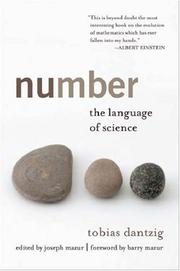
How the concept of number evolved from prehistoric times to the twentieth century.
Recommended by: Bryan Johnson
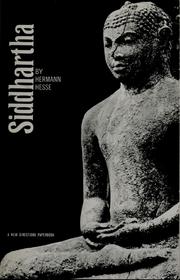
A novel of a Brahmin's son in ancient India who seeks understanding his own way.
Recommended by: Jim Collins, Mohnish Pabrai, Naval Ravikant and 6 others
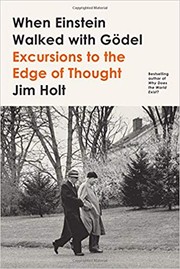
Essays on the deepest ideas of science and mathematics, from time to infinity.
Recommended by: Bryan Johnson

The history of zero, from the Babylonians to its threat to modern physics.
Recommended by: Matt Mullenweg, Bryan Johnson
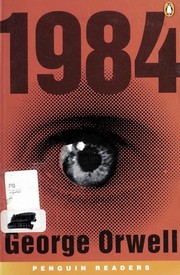
A novel of a clerk who rewrites history under a totalitarian state that watches all.
Recommended by: David Perell, Richard Branson and 7 others
The first edition of the Christmas ghost story, with its illustrations and notes.
Recommended by: Meg Whitman