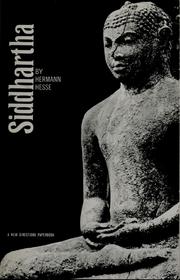
Siddhartha
A novel of a Brahmin's son in ancient India who seeks understanding his own way.
Summary
Hesse's 1922 novel follows Siddhartha, a Brahmin's son in ancient India, through successive attempts to reach understanding. He leaves home to become an ascetic, meets the Buddha and declines to become his follower on the grounds that enlightenment cannot be transmitted through teaching, enters the commercial and sensual world as a merchant and lover, becomes wealthy and disgusted, contemplates suicide, and finally lives as a ferryman beside a river where he reaches the understanding he sought.
The argument is stated explicitly in Siddhartha's refusal of the Buddha. He accepts that the Buddha has attained what he claims, and argues precisely from that acceptance that the attainment came from personal experience which no doctrine can transfer. Wisdom, in Hesse's formulation, cannot be communicated, and knowledge can.
The commercial section is the part business readers respond to. Siddhartha succeeds at trade because he is indifferent to its outcomes, which makes him better at it than people who need the results, and then is gradually captured by the habits of wealth until he cannot distinguish himself from the people he had considered children. The river functions as the book's central image and Hesse works it hard, particularly the idea that time is not real and that everything exists simultaneously.
The novel is short and the prose in translation is spare. Hesse was writing from a European reading of Indian religion during a period of Western interest in Eastern thought, and scholars note that it reflects that reading rather than the traditions themselves. The claim that wisdom cannot be taught is the argument readers take from it, and it applies directly to anyone who expects instruction to substitute for experience.
Key takeaways 8
- Wisdom cannot be transmitted through teaching, and Siddhartha declines to follow the Buddha precisely because he accepts that the Buddha attained it personally.
- Knowledge can be communicated and understanding cannot, which makes direct experience the only route to the second.
- Indifference to outcomes made Siddhartha better at commerce than the people who needed the results, and the advantage disappeared once he began to care.
- Wealth and comfort accumulate as habits that capture a person gradually and without any decision being made.
- Rejecting a path entirely, as Siddhartha rejects asceticism and then commerce, is part of learning what it can and cannot provide.
- Every experience including failure and self-disgust is necessary material, and a life edited to remove them produces no understanding.
- Opposites are simultaneously true, which is the position Siddhartha reaches and which he presents as the limit of what language can carry.
- Seeking with a fixed object prevents finding, because the goal determines what a person is able to see.
Who should read it
Readers who want a short novel arguing that experience cannot be replaced by instruction, particularly those inclined to read their way to understanding.
Who recommended it 9 · 4 direct
Similar books 6
Chosen by shared topics, the entries that hold them, and the people who recommended both.

A novel of an American with Spanish guerrillas sent to blow up a bridge.
Recommended by: Jim Collins, Mohnish Pabrai, Nat Eliason and 2 others
Two Englishwomen arrive in an Indian town and feel trapped by its Anglo-India.
Recommended by: Jim Collins, Mohnish Pabrai
Huck Finn tells of his journey along the Mississippi River in the American South.
Recommended by: Jim Collins, Mohnish Pabrai, Richard Branson
A novel in which industrialists vanish from an economy run by government directives.
“Ayn Rand had it about right when she wrote John Galt’s famous speech in Atlas Shrugged that “no substitute can do your thinking”.” — Nick Sleep
Source: Nomad Investment Partnership - Letters to Partners, complete collection 2001-2013, page 47
Recommended by: Brian Armstrong, Jim Collins, Mohnish Pabrai and 21 others
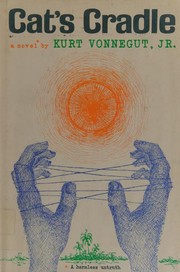
An apocalyptic satire of modern man and his madness, with an invented religion.
Recommended by: Mohnish Pabrai, Nat Eliason, Ev Williams
A poor former student in Saint Petersburg murders a pawnbroker with an axe.
Recommended by: Jim Collins, Mario Gabriele