
Atlas Shrugged
A novel in which industrialists vanish from an economy run by government directives.
Summary
Rand's 1957 novel follows railroad executive Dagny Taggart as productive industrialists disappear from an economy being progressively controlled by government directives and by executives who trade on political influence. The plot is structured as a mystery around the question of who John Galt is, resolved when Galt is revealed as the organiser of a strike by the competent, who have withdrawn to a hidden valley rather than continue supporting a society that condemns them.
The novel exists to carry Rand's philosophy, Objectivism, which holds that reality is objective, reason is the only means of knowledge, rational self-interest is the proper moral purpose, and laissez-faire capitalism is the only just political system. Galt's radio address, roughly sixty pages, states the philosophy directly. Francisco d'Anconia's speech on money and Hank Rearden's courtroom refusal to accept the premise of his prosecution are the other two set pieces most often quoted.
The book has had a durable effect on business and libertarian thinking in the United States. It supplies a moral defence of profit-seeking and production against the claim that they are selfish, and it names the pattern of firms competing through regulation rather than through product, which Rand calls the aristocracy of pull.
As fiction it is heavily criticised. The characters divide cleanly into heroes and villains, the dialogue serves the argument, and the length is enormous. As philosophy it has been rejected by academic philosophers, who argue that Rand's derivation of ethics from existence does not work and that she misrepresents opposing views. The economics assumes that political favouritism is the only source of market failure. Read it as an influential moral argument, not as analysis.
Key takeaways 8
- Production and profit-seeking are moral activities, and the moral condemnation of them is the mechanism by which productive people are exploited.
- Rational self-interest, not sacrifice for others, is the proper standard of ethics.
- An economy in which access to government determines success replaces competence with political influence and destroys the productive base.
- The competent sustain a society that despises them, and they can withdraw, which is the strike the novel depicts.
- Contradictions cannot exist, so when you find one you should check your premises rather than accept the contradiction.
- Money is a tool of exchange that presupposes production, and treating it as the root of evil inverts the actual relationship.
- A person should refuse to accept a moral framework that condemns them, rather than seeking exemptions inside it.
- Objective reality exists independently of anyone's wishes, and attempts to legislate around physical and economic facts fail.
Who should read it
Founders and investors who want the source of a moral argument for capitalism that remains influential in American business culture, prepared for a long novel written to make a case.
Who recommended it 24 · 6 direct
“Ayn Rand had it about right when she wrote John Galt’s famous speech in Atlas Shrugged that “no substitute can do your thinking”.”
Similar books 6
Chosen by shared topics, the entries that hold them, and the people who recommended both.
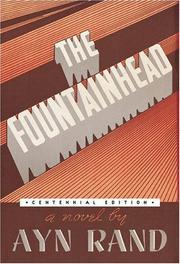
A novel of an architect who will build only by his own judgment, whatever it costs.
Recommended by: Mohnish Pabrai, Ev Williams, Iman Gadzhi and 7 others
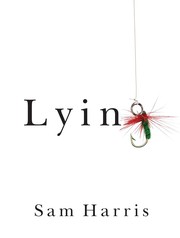
A short case against all lying, white lies included.
“A tiny booklet, like a long article, about why lying is bad. Not as many insights as I expected.” — Derek Sivers
Source: Derek Sivers book notes (primary, rated list) · Rating: 3/10
Recommended by: Derek Sivers, Nat Eliason, Naval Ravikant and 4 others
Life in Nazi concentration camps, and logotherapy: finding meaning to survive.
“What's more certain to me is that we all need a why, as Viktor Frankl told us in Man's Search for Meaning.” — David Heinemeier Hansson
Source: Universal Basic Dead End
Recommended by: David Heinemeier Hansson, David Perell and 29 others

A shepherd boy follows a recurring dream from Andalusia to the pyramids of Egypt.
“How is this so popular? Its weak message is “pay attention to serendipity”. I was open to liking it, but it gave me nothing I could use.” — Derek Sivers
Source: Derek Sivers book notes (primary, rated list) · Rating: 1/10
Recommended by: Derek Sivers, Mohnish Pabrai, Nat Eliason and 10 others
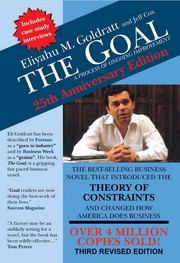
A plant manager learns that a system's output is set by its bottleneck.
Recommended by: Jim Collins, Mohnish Pabrai, Nat Eliason and 6 others

In a future dark age that denies people their names, one man dares to love.
Recommended by: Mohnish Pabrai, Ev Williams, Niki Scevak