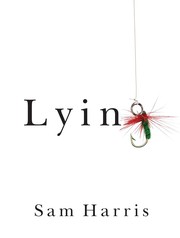
Lying
A short case against all lying, white lies included.
Summary
Harris makes a short and absolute case against lying, including white lies told to spare feelings. His argument is that deception is a form of coercion because it removes the other person's ability to act on accurate information, and that the liar arrogates to themselves the decision about what another person may know. He distinguishes lying from withholding, arguing that a person is not obliged to disclose everything but is obliged not to state what they believe to be false. This allows a great deal of tact without permitting deception.
His practical argument concerns the accumulating costs. A lie requires maintenance, must be remembered, generates further lies to protect it, and creates a permanent risk of discovery that changes the relationship it was meant to protect. He argues that white lies are the most damaging category because they are constant, because they deprive people of information they need, and because the person telling them learns nothing about how the other person would have handled the truth.
He covers specific cases including lying to children about Santa Claus, praising work you think is poor, and the classic murderer at the door problem, which he treats as a genuine exception under conditions of duress against someone who has forfeited their claim to honest dealing.
The book is very short, essentially an essay. It contains no research and Harris offers no empirical evidence about whether honest people fare better. The position is absolutist and Harris does not seriously engage with the strongest objections. Its value is the clarity of the distinction between lying and withholding, which is directly usable in professional situations where the alternative to a lie is assumed to be cruelty.
Key takeaways 8
- Lying is a form of coercion because it removes the other person's ability to act on accurate information.
- A liar decides unilaterally what another person is permitted to know, which is the specific harm regardless of the liar's intention.
- Withholding information is different from stating what you believe to be false, which permits tact without permitting deception.
- White lies are the most damaging category because they are constant and deprive people of information they need to make decisions.
- Every lie requires maintenance, must be remembered, and generates further lies to protect it.
- A relationship built on a lie is not protected by it, since discovery changes the relationship more than the truth would have.
- Telling someone an uncomfortable truth gives them information and also gives you information about how they handle it, which lying forecloses.
- Harris allows exceptions under duress against someone who has forfeited any claim to honest dealing, which is the only case he concedes.
Who should read it
Anyone whose work involves regular feedback, negotiation or difficult conversations, wanting a clear argument and the lying versus withholding distinction.
Who recommended it 7 · 5 direct
“A tiny booklet, like a long article, about why lying is bad. Not as many insights as I expected.”
“Yes, radical honesty, that's another one I want to explore a bit. There's a great book called Lying by Sam Harris.”
Similar books 6
Chosen by shared topics, the entries that hold them, and the people who recommended both.
A novel in which industrialists vanish from an economy run by government directives.
“Ayn Rand had it about right when she wrote John Galt’s famous speech in Atlas Shrugged that “no substitute can do your thinking”.” — Nick Sleep
Source: Nomad Investment Partnership - Letters to Partners, complete collection 2001-2013, page 47
Recommended by: Brian Armstrong, Jim Collins, Mohnish Pabrai and 21 others
Life in Nazi concentration camps, and logotherapy: finding meaning to survive.
“What's more certain to me is that we all need a why, as Viktor Frankl told us in Man's Search for Meaning.” — David Heinemeier Hansson
Source: Universal Basic Dead End
Recommended by: David Heinemeier Hansson, David Perell and 29 others
Twelve rules for living, each drawn from clinical practice, biology and myth.
“A unique thinker with strong opinions presented as indisputable fact. More surprisingly interesting ideas than almost any book I've ever read. Extremely thoughtful, but occasionally abruptly concludes with an unsupported point. It has a conservative “this is how it is” certainty. It’s a broad collection of thoughtful insights on life, mixed with a lot of Bible interpretation.” — Derek Sivers
Source: Derek Sivers book notes (primary, rated list) · Rating: 9/10
Recommended by: Derek Sivers, Guy Spier, Nat Eliason and 8 others
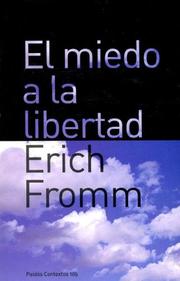
Why people flee from freedom into totalitarianism: a psychoanalyst's account.
Recommended by: Nat Eliason
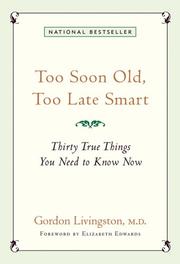
Advice on living, drawn from a psychiatrist's thirty years with patients.
“Powerful and profound life lessons from a psychiatrist who's been listening to people's problems for decades.” — Derek Sivers
Source: Derek Sivers book notes (primary, rated list) · Rating: 9/10
Recommended by: Andrew Wilkinson, Derek Sivers, Nat Eliason and 1 other