
Escape From Freedom
Why people flee from freedom into totalitarianism: a psychoanalyst's account.
Summary
Erich Fromm, a psychoanalyst, published the book in the United States in 1941 with Farrar & Rinehart; Routledge & Kegan Paul issued it in Britain in 1942 as The Fear of Freedom. It examines how individual freedom can produce fear, anxiety and alienation, and how many people seek relief by giving freedom up. Fromm argues that authoritarianism serves as one such escape, and he gives special attention to the psychological and social conditions that allowed Nazism to rise.
He separates "freedom from", release from restrictions imposed by other people or institutions, from "freedom to", the use of freedom to act creatively with the whole personality in real connection with others. Freedom from authority alone leaves people feeling hopeless, and a common substitute for creative freedom is submission to a new authoritarian order that removes uncertainty by prescribing what to think and how to act. A major chapter traces the theme through history to the Reformation: the collapse of the medieval order and the rise of capital made people aware of themselves as separate beings, and Fromm reads the theology of Luther and Calvin as a response to that new economic freedom.
Key takeaways 4
- Freedom from constraint, without the freedom to create and connect, leaves people anxious and isolated.
- Many people escape that anxiety by submitting to authoritarian systems.
- Fromm traces the rise of Nazism to these psychological and social conditions.
- He reads Luther's and Calvin's theology as responses to the new freedom of early capitalism.
Who should read it
Readers interested in political psychology and why people embrace authoritarian rule.
Who recommended it 1 · 1 direct
Similar books 6
Chosen by shared topics, the entries that hold them, and the people who recommended both.
How Western punishment changed and the prison became its main form.
Recommended by: Nat Eliason

Essays for reflection and free enquiry, from fascism's roots to "useless" knowledge.
Recommended by: Nat Eliason, Patrick Collison, Ed Cooke

An introduction to Girard's theory: mimetic desire, the scapegoat and the Bible.
Recommended by: Naval Ravikant
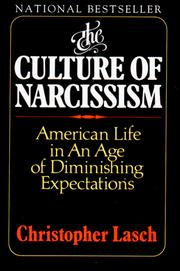
A critique of the narcissistic personality that modern American culture produces.
Recommended by: Antonio García Martínez