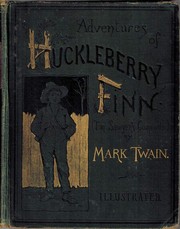
Adventures of Huckleberry Finn
Huck Finn tells of his journey along the Mississippi River in the American South.
Summary
Adventures of Huckleberry Finn is told in the first person by Huck Finn, Tom Sawyer's friend, as a direct sequel to The Adventures of Tom Sawyer. Set along the Mississippi River in a Southern antebellum society that had ended more than 20 years before Twain wrote, it describes the people and places Huck meets and works as a satire of entrenched attitudes, racism above all.
The novel was published in the United Kingdom in December 1884 and in the United States in February 1885. It was among the first major works of American literature written throughout in vernacular English, in the local-colour tradition, and it is credited with changing American children's literature through its portrayal of boyhood. On release it was widely criticised for coarse language and racial epithets, yet it is commonly named among the Great American Novels and has been studied by critics continuously since publication.
Key takeaways 3
- Twain wrote the whole novel in the vernacular voice of a boy, which changed what American literature could sound like.
- The book satirises the racism of the antebellum South through the eyes of a narrator raised inside it.
- Its coarse language and racial epithets drew wide criticism on release, alongside its later standing as a Great American Novel.
Who should read it
Readers who want a central work of American literature and a satire of race and morality in the antebellum South.
Who recommended it 3 · 3 direct
Similar books 6
Chosen by shared topics, the entries that hold them, and the people who recommended both.
Two Englishwomen arrive in an Indian town and feel trapped by its Anglo-India.
Recommended by: Jim Collins, Mohnish Pabrai

A novel of an American with Spanish guerrillas sent to blow up a bridge.
Recommended by: Jim Collins, Mohnish Pabrai, Nat Eliason and 2 others

A magic realist novel of a family and its imaginary town, Macondo.
Recommended by: Mohnish Pabrai, Richard Branson, Fred Wilson and 1 other
A novel of a Brahmin's son in ancient India who seeks understanding his own way.
Recommended by: Jim Collins, Mohnish Pabrai, Naval Ravikant and 6 others

A family of Oklahoma sharecroppers, driven from their land by drought and poverty.
Recommended by: Jim Collins, Mohnish Pabrai

A novel of a rich man of unknown origin on Long Island and the woman he wants back.
Recommended by: Jim Collins, Mohnish Pabrai and 5 others