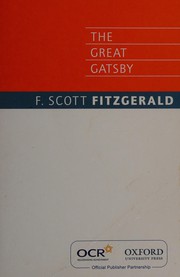
The Great Gatsby
A novel of a rich man of unknown origin on Long Island and the woman he wants back.
Summary
Fitzgerald's 1925 novel is narrated by Nick Carraway, who moves to Long Island and becomes involved with his neighbour Jay Gatsby, a wealthy man of unexplained origin who holds enormous parties. Gatsby's purpose is to recover Daisy Buchanan, whom he loved five years earlier before he had money, and whose husband Tom is wealthy by inheritance.
The class structure is the novel's subject. Fitzgerald separates inherited wealth, represented by the Buchanans and by East Egg, from acquired wealth, represented by Gatsby and West Egg, and shows that the second cannot buy entry into the first regardless of quantity. Gatsby's money comes from bootlegging and from securities fraud, and the novel is precise that the source matters less than the fact of acquisition rather than inheritance.
The central argument is stated at the end, that Gatsby's error was believing the past could be repeated and that money could restore a position that time had removed. Nick's judgment that Tom and Daisy were careless people who smashed things and retreated into their money is the book's moral conclusion. The novel sold poorly during Fitzgerald's life and became canonical afterwards, largely through wartime distribution to American troops.
It is short and the prose is the reason to read it. Its business readership treats it as a study of new money against old, of the limits of what wealth purchases, and of a person whose entire construction of self is directed at a single objective that cannot be achieved. Readings that treat Gatsby as an aspirational figure invert what the novel says about him.
Key takeaways 8
- Acquired wealth cannot purchase entry into inherited wealth, and the amount is irrelevant to the distinction.
- Gatsby constructed an entire identity, including his name and his history, directed at a single objective that could not be achieved.
- The belief that the past can be recovered is the specific error the novel identifies, and money accelerates rather than corrects it.
- People with inherited wealth can damage others and retreat into their money, which is Nick's summary judgment on Tom and Daisy.
- Social position is enforced through knowledge of origin rather than through current circumstances, which is why Gatsby's history could not be escaped.
- The parties Gatsby holds attract people who know nothing about him and who do not attend his funeral, which the novel presents as the return on the expenditure.
- Wealth acquired through crime and wealth acquired legitimately are treated identically by the class structure, which cares only about inheritance.
- Readings that treat Gatsby as an aspirational model invert the novel's judgment on him.
Who should read it
Readers who want a short novel on the limits of what acquired wealth purchases and on the construction of an identity around an unachievable objective.
Who recommended it 7 · 3 direct
Similar books 6
Chosen by shared topics, the entries that hold them, and the people who recommended both.
A novel of a sixteen-year-old's days alone in New York after his school expels him.
Recommended by: Mohnish Pabrai, Ryan Holiday, Bill Gates and 2 others
A novel of racial injustice and mob anger in a segregated Southern town.
Recommended by: Jim Collins, Mohnish Pabrai, Shane Parrish and 1 other
Napoleon's invasion of Russia, followed through Pierre, Prince Andrei and Natasha.
“But War and Peace is still clearly better than Anna Karenina, which is more of a mono novel, and less complex and sprawling, right?” — Tyler Cowen
Source: Dan Wang on What China and America Can Learn from Each Other (Ep. 263) | Conversations with Tyler
Recommended by: Jim Collins, Mohnish Pabrai and 3 others
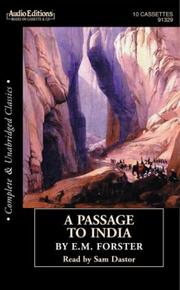
Two Englishwomen arrive in an Indian town and feel trapped by its Anglo-India.
Recommended by: Jim Collins, Mohnish Pabrai
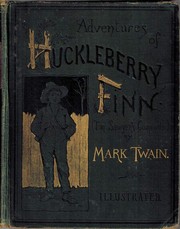
Huck Finn tells of his journey along the Mississippi River in the American South.
Recommended by: Jim Collins, Mohnish Pabrai, Richard Branson
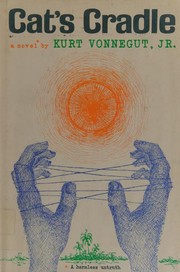
An apocalyptic satire of modern man and his madness, with an invented religion.
Recommended by: Mohnish Pabrai, Nat Eliason, Ev Williams